




Cupertino, California.
For years, if you asked Siri to do anything more than set a timer, you probably got a wrong answer or the frustrating reply, “Here’s what I found on the web.” That changes today.
Tim Cook took the stage at Apple Park on June 8 to address a familiar problem. Siri has been the punchline of voice assistant jokes for years, and Apple is well aware of it. The WWDC 2026 Keynote was the company’s most important software presentation in a decade, marking the moment Apple replaces its chronically underperforming voice helper with something that finally feels right for 2026.
How Apple Replaces the Old Siri With a Smart New Brain
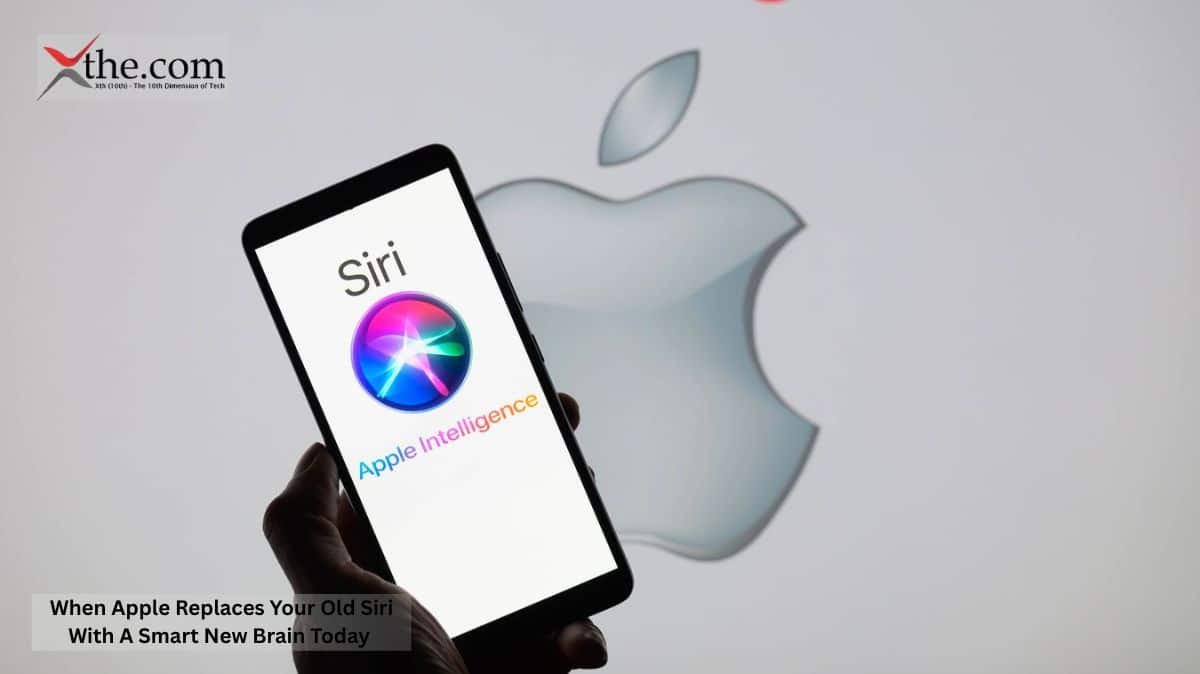
Apple introduced Siri AI at WWDC 2026, promising a more conversational assistant with personal context, app actions, and visual intelligence. This rebrand is far more than a new name. The assistant uses on-device processing and private cloud computing to understand personal context, take actions inside apps, and recognize what’s on your screen. The most significant change is its ability to read your screen in real time, which really sets the new version apart from the old one.
Here’s a practical example: you’re looking at an Instagram post of a landmark your friend tagged, and you want directions. In a demo, Apple VP Mike Rockwell asked Siri for directions to a landmark shown in an Instagram post. There was no need to copy, switch apps, or type. The assistant simply read the screen, understood what was needed, and acted. That’s what Screen Awareness Tools are meant to do when they work well, and Apple has spent two years building the infrastructure to make it reliable.
The Architecture Behind the Siri AI Overhaul
Apple worked with Google, using Gemini technologies to power the next generation of Apple Foundation Models that run both locally and on servers. This cooperation is important because Apple is no longer relying only on its own language research for the most ambitious Siri AI overhaul in the product’s fifteen-year history. Apple has now released a second version of its Foundation Models, indicating ongoing improvements rather than a one-time update.
Siri AI can also use personal information from your device. For example, it can search your messages to find a friend’s address, pull information from emails, or help with calendar events and other apps. This level of access is what makes Siri more like a real administrative assistant rather than just a voice-command tool.
A Dedicated App and Persistent Memory
The biggest change is the new standalone Siri app. Unlike the old Siri, which was built into the operating system and disappeared after each question, the new version has its own app where conversations are saved and sync privately across devices through iCloud.
This change is more important than it might seem at first. With a persistent conversation history, context builds up over time. If you ask about a contract negotiation on Monday and return on Thursday, the assistant remembers. For an executive who uses three Apple devices in two time zones, that kind of continuity isn’t simply a luxury. It’s necessary for useful AI assistance.
What the Apple WWDC 2026 Siri AI Upgrade Features and Apple Intelligence Deployment Actually Deliver
The new Apple Intelligence updates cover several apps, including tab handling for Safari, one-tap password updates, and cross-app context awareness. Messages will get AI-powered reply suggestions, and the Phone app can now pull context sourced from other apps like Mail and Messages during a call.
The Phone app integration is worth noting. Imagine getting a call from a client asking about an invoice. The new Siri, powered by Apple Intelligence Models, quietly brings up the relevant email conversation from Mail in real time. There’s no on-hold music or frantic tab switching. This is a change in how you work, not just a new feature.
Instead of just being a voice-command tool, the new Siri is built to act as a more conversational AI assistant through Apple devices. It can answer general knowledge questions using web information, understand what’s on your screen, and refer back to earlier conversations.
The Honesty Apple Owes Its Users
The Apple WWDC 2026 Siri AI upgrade features and Apple Intelligence deployment come with a caveat that responsible coverage cannot ignore. Apple announced Apple Intelligence in June 2024, then delayed key Siri features to 2025, and delayed them again. The WWDC 2026 launch comes almost two years after the first announcement. Apple introduced the update by admitting that “there are times when you expect more from Siri.” That’s corporate understatement at its finest.
Still, what Apple released today is very different from what was promised in 2024. The Siri AI Overhaul is now real software, not just a presentation. It can read your screen, check your inbox, and work across your apps, all without sending unencrypted data to a remote server.
The Wider Stakes for Personal Computing
At WWDC 2026, Apple focused on the next generation of Apple Intelligence, a rebuilt Siri, and the yearly updates to its main operating systems, officially launching iOS 27, iPadOS 27, and macOS Golden Gate 27. No major hardware was shown on stage. That was a deliberate choice. Apple is betting that advanced software, not new hardware designs, will define its next competitive cycle.
The companies most affected by this shift aren’t Samsung or Google. Instead, it’s the productivity software vendors such as task managers, email clients, and note-taking apps whose value depends on people needing separate tools to organize information that Screen Awareness Tools can now bring up instantly.
When Apple changes not just Siri’s name but its core design, the impact goes beyond the iPhone. Small business owners handling appointments in iMessage, executives dictating follow-up emails between meetings, and creative professionals asking AI to find and reframe a photo from two years ago these are the people for whom a Smart New Brain in their device changes their daily routines.
The WWDC 2026 Keynote was Tim Cook’s last developer conference as CEO. He leaves after finally delivering the AI-native Siri that Apple promised. Whether the Apple Intelligence Models can keep their lead as competitors move faster is a question that the next year will answer clearly.
Source: https://www.apple.com/newsroom/2026/05/apple-kicks-off-worldwide-developers-conference-on-june-8/