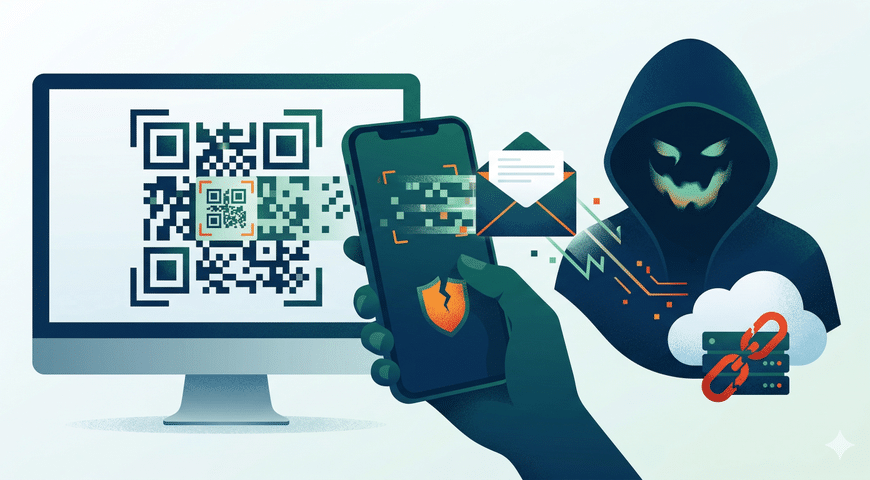
REDMOND, Wash. —A 146 percent increase in QR phishing scams reported by Microsoft has put pressure on companies to reconsider their email security procedures. By integrating Dynamic Threat Agents into its Windows 11 Kernel, Microsoft has taken the initiative to move toward more sophisticated QR Phishing Defense measures that go beyond conventional cloud-based scanning methods. This implies an emerging trend in computer network security where malware detection and prevention are being integrated directly into the system core.
Rising Trends in QR Phishing Scams
As QR codes circumvent most traditional scanning methods and pose difficulties in threat analysis, there is a growing need to incorporate intelligent processes for QR Phishing Triage.
The following are some factors contributing to the emergence of this trend:
- QR codes avoid scanning filters designed for link-based scams.
- Increasing usage in workplace communications
- Complexity in interpreting image-based attacks
- User activity taking place in environments that cannot be guaranteed to be secure
Such factors have led companies to adopt proactive measures against QR Phishing threats.
Incorporating Security into the Kernel
The strategy adopted by Microsoft is called Kernel-Level Security, in which threats are detected as they occur during execution, rather than at their point of entry.
This will allow for:
- Immediate detection of any suspicious behavior
- Analysis of visual and embedded data
- Quick blocking of threats
- Pattern-based adaptive reaction
This strategy aligns with the goals of Zero Trust architectures, in which each action is deemed untrustworthy unless proven otherwise.
Integrating AI to Improve Security
The incorporation of AI Security Copilot in its systems enhances its ability to detect and respond to threats in real time. Alongside Microsoft Defender, this will enable quicker, more precise decisions regarding potential threats.
Advantages of the use of AI include:
- Automatic categorization of phishing attempts
- Smart context-based threat analysis
- Faster response times during Phishing Triage
- Continual improvements based on learned models
QR Threat Management Automation
Another breakthrough is the automation of threat management via QR codes. Automating QR Code Phishing Triage with AI Agents is becoming a critical capability in modern cybersecurity.
- Immediate decoding of the QR code content
- Pre-click behavioral analysis
- Prevention of malicious redirections in real-time
- Constant system updating
Impact on the Industry
Microsoft’s move is likely to impact the entire cybersecurity landscape. The competition as well as other enterprises will have to make necessary adjustments to this advanced protection level.
Ripple effects from Microsoft’s innovation will likely be:
- Wider adoption of Kernel-Level Security frameworks
- Increased adoption of artificial intelligence solutions
- Reduced reliance on signature-based detection approaches
- More frequent use of Zero Trust architecture
Shifts in Security Budgets
The financial impact is huge. Companies have begun shifting their approach from standalone tools to integrated security systems that leverage Dynamic Threat Agents.
New budgeting tendencies include:
- Merging several security solutions into one
- Increased use of AI-based solutions
- Rise of the Microsoft Defender security systems
- Decreasing costs related to manual activities
All these changes show a movement towards systems-based security from solutions-based security.
Evolution Beyond Classic Antivirus
Static, classic AV systems can no longer be effective against threats such as QR phishing. Intelligent and adaptive systems are preferred today.
Advanced methods of providing corporate security include:
- Behavior-based detection
- Monitoring systems
- AI-assisted threat intelligence
- Secure Zero Trust architecture
Conclusion
The development of Microsoft’s new feature, i.e., kernel-integrated Dynamic Threat Agents, marks a significant milestone in cybersecurity. The introduction of such a solution implies an innovative approach to identifying and resolving the problems. QR Phishing Defense is another clear proof of the growing demand for proactive, artificial intelligence solutions that operate in real time. In light of the mentioned tendencies, organizations should consider implementing the indicated approaches. These frameworks will allow enterprises to manage the upcoming threats effectively.
Source Microsoft Security Blog