





The best headphones not only sound great but also do everything else you need, whether that means fitting in your pocket, blocking out noise on your subway commute, or remaining secure in your ears during workouts.
This article provides some shopping guidance, as well as an overview of top headphones.
Earbuds or Headphones?
It’s vital to choose a pair that you can wear comfortably. Aspects to keep in mind: your hairstyle, earrings/piercings, whether you’ll be performing high-impact movements, and the climate in which you’ll be wearing the headphones. Though earbuds are lighter and more portable, they often have a shorter battery life and sound less immersive than similarly priced over-ear designs.
It can also be trickier to find the perfect fit. Over-ear headphones fit more ear shapes easily, but some people may feel hot with their ears always covered, and many headbands aren’t compatible with fluffy hair. If you don’t like the feeling of something over or in your ears, bone-conduction and other open-ear headphones might be a better choice.
How Will You Use Your Headphones?
Are you looking for an all-purpose pair that you can take everywhere? Or do you have a specific use in mind, such as travel, workouts, TV watching, office use, or gaming? Some headphones do nearly everything well, while others excel at a certain task. Are you mostly listening to music, or do you need good microphone quality for phone calls and video chats?
For office use and gaming, a headset with a boom mic or background-noise reduction might be the way to go. Do you need your earbuds to be waterproof or sweatproof for workouts? By narrowing down and prioritizing specific features, you can focus on spending your money where it counts and skip the unnecessary extras.
What Devices Will You Be Connecting To?
Depending on what devices you use every day, you may want to choose a pair that works well with any operating system or one that is specifically designed to unlock specialized features on your phone or tablet. How important is voice control, and are you tied to a certain platform, such as Alexa, Siri, or Google Assistant? If you want to connect to a tower PC that has no wireless connectivity, you may want a pair that connects with a wire or USB, depending on what type of outputs your computer has.
Do You Need Active Noise Cancellation (ANC)?
Active noise cancellation is great for reducing lower-frequency sounds like the hum of an airplane engine or an HVAC system, but it isn’t as effective with higher-frequency sounds like voices. How effective and adjustable do you need the ANC to be? Some headphones simply offer on/off, whereas others offer adjustable ANC, which makes it easier for you to find a performance and comfort level that works. If you don’t like how ANC affects your ears, or you’re a musician using your headphones for recording, an over-ear pair with excellent passive noise isolation may be a better choice.
Wired or Wireless?
Generally, wired headphones have better audio performance for less money, since the cost goes mainly into tuning, drivers, and design, instead of features like Bluetooth. And with wired headphones, you don’t have to worry about charging a battery. Still, many people love the freedom and convenience that wireless headphones bring, especially now that headphone jacks have disappeared from smartphones.
If both connection methods sound appealing, consider a pair that can work both wired and wirelessly, but be sure to check whether some features are disabled in wired mode. If you choose wireless, notice the battery life. How long do you plan on listening each day? Are you good about keeping your wireless devices charged, or do you need wireless headphones that can go for long stretches of time without being plugged in? Be honest with yourself on this one, or you’ll just be frustrated later.
What (and How Intuitive) Are The Control Options?
When it comes to controlling power, volume, track skip, and the like, do you prefer physical buttons or touch-sensitive pads? We recommend that you try both kinds of controls before you buy, if possible. If dexterity concerns are a factor for you, consider over-ear designs, which often have larger surface areas for the controls compared with true wireless earbuds.
Examples of Best Wireless Headphones
Sony WH-1000XM6
The Sony WH-1000XM6 headphones are the brand’s latest flagship over-ears and they improve on previous versions in every way – especially when it comes to sound and ANC. Which is why, despite the fact they do have a premium price tag, they’re our top wireless headphones recommendation for most people.
The noise cancellation is now so effective here that it finally beats Bose. That’s largely thanks to Sony’s new QN3 chip and a total of 12 microphones, which work together to silence everything from engine hum to office chatter – even in noisy environments like trains and buses.
Touch controls are smooth and responsive, and there’s no shortage of smart features. The Sony Headphones Connect app remains one of the best around, with EQ controls, spatial sound, and LDAC support for high-res audio. Battery life is a solid 30 hours, which isn’t the best in this guide, but impressive given the power behind the ANC.
Best Budget Wireless Headphones
1More Sonoflow Pro HQ51
The 1More SonoFlow Pro HQ51 headphones are a rare find. They’re a pair of budget-friendly cans that don’t ask you to make major sacrifices. They may not reach the dizzying heights of premium audio or build quality that you’ll get from more expensive rivals, but they still manage to tick almost every box – and that’s exactly why they’re our top pick for anyone after affordable headphones that really deliver.
Best Premium Wireless Headphones
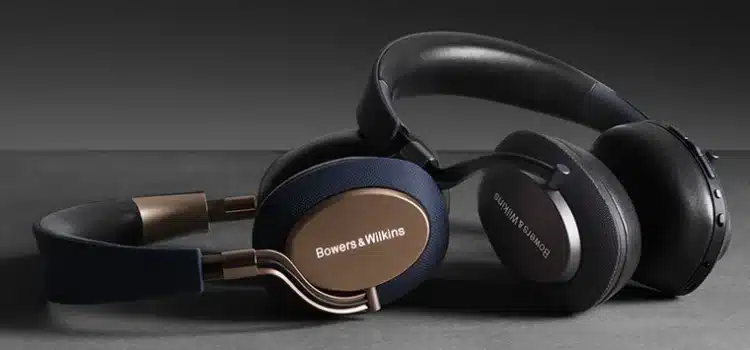
Bowers & Wilkins PX8 S2
The Bowers & Wilkins Px8 S2 are a seriously refined pair of over-ears and if top-tier sound is your number one priority, they’re some of the finest wireless headphones you can buy. As you’d expect from B&W, they aren’t cheap but they definitely have the performance, build and overall specs to absolutely justify their price tag and earn them a spot in this guide as our best premium pick.
Features-wise, these headphones are stacked. You get Bluetooth 5.3 with aptX Lossless and aptX Adaptive, plus a USB-C input that handles 24-bit/96kHz audio for wired listening. The ANC system uses eight mics and works very well. Granted it’s not as accomplished as the noise-nixing performance of Bose or even Sony now, but most people will find it’s more than effective enough for everyday listening.
Best Wireless Headphones for Battery Life
Cambridge Audio P100
The Cambridge Audio Melomania P100 headphones received a rare 5 out of 5 rating in our review, wowing in almost every way – and they’re particularly easy to recommend if battery life mixed with audio prowess are your top priorities.
Design-wise, there’s nothing to shout about here, but the fit is comfortable, and that’s what matters. The earpads are detachable and made from memory foam and vegan leather. The same vegan leather is found on the outside, and then there’s a padded headband. There are also physical buttons here, which we know some love and some hate. The benefits of this style are that they’re very straightforward to use, and you don’t have to worry about too much sensitivity.
Best Mid-priced Wireless Headphones
Sennheiser Accentum Plus
The Sennheiser Accentum Plus headphones are a step up from the original Accentum model, adding welcome features such as touch controls, aptX Adaptive support and a protective carry case – all without pushing the price into premium territory. They might not turn heads with flashy design, but they deliver a well-rounded, comfortable experience with some serious stamina.
Battery life is solid here, with up to 50 hours on a single charge and a fast-charge feature that gives you five hours of playback from just 10 minutes plugged in. The Smart Control app is also one of the best we’ve seen, giving you access to a five-band EQ, adaptive noise-cancellation tweaks (including wind noise reduction), custom sound zones and more.
Best Wireless Headphones for Active Noise Cancellation (ANC)
Bose QuietComfort Ultra Headphones (2nd Gen)
The Bose QuietComfort Ultra Headphones (2nd Gen) are our top recommendation if noise-cancelling power is your priority. The Sony XM6s at the top of our list do rival them in terms of noise-nixing performance now, but if you love Bose (we get it), then the latest QC Ultras are your best choice. They’re an upgrade on the original QuietComfort Ultra Headphones but they pack in several new features that make them an even better buy.
Although they’re high-performing all-rounders, it’s the ANC that’s the star of the show. In our review, we said that the noise-cancelling performance here is “absolutely superb” and it’s the best you’re going to get unless you’re willing to pay an eye-watering premium. Although this kind of eerily silent ANC does still come at a high price, but we’d always expect that from Bose.
Final Thoughts
Headphones have become an essential part of our daily lives, offering a personal audio experience that can transform how we work, play, and relax. The headphone market is more diverse than ever, with options ranging from cutting-edge wireless models to audiophile-grade wired designs. Whether you’re seeking immersive noise cancellation for travel, studio-quality sound for music production, or comfortable all-day wear for work, there’s a perfect pair of headphones out there for you.
With so many headphones options, the process of buying a pair can feel overwhelming. Now, you can compare your needs to the specifications of the headphones and decide how best to spend your money.
FAQs
1. What is the main difference between earbuds and over ear headphones?
Earbuds are compact and portable, while over ear headphones usually offer better sound immersion, comfort, and noise isolation.
2. How do I know which headphones are most comfortable for me?
Comfort depends on ear shape, head size, hairstyle, and how long you wear them. Trying different designs helps identify the best fit.
3. When should I choose headphones with active noise cancellation?
Noise cancellation is ideal for travel, commuting, and noisy environments where you want to reduce constant background sounds.
4. What features matter most for workout headphones?
Sweat resistance, secure fit, lightweight design, and stable wireless connection are most important for workouts.
5. Do headphones work differently with phones, laptops, and gaming systems?
Some headphones offer extra features when paired with specific devices or operating systems, so compatibility is important.