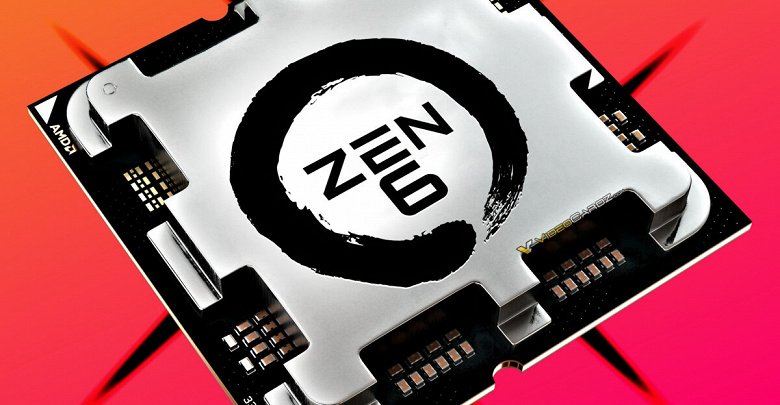




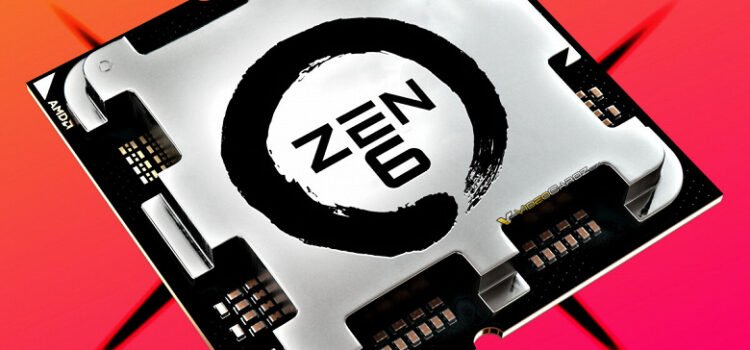
As the semiconductor industry moves from general-purpose computing toward specialized AI acceleration, AMD’s upcoming Gen 6 architecture, known as Morpheus, will introduce a major change: Coron, native support for IMT (for Bit integer) instructions.
This shift toward INT4 is a significant evolution from previous architectures that emphasized FP16 and INT8 for machine learning. The transition reflects not only technological advancement but also aligns with industry trends for efficient edge inference.
The Move to 4-bit Precision
The main challenge for local AI, whether on a desktop PC or a workstation, is memory bandwidth and cache pressure. Large language models (LLMs) and diffusion models consume significant memory. With INT4 quantization, it can compress models much more than the current int8 standard.
Instructions let the processor fit more data into the same amount of memory cache. For example, a model that once needed 16 GB of VRAM or system memory can now be compressed to 4-6 GB using 4-bit weights, with little loss in accuracy. For most consumer tasks with native hardware support, these operations avoid the usual quantization tax, which is the extra software work needed to convert 4-bit data back to 3 higher precision for calculations.
Architectural Synergy: AVX 512 and the AI Engine
NT4 support in Zen 6 is not simply an add-on; it is built into the updated AVX-512 execution units. By expanding the vector map to support 4-bit-packed integers, AMD delivers a significant boost in Token-Per-Second performance for running Local LLMs.
Zen6 will also have closer integration between its x86 cores and the XDNA3 Neural Processing Units (NPU). The NPU manages ongoing background AI tasks, while the Zen6 cores use INT4 instructions for large on-demand tasks, such as real-time code completion or live translation. This hybrid setup keeps the CPU as a key part of the AI processing pipeline.
Impact On Local AI Development
For US developers using frameworks like PyTorch and TensorFlow, native int8 support makes it easier to run small language models (SLMs) like Llama3 or PHI3. In the past, running these models locally needed a high-end GPU. With Zen6, the CPU can handle adversarial inference on its own, reducing the need for cloud APIs and improving data privacy for businesses.
Key Benefits of Gen 6 INT4 Support Include:
- Reduced memory bottlenecks: lower-precision data moves faster through the Infinity Fabric and memory controllers.
- Improved power efficiency: fewer bits per operation translates directly to lower joules per inference.
- Enhanced cache locality: more parameters fit in L2 and L3 caches, reducing the need to fetch data from slower system RAM.
Conclusion: The Future of the AI PC
By building iMT4 support into Zen6, AMD demonstrates that the AI PC is no longer just an idea it’s an imminent, practical reality. As late 2026 nears, Zen6 is poised to reshape the expectations for performance and autonomy in local AI. For developers and businesses, the barriers to running advanced AI locally are on the verge of vanishing.