






Apple is exploring technology that would enable future iPads to interconnect multiple silicon chips, significantly enhancing computational throughput, according to recent patents.
Key Findings from Apple’s Patent Activity:
- First, a patent for an optical communication bar reveals a modular photonic interconnect system. Here, data travels between chips or electronic assemblies via light rather than electrical wiring, enabling high bandwidth and low latency.
- Another related innovation is the patent for modular multiple-display electronic devices. This concept allows two iPads or other mobile devices to connect via an accessory, functioning as a single, more powerful computer in which one device serves as a display while the other serves as a digital keyboard or mouse, sharing computing resources.
- Looking further ahead, analysts indicate that Apple plans to work with Intel on future M-series chip production. Starting around 2027, the collaboration would use Intel’s Foveros (Direct 3D) stacking method to vertically bond chip components, aiming to boost performance and power efficiency.
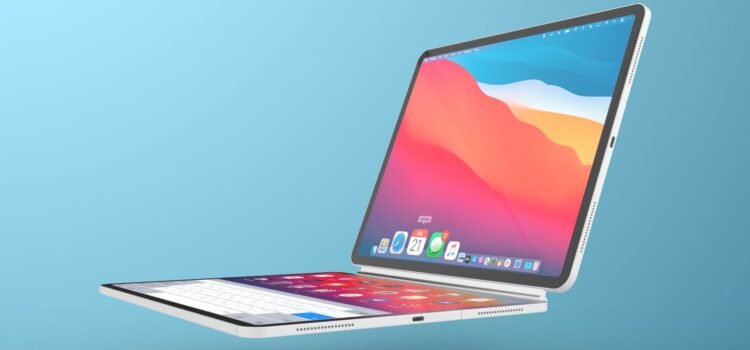
- In addition, a separate patent envisions joining two iPads with a hinge to form a notebook-style device, allowing both iPads to function together and greatly enhancing the platform’s Pro features.
These patent activities collectively highlight Apple’s clear focus on modular silicon approaches to realize more powerful, interconnected mobile devices.
Apple is looking at an accessory that could let two iPads connect and work together like a notebook computer, according to a new patent filing reported by AppleInsider.
Apple filed a patent application titled “Modular Multiple Display Electronic Devices.” Today, with the US Patent and Trademark Office, the filing describes how two iPads or phones could connect with an accessory. In this setup, one device could serve as a display while the other acts as a dynamic keyboard.
The patent describes an accessory that uses two small connectors and a hinge, letting mobile devices attach on either side. This connector allows the devices to transfer data and work together as a single system.
Patent images show that the accessory can create a notebook-style setup. One device lies flat on a surface while the hinged connector at the back props up a second device. Users can set up the devices in both portrait and landscape positions.
Using a second display as a keyboard: a dynamic keyboard would allow the device to serve as both an input surface and a customizable interface, adapting its functions to what the user is doing much like the MacBook Pro Touch Bar. However, compared to a traditional keyboard, this display would likely lack the depth and tactile feedback that a dedicated physical keyboard provides.
The patent also suggests that attaching two devices along their longest edges can create a book-style arrangement similar to the Microsoft Surface Duo’s design.
Apple has filed many patents for second-screen devices, including one called “System with Multiple Electronic Devices.” This patent describes how two or more devices can act as a single device when they are close together, using proximity sensors. While many Apple patents never become products, they often reveal what the company is working on.
Source: Apple Patent Suggests Two iPads Could Be Connected Together for Notebook-Style Computing



