






Apple is moving quickly into the smart home market, and Bloomberg’s Mark Gurman says the company has big plans that go well beyond smart speakers. In a new report, Gurman outlines Apple’s goals for AI-powered robots, advanced security systems, and home companions with personality that might change how we use technology at home.
The Star of the Show: Apple’s 2027 Tabletop Robot
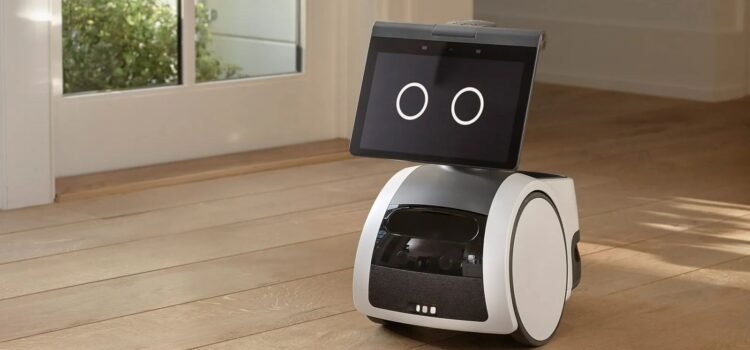
Apple’s main smart home project is a tabletop robot planned for release in 2027. Jennifer Pattison Tuohy from The Verge explained on Tech News Weekly that this device goes beyond typical smart displays. She described it as resembling an iPad mounted on a movable arm that can swivel and reposition itself, allowing it to track and follow users’ movements in a room, much like a human head.
This device functions as more than just a screen. The Bloomberg report notes it can turn to face whoever is speaking and is designed to make eye contact with people who are not looking at it, enhancing user engagement. It acts as a virtual companion, managing FaceTime calls and video chats, with the display automatically tracking users as they move around the room.
One of the most interesting features is that the device will have its own personality. German reports say it could interrupt conversations between friends about dinner plans and suggest nearby restaurants or relevant recipes. This active step differs from the typical command-and-response style of today’s voice assistants.
When Personality Blends Practicability
The idea of a device with real personality led to a lively discussion on Tech News Weekly. Mikah Sargent pointed out a situation many people might experience: “When I walk up to this thing, it’s, you know, moving its head back and forth. And then if you were to walk into a room, the thing would just go into this mode of only doing what it’s told to do.”
Personalization might be the key to getting people to use these devices. As Patterson said, there’s a fine line between an endearing personality and annoyance. The fine line is really determined by functionality. The main question is whether users will find the interruptions helpful or annoying. Some people might like getting restaurant suggestions while planning dinner, but others would see it as too much.
A Complete Smart Home Ecosystem
Apple’s plans go beyond the tabletop robot. The Bloomberg report describes a smart home security system with battery-powered cameras. These could last several months to a year on a single charge. Patterson to Hoyt was skeptical, saying there are no battery-powered cameras that can currently do that. The cameras would reportedly feature facial recognition to distinguish between household members and potential intruders. The system could also automate password functions, using cameras and infrared sensors to detect occupancy and activity in the home.
A new smart display is also expected next spring, using what Apple calls its LLM series. This signals a major shift in how Apple handles voice assistants. As Patterson Tuohy explained, Apple, like Amazon, had to do something short of stripping away the old Siri and building a whole new Siri.
The Multi-User Challenge
A major technical advance mentioned in the report is real multi-user support. The new operating system, reportedly called Charismatic, would change depending on who was looking at the device. This could make Apple’s smart home products some of the first to truly support multiple users, solving a problem many smart home devices have had for years.
Market Implications And User Adoption
The success of Apple’s smart home will likely depend on finding the right balance between usefulness and temperament. As Pattison Tuohy said, I think there isn’t the demand for it yet for AI companions. But she also noted that loneliness is real and that some people already use voice assistants for company. The robot suggests Apple is taking a measured approach, likely ensuring the technology and user experience meet its standards before launch. This extended development timeline also accounts for competitive response and market education.
Apple seems to be focusing on personality and a smooth, intuitive design to stand out, rather than just competing on features or price. It’s still unclear whether people will like devices that interrupt conversations, but Apple’s history suggests it often spotlights user needs before the market does.
The Bloomberg report suggests a time when Apple devices do more than just respond to commands. They take an active role in daily life at home. Whether people find this useful or inclusive can shape the future of smart home design for everyone.



