




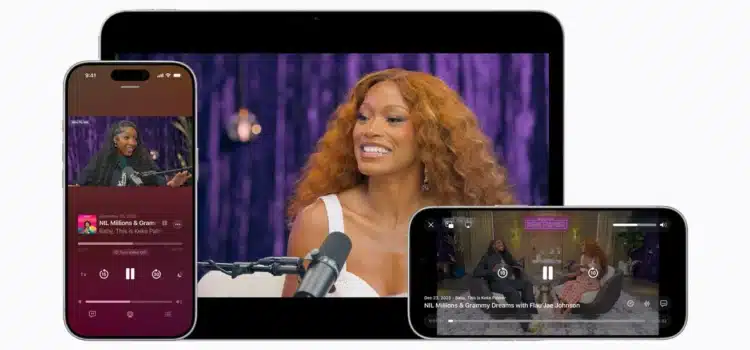
Apple Podcasts is expanding beyond audio with native adaptive video and dynamic video ads coming soon. These updates will let creators showcase their work in new ways.
Apple Podcasts already supports some video, but Apple is now adding native video playback, including HTTP Live Streaming (HLS). This update offers adaptive streaming and lets creators insert dynamic video ads directly in the app.
You can now watch video episodes in Apple Podcasts and easily switch between listening and watching. The app offers a full-screen horizontal view, and you can also download episodes to watch offline.
With Apple’s HLS technology, video quality adapts automatically to your network. HLS video is available in beta versions in iOS 26.4, iPadOS 26.4, and Vision OS 26.4.
Apple will launch this feature for iPhone, iPad, Apple Vision OS, and the web in spring 2026.
Video Is Now The Main Format In Apple Podcasts
Many video podcasts are shared on sites like YouTube, which focus on video discovery and monetization. Apple’s approach keeps video podcasts within its ecosystem rather than moving creators to other feeds.
Video episodes work with Apple Podcasts’ recommendation system and editorial picks. They show up next to audio shows, not in a separate section.
With HLS, Apple can manage playback quality on its devices. Adaptive streaming lets the app change resolution in real time, helping reduce buffering and keeping playback smooth on both Wi-Fi and cellular networks.
Dynamic Video Ads Add a New Way to Earn Revenue
Creators can now share HLS videos through hosting providers and ad networks such as ACAST, ART19, Triton’s Omni Studio, and Sirius XM. The main change is how creators can make money.
For the first time, creators can add video ads into podcast episodes, including ads read by the host. Video ads often pay more than audio-only ads, so that creators can earn more right away.
Apple will not change creators or hosting providers to share shows through RSS, MP3, or HLS video. Instead, Apple will charge ad networks a fee per impression for delivering dynamic ads in HLS video streams on Apple Podcasts.
Apple is not becoming a hosting provider. Instead, it is focusing on being the distribution and ad delivery platform for video, and within its podcast ecosystem.
Why is this change important?
Podcasting began with audio, but video now plays a big role in how shows reach audiences. Many top video podcasts use YouTube to discover and make money.
Apple’s update does not replace the YouTube model, but it gives creators a built-in option within Apple’s ecosystem. Apple keeps its hardware, software, and services closely connected while still supporting the open RSS structure that podcasting started with.
Video lets listeners do more in the app and gives creators a chance to earn more from ads.
Apple is expanding its services but still keeps the open framework that has always defined podcasting.
Source: Video won’t kill the Apple Podcasts star, but will make them more engaging



