



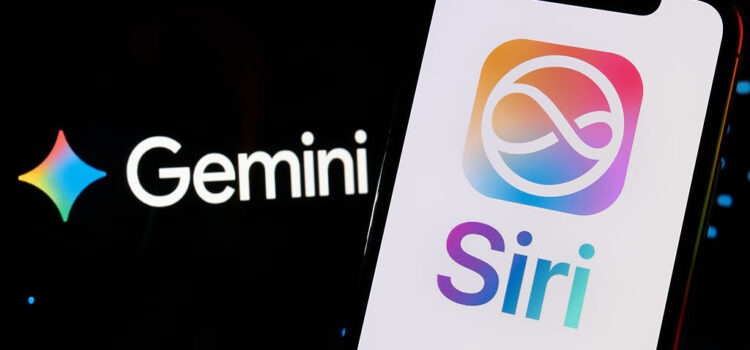
Apple’s decision to partner with Google’s Gemini as the core AI for Siri and Apple Intelligence will significantly change how iPhone and Mac users interact with AI. On MacBreak Weekly, the hosts discussed Apple’s reasoning, the impact on device privacy, and the wider implications of the Siri AI upgrade for major technology companies.
Next, let’s explore why Apple decided to choose Google Gemini for the Siri AI update.
Apple spent years developing its own AI models for Siri and Apple Intelligence but ultimately chose Google Gemini after considering leading options such as Anthropic’s Cloud and OpenAI. According to MacBreak Weekly, Apple made its decision after evaluating each provider’s ability to meet its requirements.
The decision was not exclusively based on selecting the most advanced artificial intelligence for the Apple-Google AI deal. As Jason Snell and other hosts noted, Apple had specific requirements:
- Solution needed to operate both on devices, including iPhones, iPads, Macs, and within Apple’s secure private cloud, while upholding the company’s privacy standards.
- Apple shot for a flexible, mature AI engine that could be customized to its specifications and evolve rather than licensing a generic chatbot.
Google’s AI investments and willingness to adapt Gemini to Apple’s needs secured the deal, while Anthropic and OpenAI were less able or less interested in meeting Apple’s secure, private-cloud, and on-device requirements.
Will Your Data Remain Private With Google Gemini In Siri
Privacy remains a primary concern for Apple users. The panel emphasized that Apple’s approach remains unchanged, even with Google’s Gemini AI-powered features. User data will not be shared with Google for advertising or AI training.
Apple operates Gemini within its own data centers, using private cloud infrastructure. Gemini’s models are designed to meet Apple’s requirements and do not send your requests or content to Google. This separation makes certain that voice commands, images, and requests remain outside Google’s data systems.
Now, let’s Examine What This Partnership Means For The Broader AI market.
Apple’s adoption of Gemini AI marks a significant shift in the AI industry, as both iOS and Android will now rely on the same core AI technology.
According to Leo LaPorte, this is the first time Gemini, a large language model (LLM) or advanced text-based AI, will be the default system on nearly every phone in the world. This development prompts questions about competition, future innovation, and how other providers will respond.
The hosts noted that Apple’s approach grants flexibility if another provider surpasses Gemini. Apple can adopt a different AI model as needed.
How Siri Will Change Immediately
The early rollout signals of the Apple-Google partnership have been unfolding over several years, with initial features expected as early as late 2026, possibly debuting at WWDC. Users will not see Gemini branding: Siri will keep its name. But AI-powered features like image generation, summaries, and writing assistance will improve through Google’s technology.
Apple is expected to launch new Apple Intelligence features powered by Gemini, available both on-device and via private cloud. Enhancements will focus on language processing and generative AI. Key integrations include improved Siri conversations and deeper ecosystem connections that will be introduced gradually through system updates.
To summarize the main points of this development:
Apple selected Google Gemini as the base AI model for Siri and Apple Intelligence after extensive evaluation of alternatives.
Apple maintains user privacy by controlling its cloud infrastructure and keeping user data out of Google’s hands. Gemini was chosen for its ability to meet Apple’s secure on-device and cloud AI requirements.
This series’ branding will remain unchanged, but its answers and generative AI features will be powered by Google Gemini.
The move puts Gemini at the heart of both iOS and Android, consolidating core AI experiences for most smartphones. Apple remains open to switching models in the future if a better AI option becomes available. Improvements to Siri writing tools, image generation, and summary features are expected to begin rolling out gradually from mid-2026.
The Bottom Line
Apple’s partnership with Google emphasizes the pace and stakes of AI innovation. By joining forces, users gain a more powerful Siri and smarter Apple Intelligence while privacy and seamless integration are maintained. Expect rapid progress in mobile AI as Apple and Google help shape the next era of intelligent devices.



