




The Apple Vision Pro (M5) builds on the M2 model by boosting processing power, raising the refresh rate to 120 Hz, and improving efficiency. Instead of a new design, the M5 focuses on performance, offering up to 36% faster CPU and GPU speeds and better AI features. This leads to better visuals and a battery that lasts a bit longer.
Hardware and Processing Changes: M5 vs M2
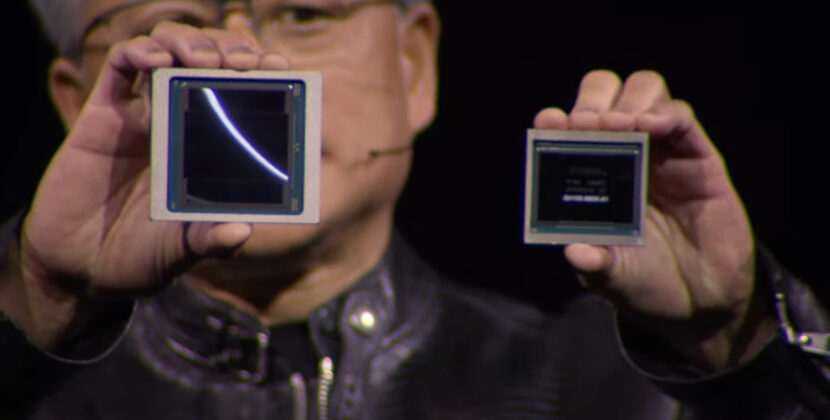
- Chipset & Performance: The M5 chip has an 8-core CPU, while the M2 has 8 cores. This means the M5 is about 35% faster for single-core tasks and 36% faster for multi-core tasks in Geekbench 6 text tests. It also has more memory bandwidth (153 GB vs 100 GB) and a faster neural engine, which helps with AI tasks like quicker persona generation.
- Visuals & Display: The OLED panels are unchanged, but the M5 now supports a 120 Hz refresh rate instead of 100 Hz. It can also show 10 more pixels in the center of your view, making visuals sharper. The M5 adds hardware-accelerated ray tracing and mesh shading, which improve graphics in games.
- Battery & Power: The M5 comes with a 40W battery adapter, up from 30W on the M2. It also offers a bit more battery life, up to 3 hours of video playback, compared to 2.5 hours on the M2.
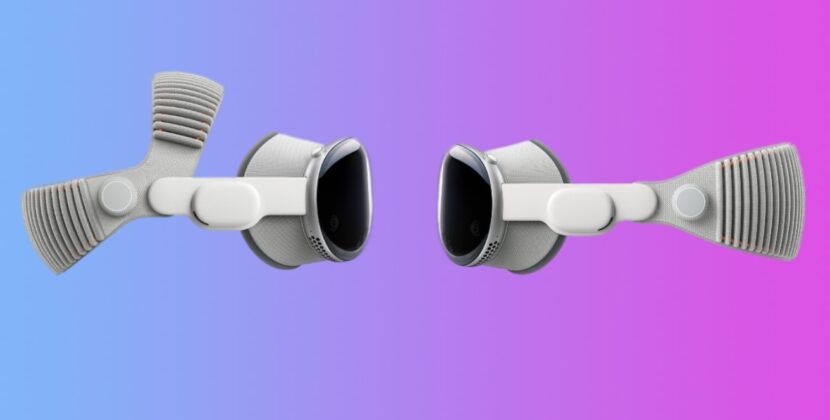
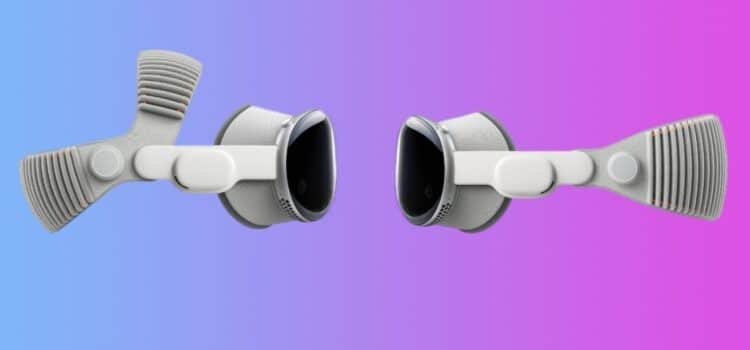
- Design & Comfort, Cologne: Both headsets look the same, but the M5 usually includes a new, more comfortable dual neck band that helps spread the weight more evenly.
- Software & ecosystem: Both devices use the same Vision OS, so the main user interface and app library are the same.
Summary Table
| Feature | Vision Pro M2 | Vision Pro M5 |
| Processor | M2 (8-core CPU) | M5 (10-core CPU) |
| Refresh rate | Up to 100 Hz. | Up to 120 Hz. |
| Memory Bandwidth | 100 GBs | 153 GBs |
| Battery Life | ~2.5 hours | ~ 3 hours. |
| Power Adapter | 30 W | 40 W |
Conclusion
The M5 is focused on better performance and is a good choice for power users or developers; however, the M2 is still a solid option for most people. Some users say that changes like clearer text and faster app loading are noticeable but not dramatic.
Apple is fully embracing its new M5 chip, adding it to all its main products, as well as updated MacBooks and iPads. Apple also revealed a new version of the Vision Pro. This is the first update to the Apple Mixed Reality Headset, which it calls a Spatial Computer.
Since the first M2-powered Vision Pro launched last year, the main change has been the switch from the M2 chip to the more powerful M5. The headset’s design and features are mostly the same; however, Apple has made a few other improvements, so we will break down what has changed and what hasn’t.
Processor: A Faster Chip
This is the most significant upgrade. The new Vision Pro moves from the first M2 chip (found in the 2022 MacBook Air and iPad Pro) to the M5 chip (now in the latest MacBook Pro and iPad Pro). We haven’t tested the M5 yet, but we can now look at how performance improved between the M2 and M4 chips in the 2024 iPad Pro and 2025 MacBook Air.
On Geekbench 6, the iPad Pro with the M2 chip scores 2,545 for single-core and 9,505 for multi-core. The M4 iPad Pro scored 3,679 for single-core and 14,647 for multi-core. That’s a big jump, and the M5 should be even faster. Of course, mixed reality headsets work differently than tablets and laptops, so it’s hard to know exactly how much faster the new Vision Pro will be. Still, the rawpower should be a noticeable upgrade.
Both the M2 and M5 are paired with Apple’s R1 chip for spatial processing, so the actual motion-tracking and environment-scanning functions will likely remain unchanged. Individual apps should benefit from the faster CPU, and this may offer a better experience when using multiple steps, multiple apps simultaneously (especially those that primarily use 2D windows rather than spatial computing). For reference, Apple says third-party apps will run twice as fast on the new Vision Pro compared to the original model.
Both headsets appear to be physically identical, at least in terms of the main hardware. They have smooth aluminum bodies and curved glass fronts, similar to those of the Apple Watch. Vision Pro came with a dual-loop band that supports the device across the top and back of the head, using narrow, stiff straps. A solo-knit band features a nice-of-healing wider fabric strap that runs only along the back of the head. Neither is ideal, and both make the headset feel very front-heavy. The dual-knit band is the best of both worlds, potentially better distributing the headset’s load and resolving one of the Vision Pro’s biggest design complaints.
Display: A Faster Refresh Rate
Won’t get a sharper or more colorful display on the new Vision Pro, as it uses the same 23 million-pixel 92% DCI-P3 macro OLED display as the original. You might move more smoothly, though, as Apple says the upgraded headset supports up to 120 Hz, up from the previous version’s 100 Hz. This seems entirely due to the M5’s power, not the display itself. More fluid and consistent movement can reduce the risk of motion sickness, which is beneficial.
Battery: A Half Hour More
The new Vision Pro can last even longer than the original, providing up to 2.5 hours of general use or 3 hours of video playback. It’s still not great, but that’s a good 30 minutes more than the first Vision Pro.
What Remains the Same
Both devices run Vision OS 26 and feature the same easy-to-use eye and hand-tracking controls. They offer the most advanced mixed reality interface so far. Storage choices are still 256 GB, 512 GB, or 1 TB. Each version comes with 18 GB RAM. It comes with 4x F/2.0 stereophonic 3D main cameras, 6 world-facing tracking cameras, and 4 eye-tracking cameras. Connectivity hasn’t changed either, with Wi-Fi 6 and Bluetooth 5.2. The price is still a steep US$3,499.
I haven’t tried the new Vision Pro yet, but if you already own one, the upgrade will not be worth spending another $3,500 just a year after buying the first. Still, Vision Pro is the top mixed reality headset right now, and the 2025 model’s better chip is a nice improvement. I am excited to test it soon, so check back for my full review and clear buying advice.
Source: Apple M5 Vision Pro vs. M2 Vision Pro: Same Vision, More Power



