






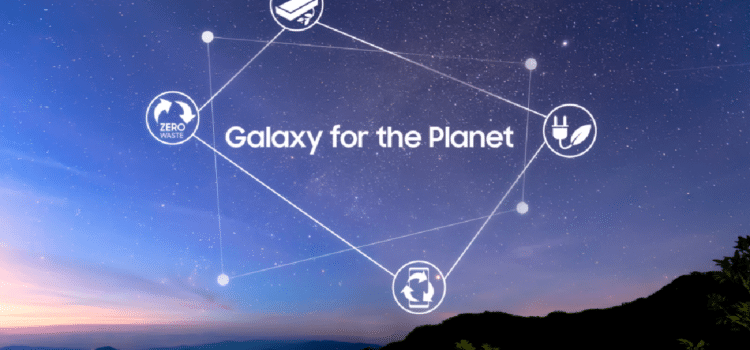
To meet its 2025 eco-friendly objectives, Samsung is expanding Galaxy for the Planet to cover a wider range of environmental issues, including water and biodiversity.
Samsung Electronics announced progress on its Galaxy for the Planet sustainability commitments and shared new ecological targets for 2030. Since launching the program in 2021, Samsung has met all four of its Go 2025 goals, which focused on lowering environmental impact in product design, manufacturing, and operations
Galaxy for the Planet is Samsung’s sustainability platform for its mobile experience business, guiding its long-term approach toward environmental responsibility. Since it began, the initiative has made steady progress in several areas, adapting as technology and materials improve.
The progress we have made through Galaxy For The Planet reflects years of consistent effort across our teams and partners. Said TM Roh, CEO, President, and Head of the Device eXperience Dx Division at Samsung Electronics: “Sustainability is central to how we operate and innovate. It informs how we design products, manage resources, and create value beyond our devices as we work toward our 2030 goals. We are expanding our commitments beyond products and operations to add wider environmental impact as we work toward our 2030 goals.”
Progress on Galaxy for the Planet
Samsung has achieved all four of its 2025 eco-friendly goals for the Galaxy for the Planet initiative, which was designed to reduce the environmental impact of the company’s mobile products and operations.
A main focus has been on increasing the use of recycled and responsibly sourced materials in Galaxy products. Samsung now uses 10 types of recycled materials across both exterior and interior parts, supported by current research, testing, and verification.
Samsung has improved circularity by using innovative materials. The company uses recycled plastics from unwanted fishing nets. It continues to develop closed-loop systems, such as its circular battery supply chain, which covers and reuses materials from old Galaxy device batteries.
Samsung also eliminated single-use plastics from its mobile packaging, transitioning to paper-based and recycled alternatives. At the same time, ongoing research and development in low-standby technology has reduced standby power consumption in Galaxy mobile phone chargers to near-zero levels, an innovation now applied across multiple charger wattages.
Across manufacturing operations, Samsung has advanced landfill waste reduction by implementing Zero-waste-to-Landfill (ZWDL) methods worldwide. All ten qualifying mobile manufacturing sites have achieved the Platinum Design for ZWDL under the U.S. Solutions Standard, reflecting landfill diversion rates of 100%. Such waste handling procedures are also adapted to regional rules and infrastructure.
These achievements show Samsung’s progress with Galaxy for the Planet and help drive the initiative forward. Now that the first targets have been met on time, Samsung is setting new green targets for 2030.
Deepening Our Commitment To The Environment
In its next phase, Galaxy for the Planet will go beyond product-focused efforts to examine the broader environmental and ecological impacts of Samsung’s global operations.
The new 2030 Goals highlight three main areas:
- Circularity
- Water Stewardship
- Biodiversity
Advancing Circularity
Samsung plans to continue improving circularity in its mobile products by incorporating at least one recycled material into every part of its devices. This shows the company’s devotion to obtaining materials more responsibly and productively across the Galaxy ecosystem
Strengthening Water Stewardship
Samsung is strengthening its water stewardship in its mobile operations, striving to return 110% of the water it uses. The company is also working to achieve the highest level of the Alliance for Water Stewardship (AWS) certification for responsible water management.
Conserving Ecosystems
And so, it knows its operations affect nearby ecosystems. It aims to conserve areas equal to the footprint of its global mobile operations. The goal is to protect and restore natural environments and sustain biodiversity and ecological robustness across its global sites.
As Samsung continues its sustainability efforts, Galaxy for the Planet underscores the company’s belief that caring for the environment is central to its innovation, operations, and long-term value creation. This reinforces Samsung’s devotion to making sustainability a core part of its business.
You can watch a video about the Galaxy for the Planet journey at the link below.
For more information about the Galaxy for the Planet, visit here. Additional details on Samsung’s Sustainability Metrics authentication procedures and progress are available on the Samsung Electronics Sustainability website.
Source: Samsung Expands Its Journey: Galaxy for the Planet With New Goals Through 2030



