



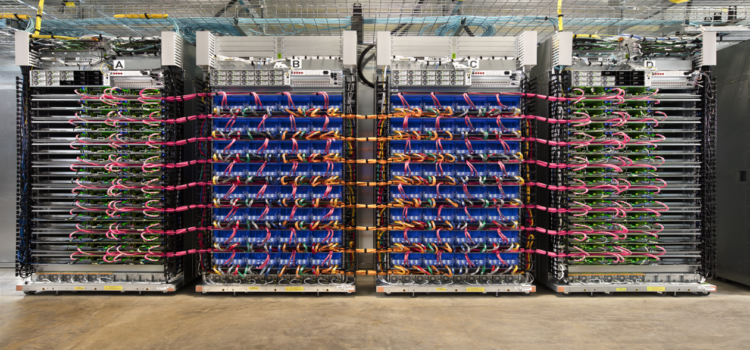
By March 2026, global AI focus has shifted from raw power to localized control. Fast, centralized AI development is giving way to a regulated, fragmented model called Sovereign AI. Google Cloud leads with sixth-generation TPU v6 Pods, enabling new Regional Sovereign AI Hubs across Europe, Asia, and Latin America.
For enterprise architects and government agencies, this change is more than just hardware updates. It means a complete redesign of the AI infrastructure. It combines the high performance of the Trillium architecture with strict national data security needs.
The Architecture: Why TPU v6 (Trillium) is the Sovereign Engine
The TPU v6, referred to internally at Google as Trillium, is their biggest advance in ASIC design to date. While the earlier v5p was built for large-scale LLM training in massive regional pods, the v6 is redesigned to be more efficient at regional hubs and supports multiple organizations with strong data separation.
1. The Systolic Array Expansion
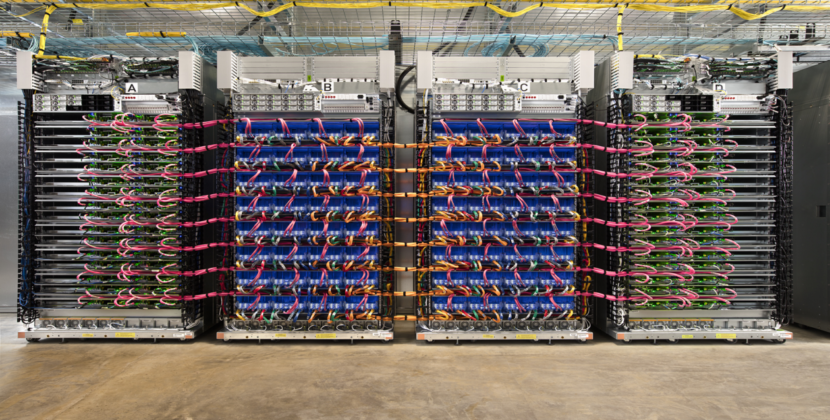
The TPU v6 features a larger design. Google has doubled the Matdoubltiply Unit (MXU) size from 128×128 to 256×256, which means four times as many FLOPs per cycle at the same speed. This lets regional hubs handle large datasets using less space, providing the high-speed “workspace” necessary to run trillion-parameter models locally. The Inter-Chip Interconnect (ICI) has been boosted to 1.2 TBps, enabling a single TPU v6 Pod consisting of 256 interconnected chips to act as a unified, 235-petaflop “supercomputer in a box.”
The Rise of Sovereign AI Hubs
Digital sovereignty means that a nation’s data and AI models must comply with its own laws. They must also be safe from foreign control or outside surveillance. Google’s rollout of TPU v6 Pods in regional hubs, like the new Munich Sovereign Cloud Hub, and soon in Brazil, Sweden, and Saudi Arabia, supports three key areas:
Pillar 1: Data Residency and “Air-Gapped” Operation
For the first time, Google is offering Google Cloud Air-Gapped solutions powered by TPU v6. In these environments, the hardware operates without a physical connection to the public internet or the global Google backbone. This is essential for the defense, intelligence, and national healthcare sectors, which cannot risk metadata leakage to US-based servers.
Pillar 2: Administrative Oversight
Google teams up with local ‘sovereign operators’ like S3NS in France. Workspace by STACKIT in Germany is another partner. These groups grant operational control to local staff with national security clearance. They run the TPU v6 Pods and ensure encryption keys and access records stay within the country.
Pillar 3: Model Autonomy
Regional hubs are designed to host Localized LLMs. Rather than sending data to a global Gemini endpoint, enterprises can fine-tune “Sovereign Gemini” or open models like Gemma 2 directly on local TPU v6 hardware. This ensures that a nation’s AI weights and training data remain a domestic asset.
Performance Metrics: Regional Efficiency
The TPU v6 Pod deployment isn’t just about security. The TPU v6 Pod rollout is not only about security, but also about energy efficiency. Google says the v6 delivers up to 4.7 times the peak compute performance per watt compared to the v5e. Since energy constraints are a major challenge for data centers, this efficiency helps regional hubs operate within the power limits of cities in Europe and Asia.
| Metric | TPU v5p (2024) | TPU v6 Trillium (2026) | Generation Jump |
| Peak BF16 Compute | 459 TFLOPs | 1,200+ TFLOPs | ~2.6x |
| HBM Capacity | 95 GB | 192 GB | 2x |
| ICI Bandwidth | 4,800 Gbps | 1.2 TBps | 2.5x |
| Energy Efficiency | Base | +67% vs v5e | Significant |
In Germany, T-Systems and Google Cloud work together as a model for TPU v6 deployment. They deploy Pods in T-Systems’ Frankfurt facilities. Now, German public agencies can use the Vertex AI stack to modernize tax platforms and national ID systems. They do this without breaking the EU Cloud Sovereignty Framework.
These agencies use the v6 Pod’s built-in Int4/Int8 support to enable real-time agentic workflows. For example, a local workflow can now handle millions of social benefit applications, checking for fraud and compliance within Germany’s legal limits and reducing processing times from weeks to seconds.
Strategic Action Items for IT Leaders
If your organization must comply with residency rules such as GDPR, India’s Digital India mission, or Brazil’s LGPD, the new TPU v6 regional pods will change your technology planning.
- Audit data boundaries. Figure out which workloads need ‘Dedicated’ or ‘Air-Gapped’ infrastructure. TPU v6 works for both, but ‘Air-Gapped’ setups cost more to run.
- Evaluate “Agentic” readiness. Use this week to test Gemini Enterprise features in a regional preview. The v6’s lower latency for “long-context” reasoning makes it ideal for autonomous agents. These agents must operate in complex, localized, regulatory environments.
- Plan for Portability: Ensure your AI models are built using open frameworks like JAX. Plan for Portability: Build your AI models using open-source frameworks such as JAX, PyTorch/XLA, or TensorFlow. This way, you can move your workloads between global and sovereign hubs as rules change.ty was equated with isolation using inferior local tech to stay safe. Google’s TPU v6 deployment proves that a nation can have hyperscale powerwhile maintaining local control. As these Pods continue to roll out through the remainder of 2026, the question is no longer whether you can afford to use AI, but whether you can afford to use AI that isn’t sovereign.
Source: Technology