



Intel Core Ultra Series 3 (Panther Lake) and Qualcomm Snapdragon X2 lead the 2026 AI/PC market, each delivering distinct strengths.
Intel focuses on efficient x86 performance with its 18A processor and a powerful 50+ TOPS NPU. Qualcomm X2 delivers over 80 TOPS and stands out for its excellent battery life. Both use on-package memory to improve AI speed and capability.
Intel Core Ultra Series 3 (Panther Lake)
- Architecture: Built on Intel 18A process technology.
- High performance: includes A50+ TOPS, an NPU built for balanced CPU, GPU, and NPU performance, and strong graphics.
- Advantages: Strong x86 compatibility for professional gaming and creative tasks delivers a 60% boost in CPU performance vs. earlier models.
- Outlook: Intel plans to compete with Apple Silicon and offer an attractive alternative to ARM with up to 27 hours of battery life for media use.
Qualcomm Snapdragon X2 Elite/Plus
- Architecture: 18-core Oryon 3 CPU with LPDDR5X built for high efficiency and always-on AI.
- AI Performance: AT+NPU-TOPS offering more than twice the AI computer vision performance of some Intel competitors (e.g., 4,193 vs 200-2,000 range scores in benchmarks).
- Advantages: The X2 is known for its long battery life, lasting several days, and is made to run local AI smoothly without cloud delays.
- Outlook: The X2 Plus will bring this high efficiency to mainstream laptops in early 2026.
Benchmarking 2026 Landscape
- Qualcomm leads in RAW and PU throughput for AI, offering over 80 TOPS compared to more than 50 TOPS from competitors.
- Panther Lake has made great improvements and may take the lead in gaming performance and heavy computing. Snapdragon X2 stands out because of its efficiency and ability to handle ongoing AI tasks.
- In 2026, Intel’s mature x86 platform with 18A performance will compete with Qualcomm’s efficient ARM-based approach. Both companies plan to offer devices that support Copilot Plus features, as mentioned in this article.
Intel introduced its Core Ultra Series 3 processors at CES 2026, marking the company’s first compute platform built with Intel 18A process technology. This US-made release aims to lead the next phase of AI-powered PCs. The new chips are set to support more than 200 PC designs and, for the first time, are being tested and certified for use in embedded and industrial edge applications, including robotics, smart cities, automation, and healthcare.
Intel announced during the CES media days in Las Vegas. The Consumer Technology Association scheduled these media days for January 4 and 5, but before the main show opened on January 6, CES 2026 runs from January 6 to 9.
Beyond performance, Intel’s main message with Series 3 is strategic. The company wants to show that 18A is now the real product platform, not just a plan. Business World reported in September and October that this shift is about execution, not just marketing, as Intel works to launch a 2nm class node in the US and use it in Panther Lake laptops.
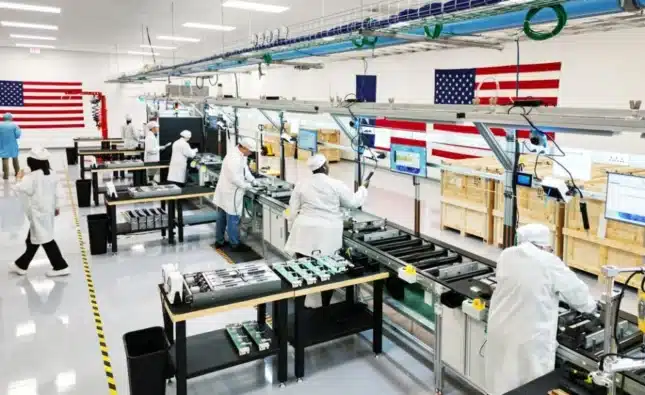
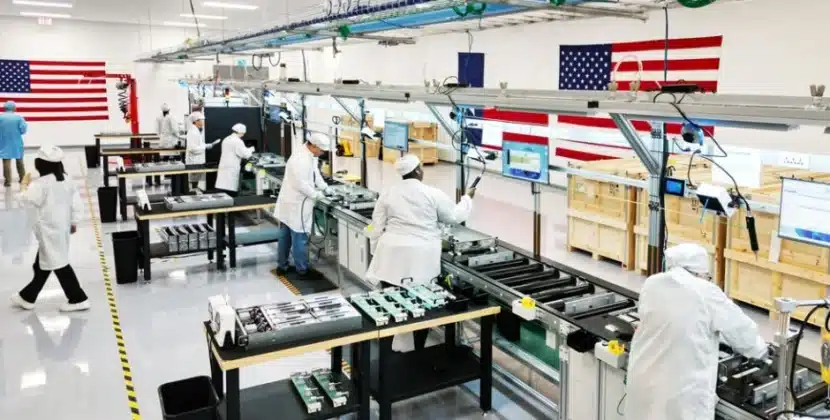
That report focused on Intel’s main site for its 18A rollout, Fab52, at the Ocotillo campus in Chandler, Arizona. According to Business World, Fab52 is the launch pad for Intel 18A, and the story centers on scaling up automation and the practical work of high-volume manufacturing.
Intel’s timeline stays mostly the same as before. High-volume production will start with Panther Lake laptop chips, shipping before the end of 2025, with wider availability planned for January 2026. In total, there will be 200 different notebook models based on Panther Lake.
The ATNA name does not mean the chips are exactly 1.8 nanometers. Instead, it refers to a new Angstrom class generation that allows for better scaling. The two main changes are Intel’s RibbonFET all-around transistor design and PowerVia, a new approach to delivering power from the back of the chip rather than the front. According to Intel, this setup reduces congestion, lowers resistance losses, improves electrical stability, and creates more space for signal wiring. These benefits matter more as AI-focused laptops need to handle more computing power in a limited space.
The timing of Intel’s launch invites direct comparison with TSMC’s N2, a 2nm-class process that many computers plan to use for future PC and mobile chips. TSMC’s N2 is also a global foundry platform designed for AI, mobile, and high-performance computing. The company says it will enter mass production in the second half of 2025, with an improved N2P version coming in 2026.
Intel says its PowerVia back said power design is an early step towards improving chip density and power delivery, aiming for better efficiency and stability in real-world use, not just peak performance.
What makes Intel 18A distinct in plain English?
Intel says the real advantage of 18A isn’t just a single benchmark but how RibbonFET and PowerVia work together. RibbonFET uses gate-all-around transistors for better control, while PowerVia delivers power from the back, reducing IR drop and freeing up space on the front. According to Intel, PowerVia can boost density and cell utilization by up to 10% and improve performance by up to 4% at the same power, while also reducing power delivery issues compared to older front-side designs.
Jim Johnson, Senior Vice President and General Manager of Intel’s Client Computing Group, said, “With Series 3, we are laser-focused on improving power efficiency and adding more CPU performance. A bigger GPU in a class of its own, more AI compute and app capability compatibility you can count on with x86.”
How it stacks up against AMD and Qualcomm at CES
Intel faces strong competition. At CES2026, AMD expanded its Ryzen AI and client line-up, launching new Ryzen AI Max Plus chips aimed at high-end thin laptops and miniature systems. AMD’s published specs show models like the Ryzen AI Max Plus 392 and 388 each rated at 50 nPU TOPS.
At CES, Qualcomm continued to promote Windows on Snapdragon with its new Snapdragon X2 Plus platform. The company presented its ATNA NPU and said that select devices from top manufacturers will be available in the first half of 2026.
The competition is simple: AI Intel is focusing on X86 compatibility and its in-house 18A manufacturing. AMD is presenting its broad Windows support and a range of performance options, with clear PU TOPS numbers for each chip. Qualcomm is emphasizing higher NPU performance and power efficiency as it works to bring Co-Pilot Plus to PCs for more users.
For buyers, the real test will be three things:
- How well each platform performs during real use
- Battery life when running different AI tasks
- How smoothly each one handles the wide range of Windows software
When Intel highlights app compatibility with x86, it’s really sending a competitive message through its products.
Source: Intel Unveils Core Ultra Series 3 On 18A At CES 2026