






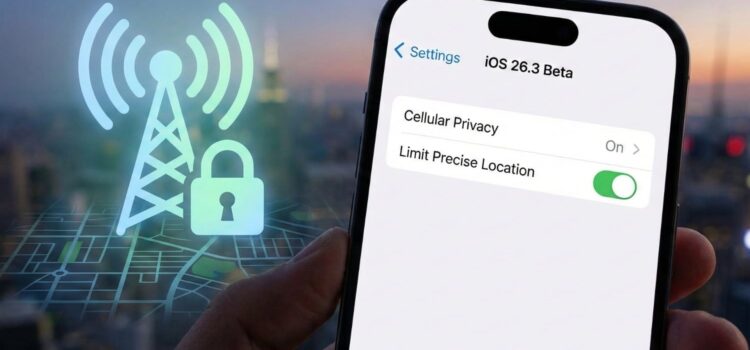
In January 2026, Apple launched a privacy feature in iOS 26.3 called Limit Precise Location (also featured as the Carrier Stealth toggle). This tool stops cellular carriers from tracking the exact location of iPhones. Instead of sharing detailed cell tower data, it only provides a general neighborhood area, making it harder for carriers to sell or share precise movement data with others.
Essential Points About The Feature:
- Purpose: This feature stops mobile network providers from using cell tower data to track your exact location.
- Functionality: When you turn it on, your phone stops sharing detailed location data with your carrier.
- Availability: As of late January 2026, this feature is available only on certain Apple devices with Apple’s C1 or C1X modems, such as iPhone Air models.
- Support: You need both the iOS 26.3 update and a carrier that supports this feature.
Other Privacy Features in Apple’s Ecosystem
- Mac Stealth Mode: This firewall setting (found in System Settings > Network > Firewall Options) makes your Mac invisible on a network by not responding to pings or connection attempts, helping prevent hackers from finding it.
- Email Privacy Protection: This feature hides your IP address and keeps email senders from knowing if you opened their messages.
- App Tracking Transparency (ATT): This lets you block apps from tracking your activity across other apps and websites.
- Locked and hidden apps: Recent iOS versions let you lock apps with Face ID or Touch ID or hide them completely from your home screen.
In January, Apple silently added a new feature to the iOS 26.3 beta, but most users overlooked the small settings option called Limit Precise Location. This toggle offers stronger privacy at the carrier level without changing app permissions. As a result, security experts are now looking into what this feature does, where it works, and why it matters. Regulators see it as another move in Apple’s privacy strategy.
Field engineers who use iPhones often work in regulated industries. For developers, understanding how certain carriers handle location data was optional before, but now network architects need to consider how less precise tower data affects analytics, billing, and legal access. Device procurement managers will also want to know which models and carriers support this feature.
This analysis supplies the facts, professional opinions, and practical steps for enterprise readers, so you can decide if early adoption is right for your organization.
iOS 26.3 Update Scope
Apple released a support document on January 26, 2026, confirming the new feature in iOS 26.3. Public beta versions show the toggle in Settings > Cellular > Cellular Data Options. After you turn it on, the phone needs to restart before the network changes take effect. App-level location services are unaffected, so your current permissions settings remain the same. The feature is focused but important because it gives users control over something they couldn’t manage before. By focusing on the carrier, Apple is expanding privacy controls beyond what earlier versions offered. These basics explain what the new switch does.
The update merely reduces the detail carriers can see, while apps are not affected. Because of this, companies need to review how much network data is exposed. Next, we will look at how carrier location data becomes less precise.
Carrier Location Precision Limits
Mobile networks usually find devices by using cell identifiers and timing measurements. More sophisticated systems can use time differences to pinpoint a device’s location to a street corner when the new setting is turned on. Carriers can only see your general neighborhood. Emergency calls are not affected, so response precision stays the same. Apple’s support note says you can limit some information that cellular networks may use to determine your location. For investigators, less precise data means more work when matching tower records. Early field testers report that the new accuracy is about 500 meters. This rounding makes it harder to match locations across nearby towers. These changes update what carriers can know about your location.
This feature limits radio-based tracking to prevent the exposure of street-level location details and improves privacy. At the same time, it maintains emergency call accuracy. Who benefits depends on where and how the feature is available.
Hardware and Carrier Availability
Right now, only devices with Apple’s C1 or C1X modems are supported, which means the iPhone Air, iPhone 16E, and the cellular iPad Pro with M5 are included. Boost Mobile is the main US carrier at launch, while EE BT, Telecom, AIS, and True are available internationally. Major US carriers are not yet participating, which limits the availability of Enterprise pilot programs. Apple has not shared when support will expand or whether older devices will be included due to their new hardware. The procurement teams should check their device fleets against carrier plans before delivering new protections to employees. Some companies may also require certain location protections before approving devices.
At the moment, only a limited number of devices and carriers support this privacy feature. Support is expected to grow as more Apple modems are used. Regulatory pressure could also speed up this process.
Regulatory and Market Context
This update includes other changes required by the DMA to make iOS more open. Still, Apple says the carrier feature is not tied to European rules. Analysts think Apple uses its own chips to stand out in security and business strategy. Android makers rely on third-party basebands, which makes it harder to implement similar features. Privacy advocates point to more law enforcement requests for cell-site records as a reason for these changes. Civil liberties groups say any reduction in data is good, but they still want systems to be auditable. They are requesting published data on how long carriers retain records. As a result, Apple improves its reputation and may avoid future rules on carrier data.
This situation shows that Apple’s privacy policy changes and product features are working together. Stakeholders should watch for new regulations about carrier data correctness. Now the focus is on what benefits users will see.
Benefits for End Users
The toggle lets people control their carrier metadata, which is not common. Companies with sensitive field work can also hide their movement patterns from analytics. Resellers with less detailed data and commercial tracking tools that use tower data become less effective. Research also shows that less precise tower pings can make triangulation attacks harder.
- Carrier logs now show only general cell locations instead of exact street addresses.
- Analytics vendors receive less detailed tracking data, limiting their ability to build commercial profiles.
- Legal teams can point to stronger protections when they negotiate data-sharing agreements.
Professionals can build their skills with the AI Cloud Practitioner certification to help design compliant systems. Still, real security needs several layers, such as managing app permissions and using network segmentation. Better privacy can also help meet new contract requirements.
Barrier dilution lowers risk in a meaningful way, but only partly. Organizations should include this feature as part of their overall mobile strategy. It is also important to pay attention to its limits.
Roadmap and Next Steps
Experts expect that future iPhones will come with Apple modems as standard, as network software updates are released, more carriers are likely to enable reduced precision. Apple has not shared a timeline despite requests from several news outlets. Testing will help measure how the location radius increases in real-world use. In the meantime, companies should test the feature with small groups and document any effects on legal discovery. Organizations can also reach out to independent researchers studying cellular tracking accuracy for guidance on implementing these changes.
Ongoing monitoring will reveal the trade-offs associated with these changes. Early adopters will collect useful data to help improve their policies. Here are the final recommendations.
Apple’s work with carriers shows careful progress that balances security and business needs because only some devices and carriers support the feature. Pilot projects are important. Privacy experts support this change but warn against becoming too relaxed. Companies could take the toggle along with strong app controls, threat modeling, and ongoing monitoring. Teams that test these changes now will help set future buying standards. Regulators may also refer to this step when creating data. Minimization Rules. Professionals who want to lead in this area can earn the AI Cloud Practitioner credential to boost their influence. In summary, testing early and communicating clearly can turn privacy improvements into a real business advantage.
Source: Apple iOS 26.3 Elevates Carrier Privacy With Location Limits