





By late 2025, Google is expected to stand out in the smartphone industry for its unique approach. While Apple and Samsung continue to compete over technical specifications like speed and camera quality, Google focuses on user experience, delivering meaningful upgrades and versatile features.
The Google Pixel 10 is designed for users who value software above all else, providing smooth performance and helpful features that simplify everyday interactions. This means users experience a device that adapts to their needs, making routine tasks easier and more enjoyable.
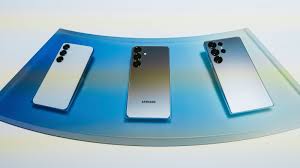
The latest lineup offers choices to fit different needs:
- The standard Pixel 10
- The more advanced Pixel 10 Pro
- The larger Pixel 10 Pro XL
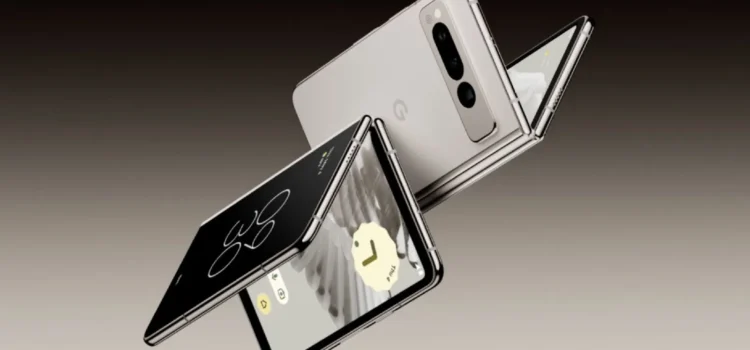
- The foldable Pixel 10 Pro Fold
All four models run a lightweight near-stock version of Android with extensive AI features. While Google Tensor chipsets are less powerful than Apple’s A-series or Qualcomm Snapdragon processors, Google leverages its software expertise to enhance the value of its devices.
Many users rate the Google Pixel series among the best Android phones, not just for its features but also for a smooth, fast, and reliable experience. Despite the Tensor chipset being slower than Qualcomm’s top processors, Pixel devices stand out for camera quality, AI enhancements, and a streamlined Android version that ensures users get new updates and improvements first, enhancing everyday usability.
As 2025 draws to a close, we look ahead to the new Google Pixel phone. At least five new devices are expected, from the budget of Pixel 10a to the Pixel 11 Pro, as well as a foldable tablet-and-phone hybrid.
To provide a clearer picture, below is an overview of the Pixel devices expected in 2026 and their anticipated release windows.
The Pixel 10a is expected to launch in spring 2026, based on the Pixel 9a’s April 10 release and the Pixel 8a’s May 24 debut, suggesting a spring release pattern for the series.
All four expected Pixel 11 flagships will likely launch together later in the year. The Pixel 10 series launched on August 28 with the Pixel 10 Pro fold following October. A similar schedule is expected for 2026 as Google aims to release ahead of the iPhones’ usual September launch.
Google Pixel 10a
The Google Pixel A series is known for being among the best affordable smartphones, with the Pixel 9a currently leading our list.
While the upcoming Pixel 10a, expected this spring, might seem like an upgrade over the 9a, leaked specifications indicate that the improvements are minimal, with the new model projected to be nearly identical to the current one. For users, this means current Pixel 9a owners may not notice much real-world difference if they upgrade.
Evan Blass posted certification details of the Pixel 10a on X, confirming Verizon network compatibility. The screenshot indicates that the 10a will feature a 6.285-inch 120Hz AMOLED display, a 48MP rear camera with an f/1.7 aperture, a 13MP ultrawide lens with an f/2.2 aperture, 128 GB of storage, 8 GB of RAM, and a 5100 mAh battery. These specifications match those of Pixel 9a.
Reports indicate that Google may retain the Tensor-G4 chip for the Pixel 10a rather than adopt the Tensor-G5 used in the rest of the Pixel 10 series. Previous A-series models have typically used the chipset introduced with the company’s flagship devices, the prior to fall.
A Pixel 10a with the G4 chip could offer a modest performance improvement compared to the Pixel 9a, which uses an older Exynos modem. For users, this means marginally faster for everyday tasks, but the overall change is likely insignificant for most day-to-day experiences.
If recent CAD design leaks are accurate, the Pixel 10a closely resembles its predecessor.
These rumored changes may not materialize, or Google may introduce other updates to its mid-range models, such as Pixel Snap or new color options. At this time, choosing a discounted Pixel 9a may be a better option for users who prioritize value, unless the Pixel 10a introduces more significant benefits.
Google Pixel 11, Pixel 11 Pro, and Pro XL
Internal sources indicate there will be upcoming launches of three non-folding Pixel 11 models like the Pixel 10 series:
- The standard new Pixel 11 is codenamed Cubs.
- The Pixel 11 Pro is Grizzly
- The larger Pro XL is Kodiak
While the Pixel A series may see minimal changes, the flagship models are expected to receive significant upgrades. The Tensor chipset, previously less competitive than those from Apple, Qualcomm, Samsung, and MediaTek, is reportedly moving to a 2nm production process for the Tensor G6, which could deliver noticeable improvements in speed, efficiency, and overall device responsiveness.
Few details have emerged about the mid-range 2026 Pixel, which is expected, given the distant launch date. However, there are reports of an under-display infrared camera that could reintroduce a more secure face unlocking feature last seen in the Pixel 4.
Significant AI upgrades are also expected, according to a 2024 leak from Google’s G-chips division. The report highlights:
- Improved cinematic blur with 4K 30fps video support
- Enhanced ultra-low light video
Ultra-low light video currently relies on cloud processing, but Google plans to enable on-device processing with the Pixel 11. This change would allow users to capture high-quality nighttime videos instantly, without delays or network dependence.
The Nano TPU in the Tensor G6 is expected to introduce machine learning-based always-on features for the Pixel 11, focusing on health tracking. These could help users monitor their health more easily and proactively, adding value beyond typical smartphone use.
- Agonal breathing
- Cough
- Snore
- Sneeze
- Sleep apnea detection
- Fall detection
- Gait analysis
- Sleep stage monitoring
Until the key differences are confirmed, it is clear that the Pro and XL variants have consistently set themselves apart through superior screens, extra RAM, advanced photography, and faster charging. These distinctions ensure that users who choose upper-tier models benefit from enhanced visuals, performance, and convenience in their daily routines.
Google Pixel 11 Pro Fold
The Pixel 11 Pro Fold is positioned to be a notable release for Google this year, signaling the brand’s continued push into the foldable market. Its launch timing may mirror last year’s, potentially with a staggered rollout.
Affordable devices remain in a niche market. Google appears committed to the category; a refreshed model code-named “Yogi” is listed among upcoming devices, indicating a follow-up to its foldable line.
Currently, limited information is available. The Pixel 11 Pro Fold is expected to include the Tensor G6 processor. It will also feature associated AI enhancements found in the rest of the lineup.
In addition to expected design improvements and an upgraded camera array, a major addition to the Pixel 11 Pro Fold is. For comparison, the Pixel 10 Pro featured 48MP ultra-wide and telephoto lenses, whereas the more expensive Pixel 10 Pro Fold provided only 10.5MP ultra-wide and telephoto lenses. Addressing this difference would be a welcome improvement in 2026.
Google Pixel in 2026: Outlook
In recent years, Google’s Pixel phones have been competitive across all price points. However, 2026 may present new challenges in its latest model summary. The Pixel 10a has the most information available and appears to offer only minor upgrades over the current version. The remaining four models are still in early development, so details are limited. Notably, a faster processor has been confirmed across all models, addressing a key demand among Pixel users who want speed and efficiency. If the Tensor G6 matches the performance of Qualcomm and Apple competitors, users could see substantial improvements in day-to-day phone performance and enjoyment in 2026.26.



