






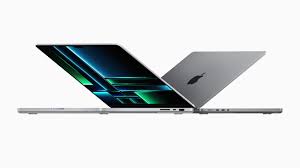
Apple is preparing new MacBook Pro and MacBook Air models with M5 Pro, M5 Macs, and M5 chips. Launches will begin in early 2026. These models will offer 15% to 25% performance gains, improved AI features, and Thunderbolt 5 connectivity. The existing design will continue through at least 2027.
Key 2026 MacBook rumors and expectations
M5 Pro and M5 Max MacBook Pro (Q1 2026): after the base, the M5 chip debuts in the 14-inch MacBook Pro in October 2025. High-end models with Apple M-series chips, including the M5 Pro and M5 Max, may launch around January 28, 2026.
Apple is expected to release M5-powered MacBook Air models, likely in March 2026, as part of its spring cycle.
The M5 generation promises to elevate AI with a powerful 16-core neural engine and lightning-fast unified memory. The Pro and Max chips will deliver remarkable upgrades over the M4, ushering in a new era of performance.
Apple will not make major chassis changes for early 2026. Significant updates, such as OLED displays and possible touchscreens, are expected for late 2026 or 2027 with the M6 chip.
Pricing Stability
Apple will return the current $999 starting price for the M5 MacBook Air. The company plans to launch the M5 Pro and M5 Max MacBook Pros at about $1,999 each.
MacBook Air, Apple’s most popular laptop, is known for its slim, fanless design. As the M4 is still recent, attention is turning towards its successor.
Apple does not announce new product launches in advance, but its Silicon roadmap release cycles and previous upgrades provide a clear indication of what to expect.
Release Timing and Price
Apple has introduced significant MacBook Air updates nearly every two years as part of its spring refresh cycle, with intermediate upgrades in between. For example, the M2 launched mid-February with a new design, and the M3 and M4 followed in March 2024 and March 2025, respectively, after a skipped release in 2023.
M5 MacBook Air models are expected in the first quarter of 2026, likely in March, starting at $999.
The 2026 M5 series MacBook is expected to feature an enhanced ARM architecture and reportedly use TSMC’s advanced 3nm process technology. Apple is believed to have chosen this process over TSMC’s 2nm technology for cost reasons.
Apple Silicon updates from a next-generation iPad Pro with an M5 chip indicate single-core scores of about 4,133 and multi-core scores of 50,437. This is a 12-15% improvement over the current M4 iPad Pro. The M5 chip’s GPU is also up to 36% faster than the M4’s.
The benchmarks suggest Apple has prioritized modest clock speed increases and core-level efficiency improvements for the Apple M-series chip rather than a major architectural change. To deliver 10% to 15% faster CPU performance, a slightly more powerful GPU, and improved efficiency (potentially extending battery life), to indicate what’s new in the chip.
As a result, the M5 MacBook Air will likely offer improved responsiveness in daily use, especially for single-threaded tasks. It may not significantly outperform the M4 in sustained workloads, such as video rendering.
Apple’s key typically keeps the same industrial design for several chip generations. The current MacBook Air design, launched with the M2 model, is three years old and still modern. The next models are expected to keep the 13 and 15-inch sizes, fanless aluminum unibody, and similar display technology. OLED displays are unlikely, as Apple is probably saving this for the MacBook Pro line in late next year or 2027.
Many physical changes are anticipated to be minor. For example, there may be improved webcam quality or adjustments for the latest generation of wireless connectivity, such as Wi-Fi 7 or Bluetooth LE audio. Apple may also introduce a new color option, as seen earlier this year with the M4.
Looking Further Ahead
Reports from Korea say Apple aims to launch a MacBook Air with an improved LCD featuring Oxide-TFT technology instead of today’s Amorphous silicon (a-Si) panels, with an expected launch in 2027.
The new display should be a notable upgrade over the current MacBook Air screens and offer performance highlights such as Oxide TFCD LCD panels, which are more efficient and perform better than a-SI displays, with sharper images, smoother scrolling, and improved battery life.
Switching to Oxide-TFT technology is also expected to bring faster pixel response and more even brightness. This should reduce motion blur in videos or games and minimize the screen clouding seen in current LCDs.



