




OpenAI has launched a new series of AI models designed to handle intricate reasoning in science, math, and coding. These models are built to spend more time thinking before answering, which helps them solve tougher problems with greater accuracy.
The first model in this series, OpenAI 01 Preview, is now available through ChatGPT and the API. This release is part of an expanded strategy to roll out models better suited for complex logical tasks. It signifies a significant milestone in AI development, as the model presents remarkable progress in scientific, mathematical, and programming tasks.
Advanced Reasoning Abilities
The O1 Review Model is trained to spend more time thinking through problems than earlier versions. This helps it try different strategies, spot mistakes, and improve its answers as it works in tests. The text model in the series performed well on tough academic benchmarks, sometimes matching PhD-level skills, especially in physics, chemistry, and biology.
The O1 Preview model also showed significant improvement in solving math problems. For example, in an international mathematics Olympiad qualifier, the earlier GPT-4-O solved 13% of the problems, while O1 Preview solved 83%. In core forces coding competitions, it scored in the 89th percentile, demonstrating a significant improvement over past models and reflecting the company’s commitment to responsible AI development. These new safety measures ensure the model adheres to the right guidelines more effectively through leveraging its reasoning abilities. For example, during tests intended to bypass the model’s safety rules, known as jailbreaking, the O1 Preview model attained a high compliance score, markedly outperforming previous models.
OpenAI also improves its internal safety processes and works with AI safety institutes in the US and UK. These groups now have early access to research versions of the O1 model, allowing outside experts to test and review it. OpenAI aims to make future AI systems safer before releasing them to the public.
Applications And Target Audience
The O1 Preview model is especially well-suited for professionals working on complex science, coding, and math tasks. For instance, healthcare researchers can use it to annotate cell sequencing data. Physicists can rely on it to generate formulas concerning quantum optics, and developers can use it to build and execute integrated workflows. Its reasoning abilities make it a helpful tool for any field that requires in-depth problem-solving.
To help developers, OpenAI has also released O1 Mini, a smaller and more affordable version of O1 Preview. The O1 Mini costs 80% less and is designed mainly for generating and debugging complex code. It does not have as much general knowledge as O1 Preview, but it is still a strong choice for tasks that need accurate reasoning at a lower price.
Availability and Access
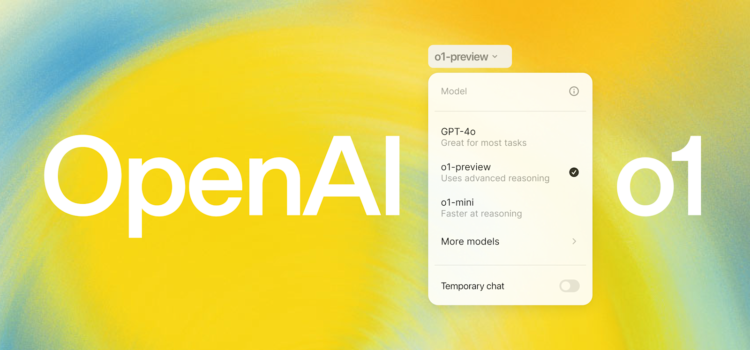
Starting today, ChatGPT Plus and Team users can access both the O1 Preview and O1 Mini models through the model picker in ChatGPT.
The current limits are:
- 50 queries per week for O1 Preview
- 50 queries per day for O1 Mini
But OpenAI plans to raise these soon.
ChatGPT Enterprise and Edu users will get access next week. However, the API for these models currently lacks features such as function calls and streaming, though these may be added in future updates.
OpenAI has also expressed plans to make the O1 Mini available to ChatGPT-free users in the future. To broaden access, OpenAI plans to offer the O1 Mini model to ChatGPT-free users in the future, making its cutting-edge reasoning capabilities available to more people. OpenAI plans to launch Addison updates to the O1 Series, including features like browsing, file and image uploading, and more. These updates aim to make the models more versatile and more helpful to a broader audience.
Along with the O1 Series, OpenAI will keep improving its GPT models so users can access the latest AI technology. By launching these RISBIN models, OpenAI shows its goal is to advance AI in terms of capability, safety, and real-world use.
OpenAI Launches New Academy To Support AI Innovation In Low- And Middle-Income Countries
OpenAI has launched the OpenAI Academy, a new program designed to support programmers and companies working with artificial intelligence. The Academy’s main goal is to help these groups address important challenges in their communities, especially in low- and middle-income countries. With this effort, OpenAI aims to ensure that the benefits of AI reach a wide range of groups worldwide, facilitating sustainable development and economic growth.
Enabling Local Innovators With AI
Many countries with growing technology sectors have skilled programmers and companies working to solve community problems. But these regions often lack access to advanced AI training, resources, and infrastructure. OpenAI wants to provide these tools and support so local talent can make a difference in areas like healthcare, agriculture, education, and finance.
The OpenAI Academy will provide programmers and companies with the resources they need to deploy AI to concrete solutions. Participants will get access to advanced AI tools, training, and support from OpenAI experts. This will help them build their skills, improve their AI projects, and solve problems in their communities.
Academy Offerings: Training API Credits And Community Assistance
OpenAI is committing significant resources to the Academy to help these innovators succeed. Key components of the program include:
- Training and Technical Guidance: Participants will receive expert support from OpenAI to help them use AI effectively to solve complex problems.
- API Credits: OpenAI is offering $1M in API credits to help developers and companies use its models in their projects. This will make it easier for more people to start working with AI, join forces on projects, and drive collective innovation. This will create a supportive environment where participants can learn from one another and develop new AI applications.
- Contests and incubators column: The academic plans to partner with philanthropists to create contests and incubators that will further invest in organizations on the front lines of their communities. These contests will reward organizations for developing AI-based solutions that tackle urgent local challenges.
By building a platform for partnership and development, OpenAI wants to increase the global impact of AI. The Academy’s goal is to ensure AI benefits reach everywhere, especially where they are needed most.
Success Stories and Global Impact
OpenAI has already helped AI developers and groups working for social good. For example, KOBI, which won the OpenAI prize at the Tools competition, created an AI tool to help students with dyslexia learn to read. iStem, a winner of the Turn.io chat for impact context contest, uses AI to make content more accessible to people with vision impairments in India. OpenAI supported these groups with API credits and technical support, helping them grow their projects and keep making a difference.
These stories show how AI can help solve global problems, from better education to making things more accessible for marginalized groups. The OpenAI Academy aims to build on these successes by supporting even more programmers and institutions worldwide.
Expanding Language Access For AI Development
To make AI more accessible, OpenAI has made sure that AI resources are available in many languages. The company recently funded and released a professional translation of the massive metadata Language Understanding (MM value) benchmark into 14 languages, including Arabic, Bengali, Hindi, Swahili, and Yoruba. This helps more people use AI in their own languages.
A Step Towards Global AI Inclusivity
OpenAI’s new initiative is an important step toward making AI development increasingly inclusive. It makes sure that those who understand the unique cultures and challenges of their regions can tailor AI applications to meet local needs by supporting programmers and institutions across diverse regions. OpenAI plans to bring the benefits of AI to a larger audience, enabling communities worldwide to use technology for economic growth and to tackle challenges.
The OpenAI Academy is ready to help innovators worldwide use AI to solve big challenges and create new chances for responsible growth and technology progress.
Source: OpenAI Unveils New Reasoning Model Series: OpenAI o1-Preview