




In the near future, users of ChatGPT will start receiving sponsored recommendations and advertisements while interacting with the widely used AI assistant, according to recent leaks and industry analysis.
The reports suggest that OpenAI is preparing to introduce ChatGPT ads on its platform, though nothing has been confirmed at this stage. What initially appeared as isolated code mentions in a beta application version has evolved into a more extensive discussion regarding OpenAI’s strategy to generate revenue from its premier product.
What Insights Were Revealed By The Leaked Version Of the Android App
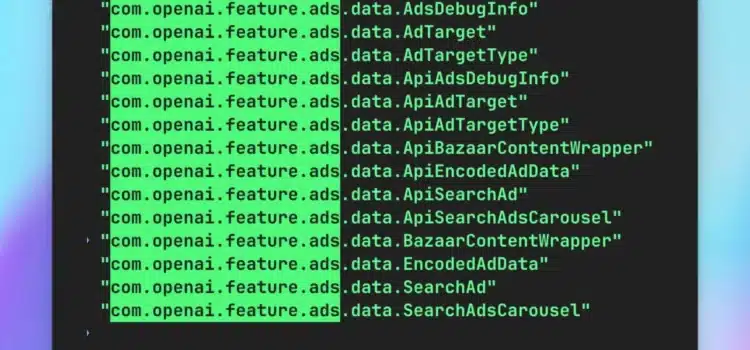
According to the information security and technology news outlet Bleeping Computer, a recent beta version of ChatGPT for Android includes explicit references to an ad’s infrastructure embedded in its code.
The publication notes that phrases such as “search ad,” “carousel,” and “bazaar content” appear in the bundle, suggesting that the OpenAI update is developing systems to showcase sponsored and promoted content during conversations.
The industry trends repository also found articles reporting similar observations, noting that the leaked codes imply initial testing of search-based responses rather than general dialogue.
What Could Be the Reason for OpenAI’s Potential Shift Towards Advertisements
As Blipping Computer points out, the OpenAI hidden ads feature appears to be exploring new revenue streams to offset the substantial computational costs of operating its increasingly advanced models. The company currently offers both free and paid tires, but advertisements could serve as an additional source of revenue.
Additionally, the digital media platform The Keyword has shared remarks from OpenAI CEO Sam Altman, who acknowledged that advertisements may be considered at some point, while stressing that the company has not yet committed to any specific model.
According to the report on the keyword, Altman stated that ChatGPT’s value lies in the trust users to place in its recommendations. If monetization disrupts that trust, the platform risks damaging the strong relationship users have with it. If ChatGPT were to accept payment to prioritize a lesser hotel over a superior one, that would likely be disastrous for your relationship with ChatGPT, he remarked.
Industry observers have also noted OpenAI’s hiring trends, including positions in advertising and engineering, suggesting a more organized strategy than mere preliminary experimentation.
How Could Advertisements Be Integrated Within ChatGPT?
Reports from Gizmo China indicate that these ads may not appear as conventional banners. Rather, they might manifest as contextual recommendations, especially during inquiries related to shopping or product comparisons.
Certain media reports suggest that personalization features, such as ChatGPT’s memory function, could affect the relevance of advertisements, prompting new suggestions for the use of user data.
When might users begin to encounter advertisements?
Currently, the timeline is unclear. Industry observers’ monitoring developments have noted that no public rollout has commenced, and no users have reported seeing ads in ChatGPT. What is available at this point includes internal code, hiring indicators, and executive hints.
Some reports have speculated that 2026 could be a potential time frame for a wider rollout, although this remains unverified.
What implications could this have for users?
Should advertisements be introduced, the significant change will not be solely visual; it will also affect trust. As an AI Assistant relied upon by millions for impartial advice, it may start to intermingle information with commercial signals.
For the average user, interpreting product and service recommendations is key. For professionals, particularly those in research, education, and journalism, the inclusion of paid suggestions within AI-generated responses may necessitate an additional level of security.
Privacy will also be a crucial aspect to monitor as ChatGPT implements changes. Advertisements generally involve data tracking, and if AI-driven ads depend on personalized conversion history, issues of transparency and user control will become central topics of discussion.
And format: OpenAI Update implies a possible structure featuring marketplace product cards with images and calls to action, displayed beneath AI responses, akin to current platform advertisements. Google Search and Microsoft’s Co-Pilot are
Early testing seems targeted at search-based answers, product exploration, and shopping, aiming to place ads where users show commercial intent.
Monetization Strategy: The introduction of advertisements would help OpenAI offset substantial operational expenses associated with managing its models and could enhance user features on the free tier while preserving the ad-free environment for paying subscribers. Therefore, paying subscribers can refrain from asking themselves questions: “Will ChatGPT Pro show ads?” OpenAI intends to preserve the ad-free environment for Pro subscribers.
User reactions: although no official timeline has been established, the announcement has elicited varied responses, with some voicing concerns about a diminished user experience or the implications for data privacy if chat history is used for ad personalization. Thank you for watching!
OpenAI’s CEO, Sam Altman, has previously characterized advertising as a last resort, yet he has also suggested the company is willing to explore this avenue in the future. The discovered code and several reported instances of actual advertisements indicate that implementation may be imminent.



