





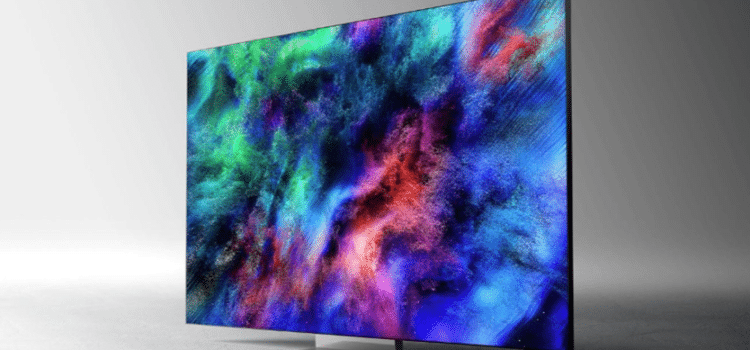
Two days before the Consumer Electronics Show (CES) 2026, Samsung unveiled its latest Quantum Dot Organic Light Emitting Diode (QD-OLED) TV panel, which delivers higher brightness and improved picture quality compared to last year’s model. This panel is expected to feature in some of the OLED TVs Samsung will announce next week.
Samsung Display, the display manufacturing division of Samsung Electronics, will showcase this panel at its CES 2026 booth in Las Vegas starting January 6. The new panel supports peak brightness up to 4500 nits (a measure of how much light the display emits), ranking among the brightest self-emissive displays (which generate their own light), and delivers more vivid colors than competing OLED panels (organic light-emitting diode displays).
According to the company, the new panel adjusts peak brightness by combining the maximum outputs of each red, green, and blue (RGB) pixel. This approach results in purer colors at peak brightness.
LG Display’s OLED panels use a white subpixel alongside red, green, and blue. This four-subpixel combination can lead to less pure colors than Samsung’s QD-OLED panels, which use only red, green, and blue for purer color output.
Additionally, this panel is compatible with AI-based picture quality optimization technologies and features expected to appear in Samsung’s upcoming high-end TVs.
The company’s latest LCD-based 4K television uses new backlighting technology that allows it to display a wider, more precise color range than previous models, it said on Sunday, Jan. 4.
Samsung is also launching the next series of high-end Samsung S26 OLED TVs, as it seeks to gain a market share from LG Electronics, the current global leader in that category. LG offers deeper blacks and higher contrast than LCDs.
Several of Samsung’s new televisions exceed the previous size standards, with some measuring over 100 inches. Super big screens continue to be the fastest-growing TV segment, and the market is expected to double in 2026, the company told reporters last month, ahead of Sunday’s announcement.
Samsung introduced its new lineup at the CES technology conference in Las Vegas, where other leading TV manufacturers are also presenting their latest products. Last month, the company previewed part of its lineup in the CES highlights, including new Wi-Fi-enabled speakers with bold designs that position the brand to compete more directly with Sonos.
What’s new for 2026?
Micro RGB
Samsung is highlighting micro-RGB technology at CES, which updates the backlighting system in LCD TVs to enhance color accuracy. Typical LCDs rely on either a white or blue backlight, limiting color purity and realism, the company said in the media briefing.
The Samsung Micro RGB employs an entirely new structure with smaller individual red, green, and blue LEDs. It added that this change significantly improves color reproduction.
Samsung introduced the 115-inch Micro RGB TV in September at $30,000, a price beyond most consumers’ budgets. In 2026, the company will offer this display technology in smaller sizes from 55 to 130 inches, though pricing has not been announced. The technology delivers precise color reproduction and exceptional clarity, but these models will still cost significantly more than Samsung’s mainstream OLED and Neo OLED sets, which use conventional mini-LED backlighting.
Oled
For many home theater enthusiasts, OLED TVs remain unmatched in black levels and contrast, as each pixel can be turned off for dark scenes. This results in more immersive viewing, especially in low-light rooms. Samsung re-entered the OLED market in 2022 after years of focusing on LCD sets, increasing competition with LG, the established leader in OLED technology.
Samsung differentiates itself from its South Korean competitor by offering glare-free displays that significantly reduce reflections, ensuring clearer images in bright rooms, and Quantum Dot OLED panels from Samsung Display, which maintain vibrant colors even at peak brightness for a more vivid picture.
For the 2026 Samsung OLED lineup, Samsung introduced minor exterior design updates to its flagship Samsung S95H OLED model. The company also increased brightness by 35% over the previous generation, making the TV suitable for well-lit rooms and enhancing the viewing experience. Brightness has become a key focus for TV manufacturers as premium OLED televisions were often not suitable for recent years.
The S90 series now features a low-reflection screen, improving comfort for viewers in bright environments, and offers 15% increased luminance according to Samsung, resulting in clearer images.
AI
AI will remain central to Samsung TVs, as with last year’s models, the new sets support multiple AI agents that assist users in finding content, summarizing episodes, planning trips, or answering questions. Supporting assistants include Samsung’s Bixby, Microsoft’s AI, and Perplexity’s AI.
Samsung is expanding software features that automatically adjust picture and sound settings, eliminating the need for advanced menu navigation.
The new AI sound controller allows users to independently adjust the volume of dialogue, music, or sound effects on this year’s TVs.
Lifestyle TVs
Samsung also announced some tweaks to the frame. It’s a wall art-style TV and the higher-priced Frame Pro that first debuted at last year’s CES. Neither introduces any notable image quality upgrades this year, even as the company faces a growing wave of competition that now includes LG.
Instead, Samsung is dramatically upsizing the frame with a new 98-inch version. In contrast with OLED vs. 2025 models, the standard frame will also have its HDMI inputs and other hardware built directly on the TV set. Previously, Samsung included a device called the One Connect box to hide those wires, with a single thin cable running up to the screen.



