





Samsung has worked with Google and Qualcomm to launch the Galaxy XR headset, which runs on the Android XR system and Gemini AI. The headset can track gestures and eye movements to analyze what users see and offer helpful information for $1,799. Samsung says this device is just the beginning as it plans to develop lighter AI glasses in the future.
Samsung Electronics, together with Google and Qualcomm, has officially released the Galaxy XR headset, which uses the new Android XR operating system and Gemini AI. This move is a direct challenge to Apple and Meta, who currently lead the mixed reality and smart glasses market.
The Galaxy XR mixed reality headset is available to buy starting today, priced at $1,799. Its design is similar to the Apple Vision Pro and Meta Quest 3, with external cameras that let users see the real world while wearing it. The headset also has internal eye-tracking cameras for controlling and lets users interact with virtual interfaces using gestures.
Although the hardware design is similar to other brands, Samsung and Google are concentrating on their jointly developed Android XR operating system and Google’s Gemini AI model to set their devices apart. Won-Joon Choi, chief operating officer of Samsung’s mobile experience business, said they believe combining XR devices with Gemini multi-model AI will create strong synergies.
This step marks the official entry of the Samsung-Google partnership into a very competitive market. Industry data shows that even Meta, the market leader, has seen headset shipments drop. At the same time, sales of lighter smart glasses are rising quickly, suggesting that Samsung and Google are pursuing a long-term strategy.
Gemini AI: The Main Feature That Sets It Apart
Samsung and Google believe that deeply integrating Gemini AI is the key to the Galaxy XR’s market advantage. Users can ask the headset questions about real-world objects or content they see on their screens.
In one demo, a Samsung representative opened Google Maps and asked Gemini about nearby pizza places. Headset found the top-rated option and showed the details. In another demo, a Google representative used the headset to ask Gemini about a pair of glasses held by the Samsung representative. The headset used its see-through feature to examine the glasses, identify them as Gentle Monster, and bring up the brand’s official website.
However, Samsung and Google are not alone in adding AI to headsets. Meta has already built its Meta AI into the Quest 3, and Apple’s Vision Pro is expected to get a new AI-powered version of Siri in a future software update.
Preparing The Ground for Future AI Glasses
Samsung executives admit that headsets like the Galaxy XR are not meant for huge sales numbers. Instead, their main goal is to prepare for future devices. Data from Counterpoint Research shows that Meta’s headset shipments dropped 11% from the previous quarter to 710,000 units in the second quarter. In comparison, global shipments of augmented reality glasses rose 74% year over year.
Woo Jun Choi said some may wonder why the company is entering this market when others are having a hard time. He believes the real opportunity is in combining XR with AI. He explained that the Galaxy XR is the first step in their product roadmap, which will include:
- Wired smart glasses
- Wireless smart glasses
- AI glasses
The future devices could have built-in displays for navigation or notifications.
Fierce market competition and major challenges
Samsung and Google’s partnership will have to compete in a tough market. Meta, the current leader, offers the Quest 3 headset and the popular Ray Ban Meta smart glasses. Meta also recently introduced new glasses with a built-in display and a wrist-worn neural band that lets users control them with gestures.
At the same time, Apple is working on its own smart glasses. This move is likely to create more doubts and difficulties for the future plans of Samsung, Google, and Qualcomm.
It is difficult for three major companies like Samsung, Google, and Qualcomm to work together on both hardware and software. Won-Joon Choi said that the early stages of the partnership were not easy at all, especially when it came to coordinating the headset development. Still, their confidence in the potential of XR and AI technologies helped them bring the product to market.
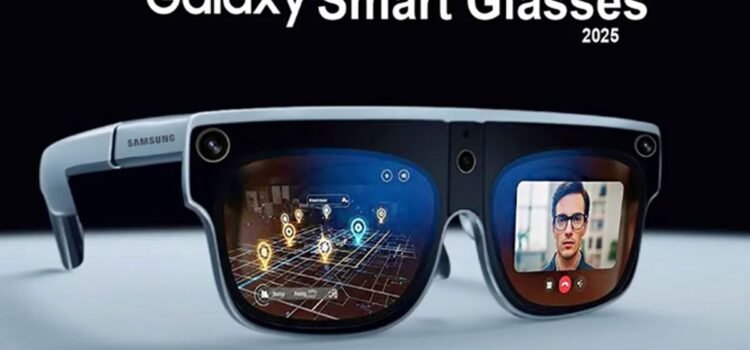
Samsung has been rumored for some time to be working on several smart wearable devices in different styles. During a recent earnings call, a company official shared that the South Korean tech giant plans to launch its next-generation augmented reality (AR) glasses in 2026. Although Samsung has not yet shared details about the features of these AR glasses, it has confirmed they will support multi-model artificial intelligence (AI). This news follows Samsung’s earlier announcement of partnerships with eyewear brands Gentle Monster and Warby Parker for its AI glasses.
Samsung AR Glasses Launch
At Samsung Electronics’ earnings call with investors, Seong Cho, executive vice president of the mobile experience MX division, said the company wants to offer rich, immersive, multi-modal AI experiences on different devices, including smartphones and next-generation AR glasses.
Last year, reports said Samsung planned to launch a new pair of smart glasses, the device codenamed “Haen,” after a city in South Korea where Samsung is based. The glasses were described as thin and light, making them easy to use every day and suitable for different face shapes.
Earlier reports suggested the smart glasses might not have a display and could look like regular glasses or sunglasses, much like Meta’s Ray-Ban smart glasses. They could include features such as video recording, music playback, calling, and social sharing.
According to reports, the Samsung AR glasses are expected to run on Android XR OS, a new system made for extended-reality devices like the Galaxy XR headset. They are also rumored to feature cameras and motion-tracking sensors.
Samsung has highlighted the new Multi-model AI, which will change how people interact with devices like XR products. The AR glasses are also expected to include AI features, such as Gemini integration, to make them easier to use.
Earlier rumors said Samsung was working on two versions of smart glasses:
- The first generation was not expected to have an AR display.
- The second generation, which could include one, was planned for release in 2027
However, based on recent comments from a Samsung official, the AR glasses might be released as soon as this year.