




Samsung Electronics brought together global experts for a panel called In Tech, We Trust: Rethinking Security and Privacy in the AI Age ” during its tech forum at CES 2026. The event, held at the Wynn in Las Vegas, focused on how trust is becoming a key factor in how people use and accept AI as it becomes a bigger part of everyday life.
Making Invisible Intelligence Feel Trustworthy
As AI increasingly anticipates needs, curates routines, and operates autonomously across devices, panelists Allie K. Miller (CEO of Open Machine), Amy Webb (CEO of The Future Now Strategy Group), Zach Kass (Global AI Advisor at ZKAI Advisory and former Head of Go-to-Market at OpenAI), and Shin Baik (AI Platform Center Group Head at Samsung Electronics) emphasized that trust must be earned not through promises but via consistent, understandable behavior. Each expert contributed their view on how transparency and reliability are critical for earning user trust.
During the session, Samsung explained its trust-by-design approach, stressing that AI should be predictable, transparent, and easy for users to control. Allie Miller said when it comes to AI, users are looking for openness and control. They want to be leaders in their own personalized experiences, to understand whether an AI model is running locally or in the cloud, to know that their data is secure, and to clearly see what is powered by AI and what is not. That level of visibility builds confidence in the provider’s head. There is a responsibility to show up for users by designing personalized experiences around the core components of trust, clarity, security, and accountability.
Samsung also pointed out that on-device AI keeps personal data on the device whenever possible. Cloud-based AI is used only when more speed or scale is needed, so users get flexibility without sacrificing privacy.
Security for an AI-Driven World
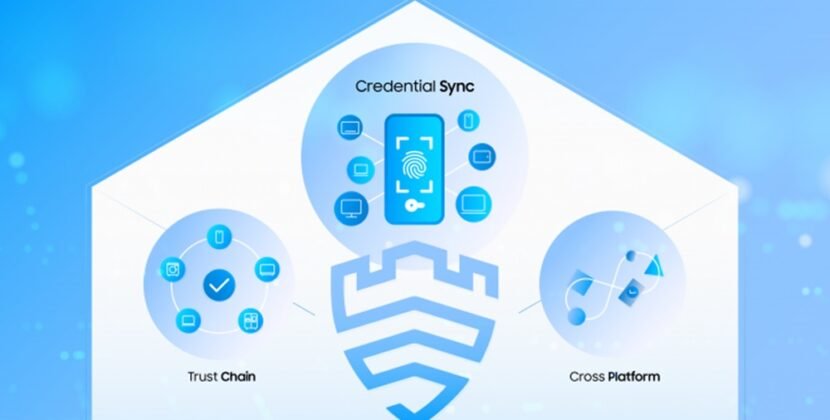
The panel discussed how security needs to change as AI spreads across phones, TVs, and home appliances. Samsung presented its Knox security platform, which now protects billions of devices through chip-level security and the Knox Matrix, a system that enables devices to authenticate and protect one another.
Trust in AI starts with security, thus proven, not promised. Shin Baik said that, for more than a decade, Samsung Knox has provided a deeply embedded security platform that protects sensitive data at every layer. But trust does go beyond a single device it requires an ecosystem that protects itself. Samsung Knox devices continuously authenticate and monitor one another, so each device acts as a shield for the rest, creating a resilient, secure environment users can rely on.
Across Industry, Look At The Future Of Trust.
Shin Baik emphasized that trust grows when AI behaves predictably and securely across devices, arguing that users need visible signals of control rather than black-box systems. Samsung pointed to its alliances with industry leaders such as Google and Microsoft as a way to strengthen shared security research, interoperability, and ecosystem-wide protection, while Allie Miller pointed out the value of transparency for users, including clear visibility into where AI models run, how data is used, and explicit labels that show what is powered by AI and what is not. Meanwhile, Zach Kass added that while misinformation and misuse present real challenges, for every risk there is also a countermeasure, and technology itself will play a critical part in mitigating AI’s downsides.
Amy Webb evaluated the relationship between trust and consumer purchasing habits. I don’t think they’re making decisions based solely on trust. She said people aren’t paying for trust. They don’t buy things because of trust. They buy things because of convenience. So if the AI piece of this hooks people in, it makes their lives easier and more convenient.
As AI becomes part of daily life, the panel agreed on one point. The technologies people trust most will be those that prioritize security, transparency, and user choice from the start.
Source: Samsung Explores How Trust, Security and Privacy Shape the Future of AI at CES 2026



