




The physical AI home, a key trend at CES 2026, signals a shift as artificial intelligence moves from digital screen-based users, such as chatbots, into the real three-dimensional world.
Now, robots and smart devices can sense, understand, and interact with their surroundings to help with household chores.
Key Aspects of Physical AI Home:
- Physical AI combines Generative AI with sensors, cameras, and robotics so that machines can understand, predict, and act in the real world as events unfold.
- Just as Generative AI helped machines learn to communicate, Physical AI is now teaching them to perform physical tasks like cleaning, tidying, and managing household chores.
Key Home Applications
- Humanoid robots can now fold laundry, make breakfast, and serve drinks.
- Advanced smart appliances use built-in sensors to adjust lighting, save energy, and learn your habits as you use them.
- New robot lawn mowers and yard systems can operate without boundary wires, using LiDAR and cameras to navigate and avoid obstacles.
Robotics-based models now enable robots to operate in changing, unpredictable environments rather than following fixed routines.
Companies train robots in virtual environments, called digital twins, before deploying them in the real world. This makes the process much safer and more efficient.
The 2026 Tipping Point:
What was once a niche or lab experiment is now reaching a turning point in 2026 as technology and buyer demand finally meet. Investment is booming, with billions of dollars going to robotics start-ups, and big tech companies like NVIDIA competing to lead in AI for robots.
Challenges and Outlook
Even with this progress, there are still major challenges, such as the high cost of building humanoid robots ($20,000+) and the need to make them safer and more reliable. Still, experts think these AI systems will soon become everyday tools, not just novelties.
Samsung’s first home AI orchestrator goes into mass production this week, marking a big shift away from using apps or voice commands in households. This new device, called the AI Home Companion Hub (internally), serves as the main control center for Samsung’s 2026 Bespoke AI system. At the center of this mass production ramp-up is a multi-chiplet device powered by the newly unveiled Qualcomm DragonWing AI chipset.
Unlike previous smart-things hubs that merely acted as bridges, the orchestrator features on-device large language models (LLMs) and Vision AI. This allows the system to see and understand the home environment in real-time, coordinating between appliances without relying solely on cloud processing.
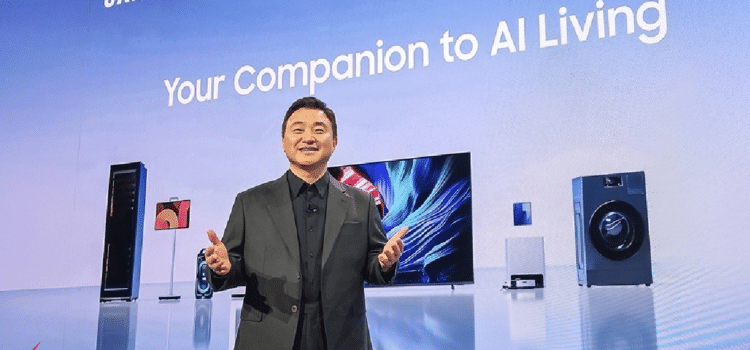
At Samsung’s First Look event at CES 2026, the company said the orchestrator’s main goal is to create a zero-housework home using data from Galaxy Wearables, Bespoke AI appliances, and Vision AI TVs. The orchestrator can manage the home on its own.
- For laundry, the Bespoke AI Air Dresser automatically lines up based on the fabric types identified by the AI laundry combo.
- In the kitchen, it uses AI vision inside to track grocery expiration dates and suggest meal plans based on family health data from Samsung Health.
- It also adjusts lighting, humidity, and temperatures to match your circadian rhythm and sleep data from the Galaxy Ring or Watch.
Flawless Integration via HBM4 and SmartThings
Samsung’s timing for mass production lines up with the start of HBM4 high bandwidth memory production, which gives the orchestrator the speed it needs to handle many AI tasks at once. This hardware enables it to manage up to 500 million connected devices worldwide on the SmartThings network, including third-party Matter-compatible devices.
Security and Agentic Privacy
A key feature of these units is the Knox Matrix security layer. Since the orchestrator handles sensitive tasks, such as hiring someone through Thumbstack to fix a dishwasher leak, Samsung uses hardware-level encryption. Every decision the orchestrator makes is recorded in a blockchain. It is a cloud-based system, so users can see exactly what happened while they were away.
Availability and Global Rollout
With high-volume manufacturing now that Samsung is making these devices in large numbers, the Home AI Orchestrator should be available worldwide by late Q1 2026. The first shipments will go to North America and Europe, where there is strong demand for energy-saving, AI-powered home solutions. With its goal of 800 million AI-powered devices by the end of the year, the Home AI Orchestrator serves as the defining piece of hardware that turns a collection of small gadgets into a single thinking companion.
Source: Samsung To Unveil New AI-Connected Living Lineup at CES 2026



