






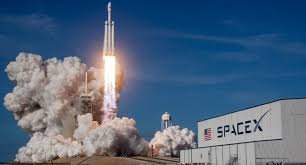
The Federal Communications Commission has approved SpaceX to launch 7,500 more Starlink Gen-2 satellites. This approval brings the total allowed Gen-2 satellites to 15,000.
The approval also lets SpaceX use more frequencies and operate at higher power in certain communication bands between 10.7 and 30 GHz. Final use depends on an ongoing FCC review.
The FCC decision is based on this waiver, subject to the completion of rules adopted in the pending rulemaking that the Agency wrote in its order. SpaceX must bring its activities into compliance with any new rules upon the effective date of those new rules to address claims that SpaceX’s operations more than the (power) limits could cause interference to (Geostationary Orbit Satellite) networks. We condition SpaceX’s operations to ensure GSO operators are protected.
Geo-stationary satellite companies, such as SES, which share the affected spectrum, have opposed the decision due to concerns about potential interference from stronger Starlink Gen 2 signals.
The extra frequencies the FCC approved are: 14.5 to 14.8 GHz, 17.3 to 17.8 GHz, and 15.51.4 GHz.
- 252.4 GHz
- 92.0 to 94.0 GHz
- 94.1 to 95.0 GHz
- 95.0 to 100.0 GHz
- 102.0 to 109.5 GHz
- 111.8 to 114.25 GHz
For Earth-to-space communications (signals sent from ground stations to satellites) and 18.6 to 18.8 GHz for space-to-Earth (signals sent from satellites to ground stations).
SpaceX will have to comply with existing lower-power limits in the 17.3-17.8 GHz band and coordinate with incumbents on these frequencies. SpaceX stated that access to additional spectrum and higher power will greatly improve its satellite internet service. The FCC agreed with this assessment.
SpaceX seeks to operate in additional contiguous spectrum bands to achieve symmetrical download and upload speeds, enabling fiber-like service for American consumers and bandwidth-intensive applications for American businesses in rural areas. The agency wrote that SpaceX commits to operating on an unprotected, non-interference basis (accepting that others use the same spectrum and agreeing not to cause interference) and has designed its satellite system to permit sharing with present and future operators of these bands. The company controlled by Elon Musk reportedly plans to go public in 2026. As of Monday, it had over 5,000 Gen 2 satellites in orbit, which was noted by astronomer Jonathan McDowell.
FCC Chairman Brendan Carr said, “This approval is a major step for next-generation services. Allowing 15,000 new satellites helps SpaceX bring new broadband, boosts computation, and ensures no community is excluded.”
Tentative bidding results show that SpaceX will serve more locations than any other ISP under the $42.45 billion Broadband Equity Access and Deployment Program, a federal initiative aimed at expanding high-speed Internet access nationwide. This follows new Trump administration rules that increased satellite providers’ access to funding.
The agency said it worked with the Commerce Department and NTIA on the decision.
The Order permits SpaceX satellites to operate in lower orbits down to 340 kilometers and to provide direct-to-cell service. SpaceX is also seeking approval for a separate 15,000 satellite constellation that would deliver enhanced direct-to-cell service using spectrum acquired from EchoStar.
Astronomers worry that more satellites could harm research by causing radio and sunlight interference. The FCC says SpaceX will coordinate with NASA and the NS and take steps to direct reflections away from Earth.
While we authorize SpaceX to launch additional satellites, we find that SpaceX’s commitments and actions to work with federal agencies and the astronomy community to coordinate and mitigate the effects of its Gen-2 Starlink constellation continue to be sufficient to address concerns raised in the prior record, the agency wrote.
SpaceX requested approval to deploy nearly 30,000 satellites; however, the FCC has currently approved only 15,000.
We believe launching more satellites benefits the public, even though Gen-2 upgrades remain untested. We are delaying approval for an additional 14,988 satellites, including those planned above 600 km. The FCC requires SpaceX to launch and operate half of the Gen-2 satellites by December 1, 2028, and finish the launch by December 2031. SpaceX must also deploy 7,500 first-generation satellites by late November 202.7.7.
Last week, Starlink announced plans to reconfigure its satellite constellation by lowering all satellites currently orbiting at approximately 550 km to 480 km during 2026 to enhance space safety. In December, Starlink said one satellite had an anomaly at 418 km. This caused some debris and lost contact with it. Such events are rare for the company. SpaceX operates the world’s largest satellite network through Starlink. It has about 9,400 satellites providing broadband to consumers, governments, and businesses.
In 2024, Jessica Rosenworcel, Carr’s predecessor, called for more computing power for Starlink. She noted that Starlink then controlled nearly two-thirds of all active satellites.



