






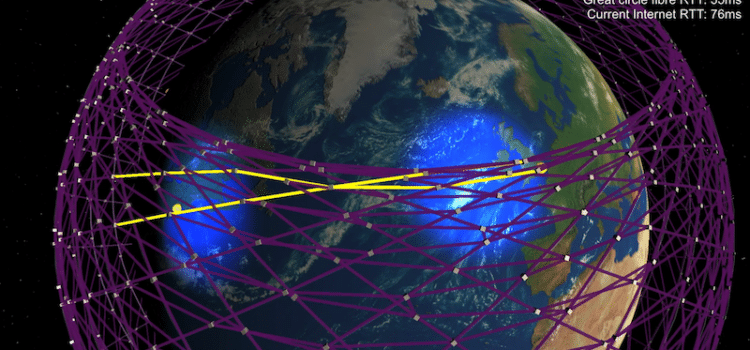
The Federal Communications Commission determined that expanding the Starlink network with 7,500 additional second-generation (Gen-2) satellites presents an acceptable orbital risk of collision in orbit (known as orbital risk).
With this decision, SpaceX can expand its constellation to 15,000 satellites, which will, in turn, improve worldwide internet and mobile connectivity.
To support this authorization, the FCC provided its rationale and set forth several conditions.
CCC announced its decision in January 2026. It prioritized public interest and Starlink space safety and included several conditions:
Lower orbits: The FCC noted that operating the new satellites at lower altitudes, about 480 km above the Earth’s surface, compared to 550 km for existing satellites, will reduce the time non-functional satellites remain in space, helping prevent a long-term build-up of space debris.
Performance data: The agency cited SpaceX’s low failure rate for non-orbiting satellites and found its protection procedures sufficient to address concerns from competitors such as Viasat and Amazon, as well as some astronomers.
The FCC approved the project conditionally, subject to SpaceX meeting specific deployment milestones.
50% of the newly authorized Gen 2 satellites must be launched and operational by December 1, 2028.
The remaining satellites must be deployed by December 1, 2031.
Ongoing oversight: The FCC order requires ongoing reporting on collision provision, prevention, and satellite disposal. It reserves the right to halt further deployments if debris risk thresholds are exceeded.
Service Expansion
The expansion will enable Starlink to offer several new services:
Direct-to-cell connectivity: The satellites will support mobile satellite service (MSS), enabling direct connectivity with regular mobile phones. This feature will be available primarily outside the US and will offer extra coverage within the US through partnerships with mobile carriers such as T-Mobile.
Increase capacity: by using five radio frequency bands (Ku, Ka, V, E, and W bands), which refer to specific ranges of the radio spectrum. The expanded network aims to increase capacity and offer faster internet speeds, potentially up to 1 Gbps.
Global Reach: The expansion is projected to improve internet access in rural and remote areas worldwide. These are places where terrestrial networks are unavailable or uncompetitive.
While this approval moves the expansion forward, the safety justification from regulators led to the postponement of a decision on SpaceX’s request for an additional 14,988 satellites. First, the FCC will conduct a performance review of the newly authorized constellation.
In line with these plans, on January 9, the FCC approved an additional 7,500 Starlink Gen-2 satellites, further expanding SpaceX’s authorized next-generation constellation.
This decision brings SpaceX’s total Gen2 satellite authorization to 15,000, following the initial 7,500 approved over three years ago.
By authorizing 15,000 advanced satellites, the FCC has enabled SpaceX to deliver robust satellite broadband, strengthen computation, and expand access to all communities, FCC Chairman Brendan Carr said.
SpaceX has proposed 29,988 satellites, but FCC approvals are being issued in stages.
The Commission stated it is authorizing parts of the proposed constellation incrementally, rather than all at once.
The order authorizes satellites in orbits between 340 and 485 km with inclinations of from 28 to 96.9 degrees. It also covers previously approved satellites at 525 and 535 km. SpaceX plans to move those two orbits between 475 and 485 km.
The newly authorized satellites have what the FCC calls advanced form factors compared to earlier Starlink models. No details were provided. SpaceX announced it will begin deploying larger V-3 satellites in 2026 using the Starship launch vehicle. Each will deliver 1 terabit per second of download capacity.
The Space Bureau has evaluated the real-world performance of the Gen2 Starlink satellites launched to date, and we find that the authorization for additional satellites is in the public interest, even as the Gen2 Starlink upgrade satellites remain untested in orbit, the FCC concluded.
This order grants SpaceX a temporary waiver from equivalent power flux density (EPFD) limits for the Gen-2 system (EPFD), which refers to the strength of radio signals a satellite system transmits towards the ground to prevent interference with other satellites. These limits are designed to prevent interference with geostationary satellites (GSO), which remain fixed over a single point on the Earth’s surface. However, SpaceX and other satellite operators in low Earth orbit (LEO) consider the rules outdated.
The FCC is currently reviewing Equivalent Power Flux Density (EPFD) limits. EPFD is a technical measure used to limit interference between satellite networks by limiting the strength of radio signals radiated toward the ground.
We believe that while this rule-making is ongoing, it is in the public interest to grant SpaceX’s request for a waiver to allow it to exceed the EPFD limits, given the benefits to SpaceX’s service and thus American consumers, and the continued protection of geostationary satellite orbit (GSO) operators. The order states. (GSO refers to satellites stationed in Earth’s equatorial plane that maintain a fixed position relative to the ground.)
The Commission stated that Gen-2 satellite performance has addressed concerns about collision risks and failure rates. It rejected comments suggesting that the full constellation could result in thousands of unmaneuverable satellites.
In support of this, the order noted that SpaceX reported only two disposal failures—satellites that could not be de-orbited at the end of their missions—during the first year of Gen 2 operations. For comparison, there were 6 such failures in the first year of first-generation Starlink operations. The FCC stated that this comparison illustrates that commenters’ concerns that hundreds of thousands of failed non-maneuverable Gen 2 Starlink satellites are unlikely to come to pass.
The FCC also denied a motion by the Ukrainian Congress Committee of America to pause its review of the application. The organization argued that there was a conflict of interest arising from Elon Musk’s roles as CEO of SpaceX and as the de facto head of the Department of Government Efficiency (DOGE), established by the Trump administration in early 2025.
The commission concluded that the group had not demonstrated a likelihood of success on the merits and noted that Musk left Doge in May 2025, rendering the conflict-of-interest argument moot.



