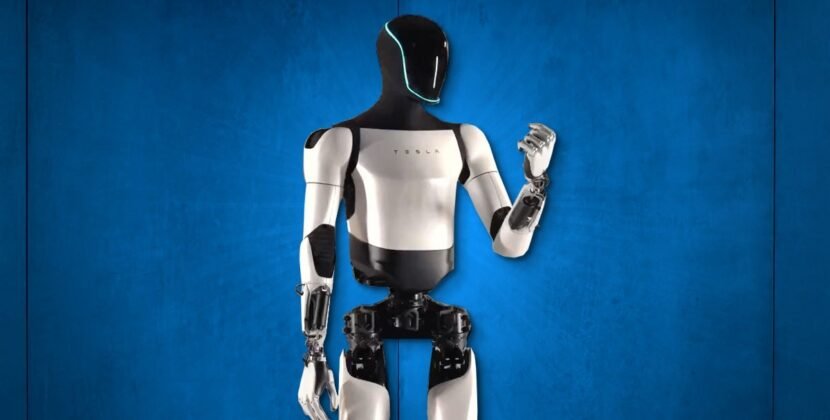




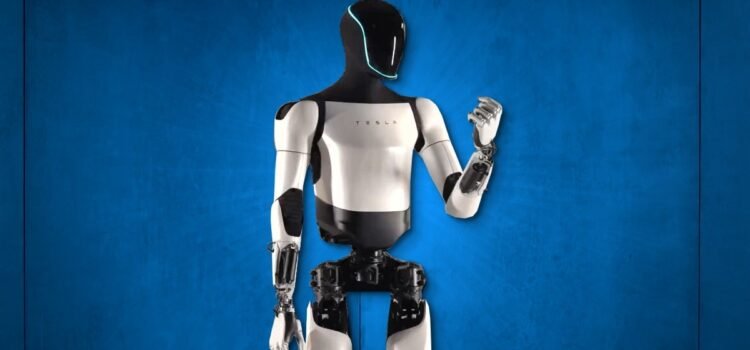
Tesla has advanced general-purpose robotics. The latest Optimus AI update adds vision-language navigation, enabling the robot to reason. By merging language understanding with spatial cognition, Tesla addresses the main challenge of deploying humanoid robots: executing complex real-world instructions.
For robotics engineers and AI researchers, this update marks a shift from traditional SLAM methods to a more comprehensive, embodied AI approach for humanoid robots. Now the focus is not just on avoiding obstacles but on helping the robot comprehend its environment using human language.
The shift to vision-language navigation (VLN) for robotics engineers and AI researchers. This update marks a shift from traditional SLAM methods to a more comprehensive embodied AI approach for humanoid robots. Now the focus is not just on avoiding obstacles but on helping the robot comprehend its environment using human language.
The Shift to Vision-Language Navigation (VLN)
Historically, autonomous navigation was a geometric problem. Robots use LiDAR-based vision to create a voxel map of the world and navigate to specific coordinates. However, coordinates are not how humans communicate. We do not tell a co-worker to move to 45.2-12.8 in. We say, “Take the red folder from the messy desk and bring it to the lounge near the coffee machine.”
With Vision-Language Navigation (VLN), Optimus can now understand these kinds of instructions. The new AI uses a transformer model (a type of neural network, especially good at understanding language and images) that processes video from the robot’s eight cameras along with language input. This lets the robot find objects or rooms it hasn’t seen before by matching what it sees to the words it hears.
Embodied AI: The Fusion of Logic and Limbs
This update focuses on embodied AI, meaning the robot’s intelligence is integrated with its physical form. Unlike pure text-based models, a humanoid robot must interact with the physical world and obey its laws. Tesla has redesigned its FSD for robots to enable detailed step-by-step reasoning about space and time, allowing Optimus to plan and act within its environment.
When Optimus receives a command, the vision language model first breaks the task into sub-goals. If the goal is to clean up the spill in the lab, the robot must identify it using its vision system. Understand that cleanup requires a tool, such as a mop or paper towels. Use language/logic) and then navigate to where those items are typically stored (using memory and spatial reasoning, or the ability to recall and understand places). By running this logic locally on Tesla’s D1 chip, the robot achieves sub-millisecond latency to adjust its balance and gait while simultaneously processing high-level cognitive tasks.
Mastering Active Environments with World Models
A major challenge for humanoid robots is that human spaces change constantly. Factories, homes, and offices are never static. The new AI stack uses Neural World Models to help Optimus predict possible changes based on past data.
If a human walks across the robot’s path, Optimus does not simply stop. It predicts the person’s path and adjusts their velocity and path in real time. This is where the vision-language component becomes critical for safety and social etiquette. The robot can distinguish between a stationary object, such as a box, and a temporary obstruction, such as a person, and chooses a wider berth to ensure people’s comfort. This subtle behavior is a direct result of training the navigation stack on millions of hours of human-human interaction data, allowing the robot to emulate natural spatial social norms.
The Role of End-to-End Neural Networks
Tesla is committed to an end-to-end approach. While others use separate modules for vision, planning, and movement, Optimus depends on a single large neural network. The Vision Language Navigation update feeds raw data, images, and text directly into this network, which controls the robot’s actions.
This approach provides for emergent problem-solving. During recent internal testing, an Optimus unit was tasked with moving a crate that was blocked by a rolling chair. Rather than failing or waiting for the path to clear, the robot used its vision-language understanding to recognize the chair as a movable object, pushed it out of the way, and proceeded to its goal. This type of reasoning, identifying affordances in the environment and seeing what actions an object allows (such as a chair’s mobility), is the hallmark of true humanoid autonomy.
Scaling Through The Dojo Training Fabric
Tesla’s Dojo supercomputer drives Optimus’s advanced embodied AI. To train vision-language navigation, Tesla uses a special auto-labeling system. Thousands of Optimus robots in factories collect data. When a robot encounters a new situation or tricky instructions, it sends the data to Dojo.
There is a larger teacher model that analyzes the Dojo video. A bigger teacher model reviews the video and results, then labels the data for the student model on the robot. This cycle makes the navigation system stronger every day. In 2026, Tesla began using generative world simulations in which Dojo creates millions of challenging scenarios, such as a robot in a dark room with mirrors or a busy hospital hallway, to test the VLN system before it’s used in real robots. The technical ability to move forward with vision-language navigation is an economic strategy that makes the robot easier to perform via voice or text.
Tesla is reducing the barrier to entry for small-scale manufacturing and elder care facilities. You no longer need a staff of robotics engineers to define waypoints or no-go zones. A floor manager can simply walk the robot through a facility, giving verbal indications such as “this is the shipping dock” and “don’t enter this area during shift changes”. The robot’s VLN stack will build a semantic map that adheres to those rules.
Tesla believes accessible robotics will help Optimus reach millions of users. When using a robot is as simple as conversation, it becomes an everyday workplace tool, not a luxury.
The Road Ahead: General Purpose Intelligence
Adding Vision Language Navigation to the Optimus AI stack is a step toward Tesla’s goal of Artificial General Intelligence. While a chatbot explains a recipe, Optimus is getting closer to seeing the ingredients, understanding the recipe, and completing the task.
Looking to 2026, integrating vision and language will drive social robotics. Optimus will move through our world and communicate, saying things like, “Excuse me, I need to reach that shelf,” or, “I have completed the inventory check.” This will ease collaboration between people and robots.
Final Thoughts: The Humanoid Constitution
Tesla’s vision for Optimus has always been bold, but Tesla’s big plans for Optimus are now becoming real with the latest AI update, which adds vision-language navigation. Tesla is reaching, teaching the robots to see and hear the world as we do. This marks the start of the Autonomous Digital Coworker, a machine that understands not just what to do, but also how and why. The general-purpose humanoid is no longer simply an idea; it’s already working on factory floors.
Source: AI & Robotics