






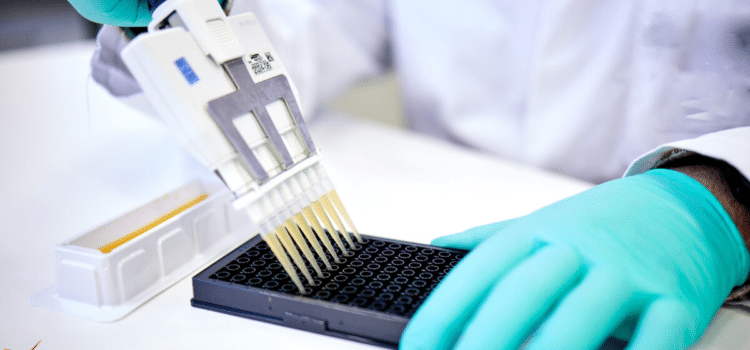
With new developments from Bio-Techne in early 2025 and into 2026, the Leo System is changing the way protein analysis is done. It brings high-throughput lab-quality Western blotting out of specialized labs and into more accessible, faster workflows. The Leo System uses automated capillary separation and advanced multiplexing to quickly and accurately analyze up to 100 samples in about three hours.
How The Leo Systems Redefines Protein Analysis
The Leo system works like a lab-in-a-box for protein analysis, providing features that previously required time-consuming manual work.
- High throughput: The system can process up to 100 samples in a fully automated 3-hour run, delivering up to 4x the throughput of earlier technologies, such as the JESS system.
- Multiplexing and precision: The system uses dual-channel fluorescence (NIR and IR) and chemiluminescence to detect up to 24 targets. At each time point, its inter-instrument coefficient of variation is less than 10%, ensuring highly reproducible results.
- Low sample use: The system requires only 3 μL of lysate, allowing researchers to obtain more data from small, valuable, or rare samples.
- Automation and speed. The system removes the necessity for manual washing and blotting, enabling hands-free operation around the clock.
Key Impacts on Personal Health and Research (2026)
Although the Leo system is mainly used for clinical research and drug development, right now, its speed and accuracy are helping to bring advanced lab work into more everyday settings in several ways:
- Faster Drug Discovery: In 2026, the platform will help accelerate the development of new treatments, especially for cancer, by enabling rapid, precise, and sensitive protein identification.
- Connecting research and diagnostics: Lio offers high-precision protein measurements similar to ELISA to regular research labs. This helps speed up the discovery and validation of biomarkers.
- High-volume biomarker testing: Its high throughput makes it easier to study complicated signaling pathways in large groups, helping move lab findings more quickly into personalized treatments for patients.
The Lio system is making high-end proteomics more accessible, cutting the time needed for some processes from days to just hours.
Bio-Techne Corporation announced today that it has started shipping the Leo System, which utilizes simple Western technology. Leo builds on simple Western platforms by improving sample throughput and increasing protein quantification reproducibility. It matches the throughput and precision of the standard ELISAs in a fully automated Western blot assay, making it useful for bioanalytical workflows from discovery to commercialization.
Leo can process up to 100 samples at once in a 3-hour run. This is 4 times the throughput of the Jess simple western system and 5 times faster than the Sally Sue and Peggy Sue systems. Leo also delivers the size, precision, and reproducibility required for reliable analytical-grade protein quantitation, which is important for regulatory submissions. The system includes an improved Compass for Simple Western software, offering advanced analysis tools and better support for 21 CFR Part 11 compliance.
With Lio, scientists can reach their development goals faster and more efficiently, finishing studies with fewer runs, operators, and instruments. Said Will Geist, president of Bio-Techne’s Protein Sciences segment. Lio will help our customers speed up their research and bring new therapies to market sooner.
Early users have been excited about what LEO can do. Beta testers have praised its excellent performance, high-quality data, and broad applicability across:
- Targeted protein degradation
- Clinical biomarker studies
- Gene therapy potency assays
- Quality control release assays
- Recombinant protein expression
Source: Bio-Techne Begins Shipping Leo – A Next Generation High-Throughput Simple Western System



