






A widespread outage disrupted Verizon’s cellular data and voice services for hundreds of thousands across the U.S. It was resolved after more than 10 hours.
Reports of Verizon’s outage map surfaced mid-Wednesday, with some users noting their phones displayed no service or SOS mode a setting that places the device in emergency call-only mode when regular cellular connectivity is unavailable.
At about 1:00 PM ET on Wednesday, the nation’s largest wireless carrier posted on X: “We are aware of an issue impacting wireless voice and data services for some customers.” Our engineers are engaged and are working to identify and solve the issue quickly. We understand how important reliable connectivity is and apologize for the inconvenience.
Later that evening, the company announced the outage had been resolved around 10:30 p.m. and advised users still experiencing issues to restart their devices. Verizon also offered account credits to affected customers.
A spokesperson for the company told Time in a statement that the outage was caused by a software issue and that the company is conducting a full review of what happened.
For a clear overview, here are answers to key questions:
Although the full extent remains unclear, reports indicated widespread disruptions covering large areas.
List Of The Regions Affected By The Verizon Outage As Reported By Users
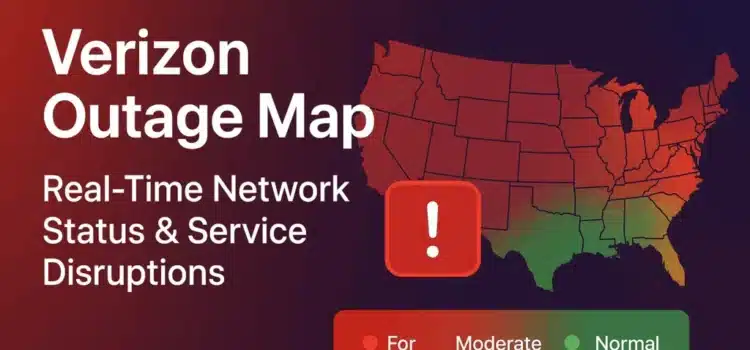
the Verizon outage Map shows issues in several major cities, including Boston, New York City, Chicago, Washington, D.C., and Seattle, as well as in Florida, Tennessee, and nearby areas. Users across multiple states have reported similar problems.
DownDetector Verizon said by 5pm Eastern Time on Wednesday, it had received more than 1.5 million reports since the outage began at midday.
According to DownDetector, the most common problems were:
- Mobile phone connectivity (61%)
- No signal (35%)
- Mobile internet (4%)
Outages were reported across the country, especially in outage states like New York, Houston, Philadelphia, Atlanta, Miami, Charlotte, Dallas, and Ashburn.
New York City experienced a peak of over 10,000 reported outages after 1pm. The city’s Office of Emergency Management stated, “We were working closely with our partners and were aware of the outage, though it did not name Verizon.”
In Washington, D.C., the city’s official emergency notification system sent a message to residents about the nationwide Verizon outage.
An alert noted that the outage may be affecting some users’ ability to contact 911.
Alongside Restoring Service, Verizon Addressed Customer Compensation
Verizon is offering $20 credits to affected users, covering multiple days of service on average in most affected states.
Users can redeem credits in the My Verizon app and will be notified by text. Business customers will get direct contact.
Verizon said the $20 credit doesn’t make up for the outage but acknowledges customers’ time. Details were shared on Thursday about 24 hours after the outage began.
To Address The Broader Impact
Other carriers reported disruptions on Wednesday, including AT&T and T-Mobile.
Those reports were far fewer in number than those for Verizon. However, both companies said their networks were operating normally.
However, due to Verizon’s reported outage, our customers may not be able to reach anyone on Verizon’s network. At this time, a spokesperson for T-Mobile told media outlets in a statement:
As the cause of the disruption remains unclear, Verizon has not responded to requests for further information or to explain why outages vary by region.
The company said the problem was a software issue and that there was no indication of a cybersecurity issue in a statement to Tech Radar on Thursday. This outage, which started late Wednesday morning and continued into the evening, was notable for its duration and nationwide impact. Unlike previous incidents, which were typically limited to specific regions, reports indicated service disruptions in New York, Florida, Hawaii, Los Angeles, Oakland, and other locations across the United States.
Further details will be available once Verizon provides additional information.
Analyst Roger Entner of Reagon Analytics, a telecommunications research firm, suspects that a feature went awry based on how devices were affected. It looks like their 5G SA (stand-alone) core went down during a minor feature change; he wrote to CNET.
Entner noted that the outage affected only new high-end devices in selected markets where Verizon’s 5G SA core is deployed, which is why it wasn’t felt everywhere. The term 5G SA core refers to a network that uses only 5G technology and doesn’t rely on older 4G LTE infrastructure.
Entner also suggested the outages’ timing was unusual. When carriers do massive upgrades, they do so between 2am and 4am, he said. A noon start for the crash indicates fat fingers or a smaller change that propagated through the system.
The story is developing just as Verizon’s recovery progresses. For updates, follow CNET’s coverage of Verizon news.



