





Verizon attributed this week’s network disruption to a Verizon software issue outage. The company says the service has been restored and further details are expected.
The Verizon outage was caused by a software issue, and we are conducting a full review of what happened. As of now, there is no indication that this was a cybersecurity issue, the telecom giant said in a statement sent to Mashable.
Earlier on Wednesday, Verizon reported that it had resolved the issue that left tens of thousands of US customers without voice and data services for much of the day.
Today, we let many of our customers down, and for that, we are truly sorry. A Verizon spokesman said in a statement to CNN, “They expect more from us.”
The resolution was announced at approximately 10:30 p.m. ET on Wednesday. Several hours after the outage reports began emerging in major cities from New York to Dallas via Down Detector, a website that tracks user-submitted outage reports.
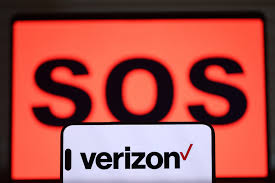
The outage prevented many from making calls, sending texts, or using data. Some on social media reported that their phones were stuck in SOS mode or had no service.
On Thursday, following the restoration of service the previous night, Verizon announced it will provide customers with a $20 account credit, redeemable through the My Verizon app. According to a spokesperson, this amount covers multiple days of service on average.
No credit can make up for this, an official Verizon statement said. This is our way to show appreciation.
Down Detector told CNN that over 1 million outage reports were generated in 24 hours, peaking at 178,000 in 15 minutes.
Verizon has not revealed the cause of the outage.
This outage is among several significant technology disruptions over the past year. For example, an Amazon Web Services issue in October affected much of the internet, while more recently, in 2024, a major AT&T outage left customers nationwide without service and led to a Federal Communications Commission investigation. These incidents highlight the broader challenges faced by major technology providers.
Further details from Down Detector reports submitted on Wednesday show that 59% of Verizon users experienced mobile phone failure, while 34% reported a loss of signal.
In terms of geographic impact, down-detected data indicates that customers in New York City, Atlanta, Charlotte, Houston, and Dallas were most affected.
To assist those still having trouble, Verizon advises users to restart their devices to reconnect to the network.
In addition to Verizon, users have also reported issues with AT&T and T-Mobile on Down Detector. However, spokespeople for both companies said their networks are operating normally. Due to the Verizon outage, customers may experience issues contacting Verizon.
T-Mobile stated that its network is operating normally and as expected. However, due to the reported Verizon outage, T-Mobile customers may not be able to reach Verizon customers at this time.
Jack Burbank, a senior member of IEEE and vice president of cutting-edge communications technologies at Saber Systems, stated in an email that disruptions like this may stem from various causes, including faulty configuration changes or software updates gone wrong.
When cellular service is unavailable, some carriers, including Verizon, allow calls over the internet using Wi-Fi calling.
To enable Wi-Fi calling on an iPhone, open Settings, tap Cellular, and select Wi-Fi Calling.
On Android, open Settings, go to Calls, and select Wi-Fi Calling.
Apple, Google, and Samsung phones on Verizon also support satellite text messaging, allowing texts even without cell or Wi-Fi service. However, buildings or trees may block satellite signals, so users should be in an open area.
Why It Wasn’t A Cyber Attack?
Verizon issued a statement to TechRadar about the January 14, 2026, outage that lasted over 8 hours and affected customers nationwide. The company blames the disruption on a software issue and is conducting a full investigation.
Verizon also clarified that this was not a cyberattack: as of now, there is no indication that it was a cybersecurity issue.
Below is the full statement from a Verizon spokesperson to TechRadar.
This was a software issue, and we are conducting a full review of what happened. As of now, there is no indication that this was a cybersecurity issue.
How Software Failures Impact Networks
Software failures disrupt networks by causing downtime, data loss, and security risks. Common causes are misconfigurations, bugs, and resource exhaustion, resulting in financial loss, productivity drops, and reputational harm. Such failures can lead to outages, degraded performance, or data corruption. Prevention needs robust monitoring and prompt action.
Key Impacts on Networks
- Service Downtime: Application crashes or service outages prevent user access and halt operations.
- Performance degradation: Inefficient code or database issues can consume resources and slow network performance.
- Data loss or corruption: Failures may corrupt or delete critical data, causing significant financial and reputational harm.
- Security vulnerabilities: bugs and misconfigurations can allow trackers to gain unauthorized access, cause data breaches, or spread malware.
- Resource exhaustion: Memory leaks or runaway processes can consume server resources, affecting other applications and services.
- Software bugs: coding errors, particularly in complex protocols like SNMP, can introduce exploitable weaknesses. Errors during maintenance or management can also cause failures.
Consequences For Businesses
- Financial losses: due to lost revenue, recovery costs, and potential fines.
- Reputational damage: disruptions can halt business processes and reduce productivity.
- Legal Liability: In extreme cases, software failures can lead to legal action.
To prevent these issues, incident response plans are critical.



