






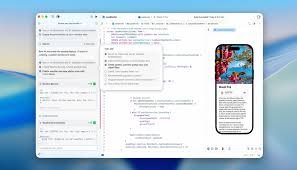
Apple’s Xcode 26.3 now includes Anthropic’s Claude agent and OpenAI’s Codex, bringing autonomous, agentic coding to the platform. AI agents can manage complex, multi-step development tasks autonomously within the IDE.
Key Features of Agent Tech Coding in Xcode 26.3
With Agentic coding, AI models become active partners in development instead of just offering suggestions. They can handle many tasks when given high-level natural-language instructions.
- Project-wide awareness column agents can examine and comprehend the whole project’s file structure, dependencies, and design patterns.
- Automated task execution: Agents can take brand goals (such as “add a new feature” and “show the weather”), break them into smaller steps, write the required code, update settings, and fix errors on their own.
- Visual verification: Agents can use co-Xcode previews to check their work, spot user interface issues, and make fixes by themselves.
- Documentation and testing: The AI can look up Apple’s documentation and inline comments and set up and run unit or UI tests.
- Open standards support: Apple now uses the Model Context Protocol (MCP), an open standard that lets developers use other compatible agents or tools, not just Claude Agent and Codex.
Availability
The Xcode 26.3 release candidate was made available to Apple developer program members on February 3rd, 2026. The full release is expected soon on the Mac App Store. Developers can turn on and set up their preferred models in Xcode’s settings or use their own API credentials for OpenAI or Anthropic.
Xcode 26.3 now supports Agent Coding, which lets developers build apps with coding agents like Anthropic, Claude Agent, and OpenAI’s Codex. With this feature, Xcode can work more independently to help developers reach their goals, from decomposing tasks to making decisions based on project architecture and using built-in tools.
Building on the intelligent features introduced in Xcode 26, which included a new coding assistant for Swift, this update gives coding agents even more access to Xcode’s tools. Now, agents like Claude Agent and Codex can work with developers throughout the whole development process. This helps developers streamline their tasks, work faster, and bring their ideas to life more easily. Agents can search documentation, review file structures, update project settings, and visually check their work by capturing Xcode previews and making changes as needed.
At Apple, our goal is to make tools that put industry-leading technologies directly in developers’ hands so they can build the very best apps, said Susan Prescott, Apple’s vice president of worldwide developer relations. Agentic coding supercharges productivity and creativity, improving the development workflow so developers can dedicate attention to innovation.
With easy access to Cloud Agent and Codex, developers can use the advanced reasoning from these models in their app-building workflow. This connection combines the strengths of these agents and Xcode’s built-in features, helping developers achieve the best results when building Apple platforms. Developers can choose the model that works best for their project.
In addition to these built-in integrations, Xcode 26.3 also supports the Model Context Protocol. This open standard lets developers use any compatible agent or tool with Xcode, giving them more flexibility.



