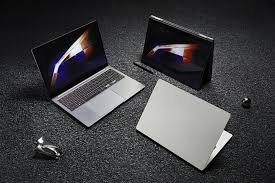





AI laptops are becoming increasingly popular across America. The fast-growing trend towards AI running on devices rather than in the cloud has led to an explosion of chip makers and tech companies offering a range of chips and systems that can run AI tasks directly on your laptop, reducing your dependence on computing from a datacenter far from your laptop. This shift represents a broad trend in the technology industry to enhance performance, protect privacy, and operate more efficiently by integrating AI hardware and software opportunities into the devices we use every day.
The Rise of On-Device AI
On-device artificial intelligence enables devices to perform AI tasks without requiring a connection to an external data center or server. This is particularly useful for using artificial intelligence to process information quickly and to ensure that personal information remains private, without relying on internet connectivity.
On-device artificial intelligence allows devices to both receive and execute tasks normally associated with transmitting information to and from external systems, thereby providing the ability to perform tasks in “real time”. Real-time tasks include processing spoken words into written words, recognising images of people or objects, and optimising an operating system (OS) for improved efficiency. Such capabilities are especially important for laptop users who want their devices to run seamlessly while performing productivity, creativity, and communication tasks.
As on-device artificial intelligence becomes more prevalent, there is increasing demand for hardware specifically designed to support its operation.
Advancements in AI-Focused Processors
Artificial Intelligence (AI) hardware is emerging as business leaders like Intel, Apple, and AMD lead the charge to deliver AI-enabled CPUs. These new core processors include specialised components, such as Neural Processing Units (NPUs), to improve the speed and power efficiency of AI-based tasks.
Intel’s Core Ultra processors are single-CPU designs designed to execute AI workloads directly on the computer. This means that applications can use the CPU to run functions such as real-time transcription or photo editing, enabled by advanced image processing techniques. Apple’s silicon also includes a Neural Engine, which enables multiple devices to leverage AI capabilities on or off the device. AMD’s Ryzen AI processor similarly focuses on running AI workloads directly on the device to improve the performance of machine-learning applications.
These technological advancements will have a significant impact on the development of the next generation of laptops and desktop computers, including the introduction of fundamental AI capabilities.
Enhancing Performance and Efficiency
On-device AI offers many advantages. One important advantage is that on-device AI can process data locally and produce results more quickly, with little or no wait time, improving the overall user experience. This is especially true for applications that require quick or immediate processing time, such as speech recognition, video editing, and real-time collaboration tools.
In addition to faster response time, on-device AI provides for greater energy efficiency. By having dedicated AI hardware designed specifically to perform complex calculations more efficiently than a general-purpose processor, using less power and extending battery life are also advantages.
The performance gains from on-device AI make AI-enabled computers an ideal solution for both business and home use, as almost any application can run on an AI laptop without affecting the computer’s overall performance.
Privacy and Data Security Advantages
The primary reason for the rise in on-device AI use is concern about data privacy. On-device AI uses local data processing rather than sending that information to an external server, which reduces the likelihood that sensitive content will be transmitted externally and placed at risk.
This is particularly useful in applications that process personal data, such as voice recognition, document analysis, and biometric authentication. This way, users can benefit from the AI service while also having more control over their own data and preventing it from being put at risk.
With increased government regulation of data protection, on-device AI will remain important for businesses to remain compliant and build customer trust.
Expanding Use Cases for AI Laptops
Artificial intelligence laptops offer new uses across a range of fields. In a professional setting, these types of laptops allow for enhanced productivity tools (that include automated workflow), higher levels of collaboration, and the utilisation of AI-assisted applications to create content (e.g., create content using AI). Professionals in creative fields will be able to edit, render and generate content more efficiently, utilising software that takes full advantage of their hardware, which further increases their productivity.
In educational settings, AI laptops offer users an individualised use differentiation in the classroom. Everyday users will benefit from AI laptops through smart assistants (which will help with tasks), enhanced search capabilities, and more streamlined, automated processes for maintaining the system.
The increasing popularity of AI laptops can be attributed to their versatility, which enables them to meet diverse user needs.
Competitive Landscape and Industry Momentum
The fast-paced development of Artificial Intelligence laptops means that technology businesses are now competing vigorously with one another to make their products stand out through performance, product features, and how they fit into the ecosystem of other manufacturers. Manufacturers who can merge hardware and software capabilities / functionality will have a competitive advantage.
The key to driving innovation is through forming partnerships among chip manufacturers, software developers, and device manufacturers. These types are utilised/optimised across the various platforms and applications they operate in.
As the market continues to evolve, there will be a strong focus on delivering an efficient, seamless AI experience for customers, which will ultimately determine a business’s success or failure in this fast-changing marketplace.
Challenges in Adoption
Nonetheless, AI laptops offer numerous benefits, but they still face a few barriers to entry that may slow customer adoption. One of these barriers concerns the potential for advanced AI hardware to drive up manufacturing costs. This may subsequently lead to higher consumer prices for these laptops than for traditional laptops.
To fully benefit from AI hardware capabilities, a software ecosystem must be in place. If the applications available on an AI-enabled laptop are not optimised, the AI hardware will not be used to its full potential.
Another barrier to realising AI laptops’ full potential is the ongoing challenge manufacturers face in balancing performance with power consumption and thermal management.
Future Developments in AI Computing
The development of AI-powered laptops will primarily depend on continued improvements in processor design, software optimisation, and end-user experience. The growing efficiency of AI models will enable the device itself to handle more complex tasks, thereby significantly reducing the need for cloud computing.
Advancements in emerging technologies such as edge computing and hybrid AI systems will likely enhance the capabilities of AI-enabled laptops. For example, as new technologies emerge, laptops could easily switch between cloud and local processing, depending on the task at hand. Continued innovation will be the key to realising the full potential of AI-enabled devices.
Sources: Unlock more everything


