



Recent developments from Refroid Technologies and TIERX data centers illustrate how infrastructure is rapidly evolving to power next-generation AI-driven customer experiences.
Refroid and TIERX have joined to develop infrastructure tailored for AI-powered customer experiences.
As more organizations use artificial intelligence and analytics-based services, the technology driving these tools is becoming a key focus not just for CIOs and CTOs but also for those leading customer experience.
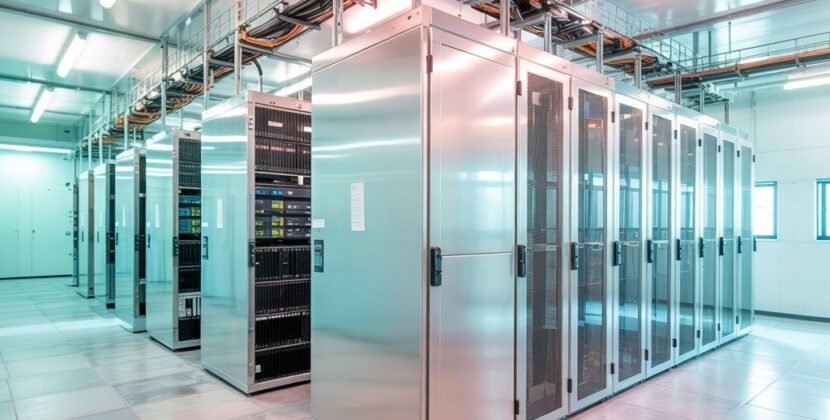
They are building a modular data center system for high-performance computing and AI workloads.
The partnership joins RFROID’s advanced liquid cooling with TIERX’s modular, standard-based data centers.
Their goal is to build scalable infrastructure that can handle high-density AI computing and be quickly deployed in research centers, businesses, and edge locations.
Although the announcement is mainly about new engineering in data-center design, its impact extends beyond that: as companies digitize customer engagements and increasingly use AI services, a reliable, efficient, and scalable infrastructure is becoming vital to modern customer-experience strategies.
How Infrastructure Drives Customer Experience Behind the Scenes
Traditionally, customer experience strategies have focused on front-end areas like user interfaces, service journeys, personalization, and engagement channels.
But as AI is increasingly used in customer engagements, the backend systems that support these experiences are becoming more important.
Tools such as recommendation engines, predictive support systems, real-time analytics, and AI assistance all require computing systems capable of handling large amounts of data quickly and reliably.
As these systems become central to digital engagement, organizations must ensure their infrastructure meets the performance and scalability demands of AI workloads.
Traditional data centers struggle to manage the heat and power demands of new AI processors. High-performance chips for AI training and inference generate much more heat than regular computer hardware.
This challenge is driving greater interest in new solutions, such as modular data centers and liquid-cooling systems. These technologies help organizations run high-density computing environments more efficiently.
Strong technology infrastructure is now crucial to effective digital customer experience.
Strategic Standing in the AI Landscape
Their partnership responds to evolving strategies for managing digital infrastructure.
TierX offers modular prefabricated data centers, enabling faster setup and easier expansion than traditional builds.
This method is especially useful for sectors where computer needs are growing rapidly, such as artificial intelligence, digital services, and research computing.
Meanwhile, Refroid Technologies brings expertise in liquid-cooling systems, helping solve one of the biggest challenges in today’s data centers: controlling heat.
As AI processors become increasingly powerful, they generate substantially more heat. Inadequate cooling can significantly impair system performance and stability.
Together, they deliver fast-deploying, energy-efficient, high-performance computing environments that reduce costs and support demanding workloads, such as AI.
Satya Bhavaraju, CEO of Referred Technologies, emphasizes that the initiative centers on developing infrastructure capable of accommodating the intense thermal requirements of next-generation processors, leveraging innovations conceived and manufactured locally.
Ravikumar Enamsetti, CEO of TierX Data Center, highlights that modular infrastructure expedites the deployment of sophisticated computing environments, which is particularly beneficial to research institutions and distributed computing applications.
The Technology Behind The Partners
Artificial intelligence workloads require high-performance processors that consume substantial energy. Frequently, those processors demand more than 500 watts per socket, far exceeding the requirements of conventional server hardware.
These processors create major heat. Direct-to-chip DLC cooling circulates liquid over hot components, providing better cooling than traditional air cooling. The collaboration also includes immersion cooling, in which hardware is submerged in fluids that efficiently remove heat.
These cooling methods let data centers handle more powerful computing while using less energy to keep things at a safe temperature for RFROID and TierX. Integrating advanced cooling systems into modular data center units enables customers to rapidly deploy infrastructure capable of handling high computing loads with lower energy requirements and enhanced cooling reliability. These modules are adaptable for deployment across diverse environments, including university campuses, research laboratories, industrial facilities, and edge computing sites. This modular strategy enables organizations to incrementally expand computational capacity, eliminating the prolonged construction timelines associated with traditional data center development.
Consequences for Customer Experience Strategy
Data center technologies may seem unrelated to customer engagement, but they significantly affect customer experience.
More digital services use AI platforms that process large volumes of customer data in real time. These systems enable features like dynamic product recommendations, predictive support, fraud detection, and smart service routing.
For these features to work, organizations need environments that handle complex tasks rapidly and reliably.
New infrastructure options, such as modular data centers, help organizations quickly boost computing power as demand grows. This flexibility enables businesses to scale AI services more quickly.
Lower latency is another benefit when computing resources are placed closer to where data is generated. Digital platforms can respond more quickly to customers.
This results in more responsive chatbots, faster recommendations, and better real-time analytics, all of which shape customer perceptions.
Energy efficiency is also becoming more important within digital infrastructure. Cooling technologies that use less power can cut costs and help meet green targets for environmental accountability. Infrastructure efficiency may play an indirect but meaningful role in shaping customer perceptions and trust.
Wider Industry Implications
The Refroid and TierX partnership highlights major trends in global digital infrastructure.
One major trend is the shift toward modular, distributed computing. As organizations expand digital services and deploy AI, they need infrastructure that scales quickly and operates closer to the edge.
Another trend is liquid cooling in high-performance computing as powerful processors outpace air-cooling solutions.
Additionally, the announcement emphasizes the growing importance of regional infrastructure ecosystems. Many countries are seeking to strengthen domestic capabilities in semiconductor manufacturing, AI infrastructure, and advanced computing technologies.
Both governments and businesses now see reducing dependence on global supply chains for key technology as a major strategy. These trends suggest that infrastructure innovation will play an increasingly central role in enabling digital transformation initiatives.
Source: Refroid and TierX: The Infrastructure Behind AI-Powered CX


