



Introduction
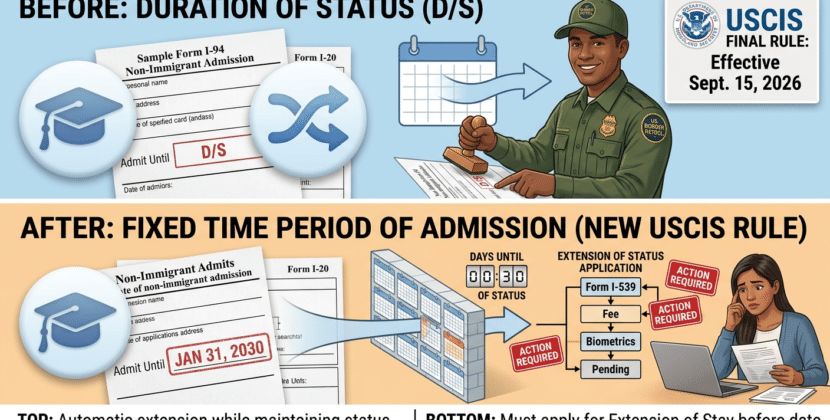
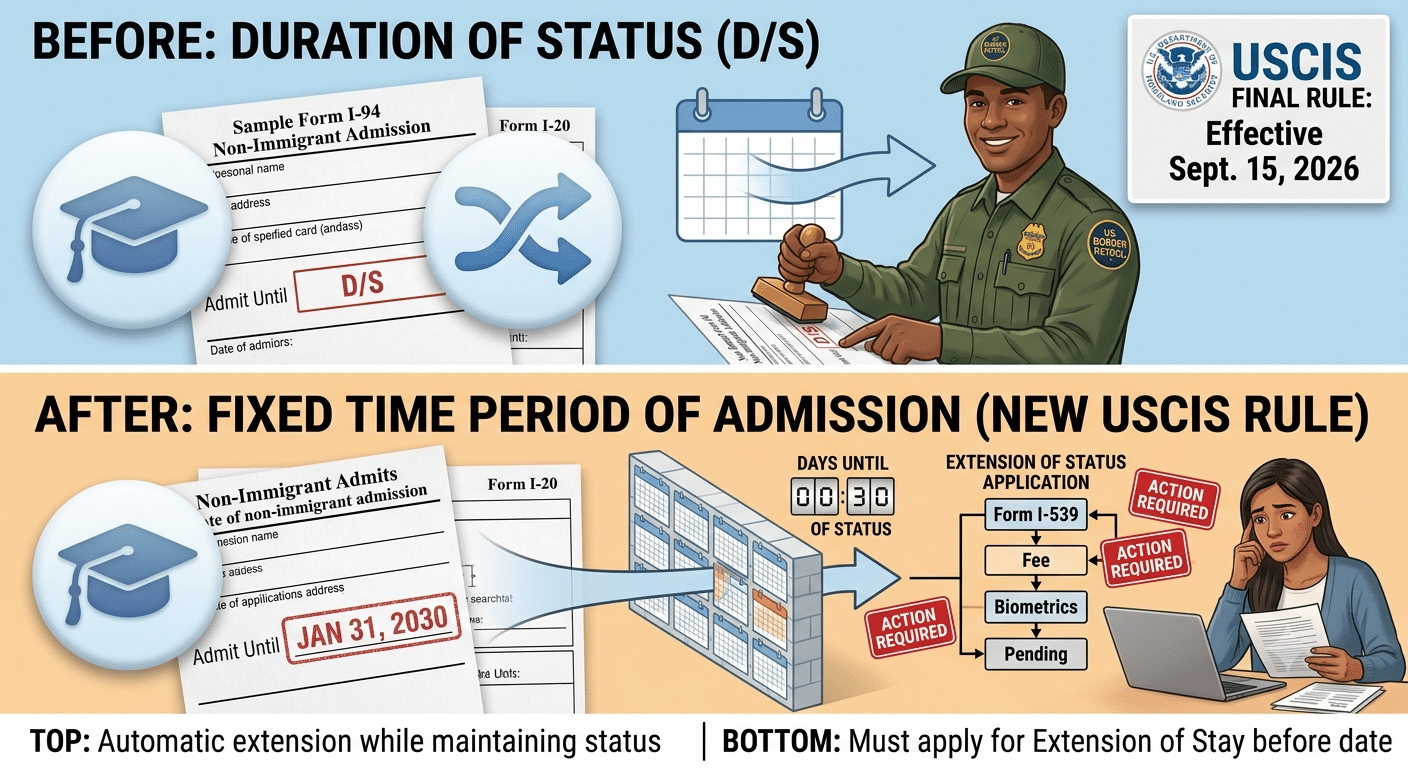
A sweeping change to U.S. immigration policy is set to take effect on September 15, 2026, when the Department of Homeland Security officially ends the ‘Duration of Status’ framework for F-1 and J-1 visa holders. The new rule replaces open-ended stays with fixed admission periods of up to four years, fundamentally altering how hundreds of thousands of international students and exchange visitors remain in the United States.
The rule, published as a final rule by DHS on July 17, 2026, has sent shockwaves through the American higher education system. Universities, colleges, and exchange program sponsors are scrambling to update their systems and inform affected students of the significant changes to their visa status.
What Is Duration of Status?
For decades, the United States has operated under a system known as Duration of Status, or D/S. Under this framework, international students on F-1 visas and exchange visitors on J-1 visas were admitted to the country for the duration of their academic program or exchange activity, as long as they maintained their visa status.
This meant that as long as students remained enrolled full-time, made normal academic progress, and complied with the terms of their visa, they did not need to worry about a specific expiration date. The system was widely regarded as student-friendly and was a key factor in making the United States the world’s top destination for international education.
How the New Rule Changes Everything
Starting September 15, 2026, all new F-1 and J-1 visa holders will be admitted for a fixed period of up to four years, or the length of their academic program as listed on their Form I-20 or Form DS-2019, whichever is shorter. I visa holders, who are media representatives, will be admitted for up to 240 days.
This represents a dramatic shift from the previous system. Students whose academic programs extend beyond the four-year admission period will now need to apply for extensions through USCIS before their status expires. Failure to do so could result in a loss of legal status, which carries severe consequences including potential deportation bars.
Columbia University’s International Students and Scholars Office issued guidance stating that the changes are ‘the most significant modification to student visa rules in decades.’ The office has set up dedicated support sessions to help affected students understand their new obligations.
Transition Rules for Existing Students
DHS has included transition provisions for students who are already in the United States under the Duration of Status system. F-1 and J-1 students who were admitted before September 15, 2026, will continue to be governed by the D/S framework as long as they maintain their current status. However, if they depart the United States and seek re-entry after the effective date, they will be subject to the new fixed admission rules.
Yale University’s Office of International Students and Scholars has published detailed FAQs explaining the transition. According to the guidance, ‘Students admitted in F or J status before September 15, 2026, for Duration of Status, are covered by special transition provisions that allow them to maintain their current status without immediate changes.’
Despite these protections, immigration attorneys warn that the transition period is fraught with potential pitfalls. Students who travel abroad during the fall semester and attempt to re-enter the United States could inadvertently trigger the new rules, even if they were originally admitted under D/S.
Impact on International Students
The United States currently hosts over 1.1 million international students, who contribute approximately 4 billion annually to the American economy. These students are a critical component of the U.S. higher education ecosystem, filling seats in STEM programs, contributing to research, and driving economic activity in college towns across the country.
Under the new rule, students in programs that typically exceed four years — including many doctoral programs, medical residencies, and combined degree programs — will face additional bureaucratic hurdles. They will need to file extension applications with USCIS, a process that can take months and requires demonstrating continued academic progress.
Dr. Sarah Meng, Director of International Student Services at UCLA, expressed concern about the administrative burden. ‘Many of our PhD students are in programs that naturally take five to seven years to complete,’ she said. ‘Under the old system, they could focus entirely on their research. Now they will need to navigate a complex extension process every year.’
The rule also introduces new reporting requirements for Designated School Officials, the university staff members responsible for maintaining student visa records. Schools will need to update students’ SEVIS records to reflect their fixed admission periods and monitor compliance more closely.
Economic Implications for U.S. Universities
Higher education institutions are bracing for potential enrollment declines as a result of the policy change. International students pay significantly higher tuition rates than domestic students at most public universities, and many private institutions rely heavily on their tuition revenue to fund financial aid programs and research activities.
A recent analysis by the Institute of International Education estimated that the new rule could reduce international student enrollment by 8 to 12 percent over the next three years. This would translate to a loss of approximately .5 to .3 billion in annual economic activity, affecting not just universities but also the local economies of college towns.
Canada, the United Kingdom, and Australia — the United States’ primary competitors for international students — have all implemented more welcoming visa policies in recent years. Canada’s Post-Graduation Work Permit program, which allows international graduates to work for up to three years after completing their studies, has been particularly effective at attracting top talent.
Legal Challenges Expected
Several immigration advocacy organizations have signaled their intention to challenge the rule in federal court. The American Immigration Lawyers Association has argued that DHS did not adequately consider the rule’s impact on international student enrollment and failed to conduct a proper cost-benefit analysis.
‘This rule will have a devastating impact on American competitiveness in the global race for talent,’ said AILA President Kelli Stump. ‘We are exploring all available legal options to prevent this rule from taking effect.’
The legal challenges face an uncertain path forward. The Supreme Court’s recent decisions have generally deferred to executive branch authority on immigration matters, and the DHS has argued that the rule is well within its statutory authority to regulate nonimmigrant visa classifications.
What Students Should Do Now
Immigration attorneys are advising international students to take several proactive steps in the coming weeks. First, students should review their Form I-20 or Form DS-2019 to understand their current admission status and any upcoming expiration dates. Second, students should consult with their school’s international student office to discuss the implications of the new rule.
Third, students should avoid unnecessary international travel during the transition period, as re-entry after September 15 could subject them to the new fixed admission rules. Finally, students in programs that may extend beyond four years should begin preparing extension applications now, even before the rule takes effect.
Sources
· https://oiss.yale.edu/immigration/elimination-of-duration-of-status-summary-faqs
· https://isso.columbia.edu/fixedtimeperiod
· https://www.aila.org/featured-issues/elimination-of-duration-of-status-for-f-j-and-i-visas