




Introduction
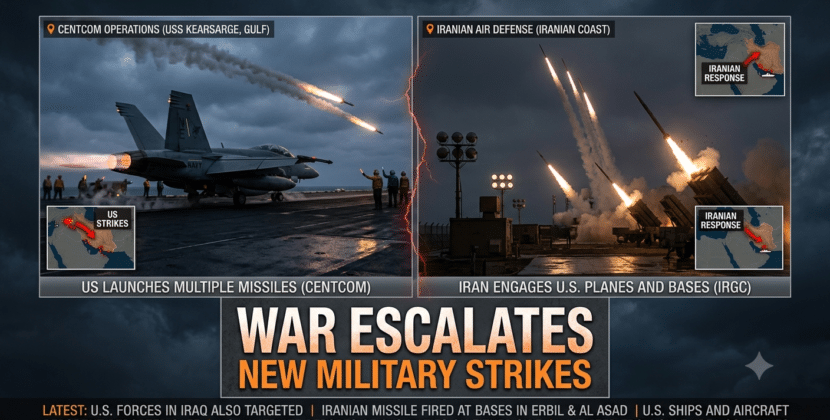
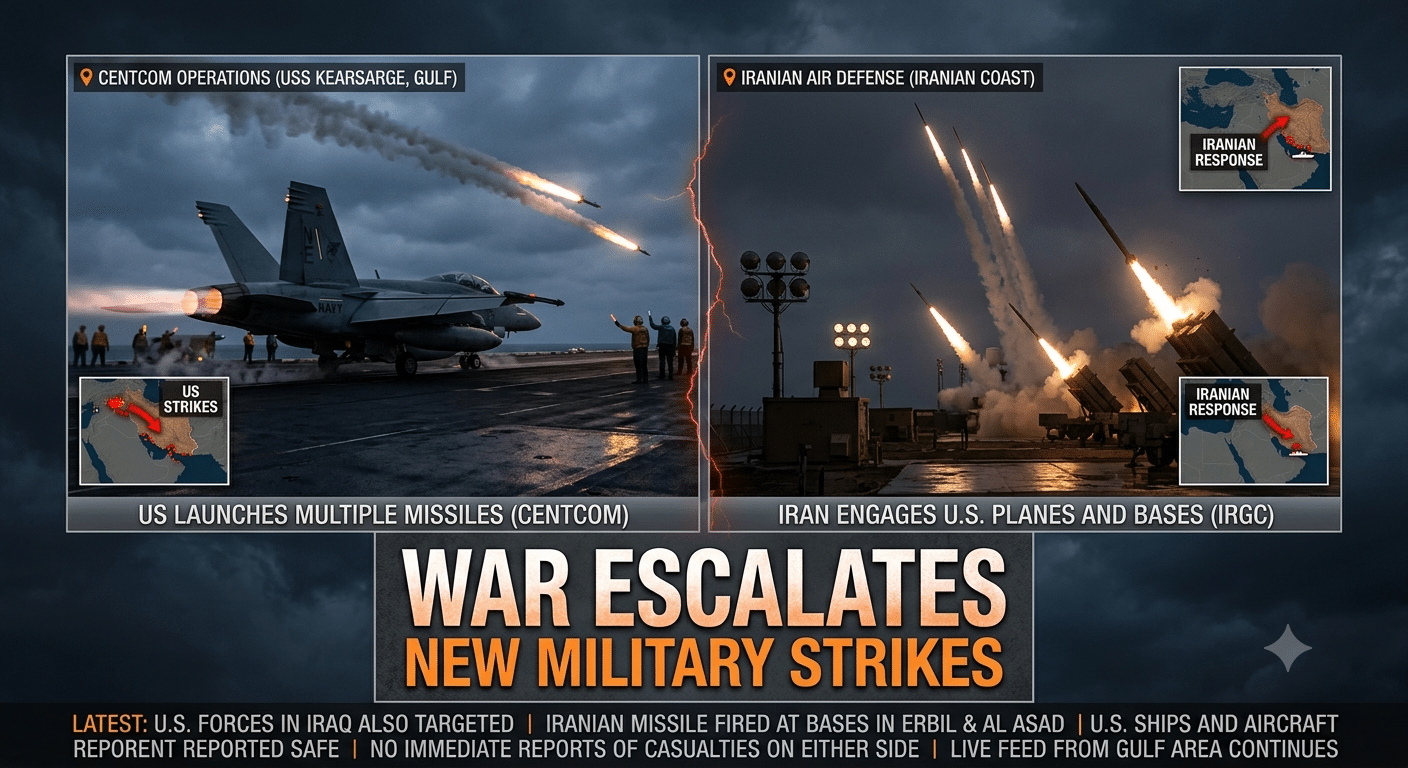
The conflict between the United States and Iran continues to escalate as fresh reports emerge of new military strikes against Iranian targets. The latest round of operations, confirmed by U.S. Central Command, comes as the fragile ceasefire that had briefly paused hostilities appears to have completely collapsed. The renewed fighting has raised urgent concerns about regional stability and the potential for a broader war in the Middle East.
The 2026 Iran war, which began on February 28 when U.S. and Israeli forces launched joint airstrikes against Iranian military and nuclear facilities, has now entered its seventh month. What was initially expected to be a short, decisive operation has evolved into a protracted conflict with significant geopolitical consequences.
How the Conflict Started
The war began after years of escalating tensions over Iran’s nuclear program and its destabilizing activities across the Middle East. U.S. and Israeli intelligence agencies had reportedly been tracking Iran’s progress toward weapons-grade uranium enrichment, and in February 2026, the decision was made to launch a preemptive military operation.
Operation Epic Fury, as the U.S. operation was designated, began with nearly 900 airstrikes in the first 12 hours alone. The strikes targeted Iranian military command centers, air defense systems, missile installations, and nuclear research facilities. Israel simultaneously launched its own parallel operation, focusing on Iranian proxy forces in Lebanon and Syria.
The initial wave of strikes was devastating but did not completely neutralize Iran’s military capabilities. Iran retained significant missile and drone assets, and its retaliatory strikes against U.S. military bases in Bahrain, Jordan, Kuwait, and Qatar demonstrated the breadth of its military reach.
The Ceasefire and Its Collapse
A ceasefire agreement was reached in late April 2026, brokered by Oman and Qatar with support from the United Nations. The agreement called for a mutual cessation of hostilities, the withdrawal of Iranian proxy forces from key conflict zones, and the establishment of a diplomatic framework for resolving the underlying issues.
However, the ceasefire proved to be fragile from the start. Both sides accused each other of violations, and sporadic clashes continued even during the nominal peace period. The ceasefire effectively collapsed in late July when U.S. Central Command announced a new round of strikes against Iranian military targets.
CENTCOM stated that the strikes were conducted ‘in response to Iranian forces targeting U.S. military assets in the Middle East,’ suggesting that Iran had initiated provocations that warranted a military response.
Current State of the Conflict
As of late August 2026, the conflict has settled into a pattern of periodic strikes and counter-strikes. The U.S. military continues to conduct targeted operations against Iranian military assets, while Iran has responded with missile and drone attacks against U.S. installations across the Persian Gulf region.
The humanitarian toll has been significant. According to the United Nations, the conflict has displaced over 2.3 million Iranians, with widespread damage to civilian infrastructure including hospitals, schools, and water treatment facilities. International humanitarian organizations have struggled to access affected areas due to the ongoing military operations.
Oil markets have been volatile throughout the conflict, with crude oil prices spiking whenever hostilities escalate. The threat to Strait of Hormuz shipping lanes — through which approximately 20 percent of the world’s oil passes — has kept energy markets on edge and contributed to rising fuel prices for American consumers.
International Response and Diplomatic Efforts
The international community remains deeply divided over the conflict. U.S. allies in Europe have expressed concern about the escalation while generally supporting America’s right to address Iran’s nuclear program. France, Germany, and the United Kingdom have called for renewed diplomatic negotiations, while France has proposed hosting a new round of peace talks.
Russia and China have condemned the U.S. military operations and have called for an immediate ceasefire. Both nations have maintained economic ties with Iran throughout the conflict, providing a lifeline that has helped sustain Iran’s economy despite the impacts of military action and existing sanctions.
The United Nations Security Council has been unable to take meaningful action due to the competing vetoes of its permanent members. Several emergency sessions of the General Assembly have resulted in non-binding resolutions calling for peace, but these have had little practical impact on the ground.
Impact on American Consumers
The war has had tangible effects on everyday Americans. Gasoline prices have risen by an average of 45 cents per gallon since the conflict began, driven by supply concerns and speculation in oil futures. The average price of a gallon of regular gasoline now hovers above .20, with some states seeing prices above .
The defense spending associated with the conflict has also contributed to concerns about the federal budget deficit. The Congressional Budget Office estimated that the first six months of the conflict cost approximately 7 billion, making it one of the most expensive military operations in recent U.S. history.
What Comes Next
Diplomatic efforts continue behind the scenes, with Oman reportedly mediating informal talks between U.S. and Iranian officials. However, both sides have set conditions that the other considers unacceptable, making a comprehensive peace agreement unlikely in the near term.
Military analysts suggest that the conflict is likely to continue in its current form — a series of limited strikes and counter-strikes — for the foreseeable future. A full-scale ground invasion of Iran remains unlikely due to the enormous logistical challenges and potential for escalation, but the risk of miscalculation remains high.
For American consumers and businesses, the most immediate concern is the impact on energy prices and the broader economy. The longer the conflict continues, the greater the risk of a significant economic disruption, particularly if Iran succeeds in closing the Strait of Hormuz or attacking major oil production facilities in Saudi Arabia and the UAE.
Sources
· https://www.cfr.org/global-conflict-tracker/conflict/confrontation-between-united-states-and-iran
· https://www.centcom.mil/MEDIA/PUBLIC-RELEASES/Article/4550818/us-finishes-latest-strikes-against-iran/
· https://www.nytimes.com/live/2026/07/28/world/iran-us-strikes-iraq-trump
· https://en.wikipedia.org/wiki/2026_Iran_war
Humanitarian Crisis and Civilian Impact
Beyond the military dimension, the conflict has created a growing humanitarian crisis. The United Nations Office for the Coordination of Humanitarian Affairs has reported that millions of Iranian civilians lack access to basic medical care due to damaged hospitals and supply chain disruptions. Sanctions imposed before and during the conflict have severely limited Iran’s ability to import medicine and medical equipment.
International humanitarian organizations, including the Red Cross and Doctors Without Borders, have called for the establishment of humanitarian corridors to allow aid to reach affected populations. However, both sides have been reluctant to agree to such measures, citing security concerns and the potential for aid to be diverted to military purposes.
The refugee crisis extends beyond Iran’s borders. neighboring countries, particularly Iraq and Turkey, have seen an influx of Iranian refugees seeking safety. The UNHCR estimates that over 400,000 Iranians have fled to neighboring countries since the conflict began, placing enormous strain on regional resources and infrastructure.
Oil Markets and Global Energy Security
The conflict has had a profound impact on global energy markets. The potential disruption of oil supplies through the Strait of Hormuz — the world’s most critical oil transit chokepoint — has kept crude oil prices elevated throughout the conflict. Brent crude has traded above 5 per barrel for most of the past six months, compared to approximately 8 before the conflict began.
Energy analysts at the International Energy Agency have warned that a prolonged disruption of Strait of Hormuz traffic could trigger a global energy crisis. The strait handles approximately 20 million barrels of oil per day, representing roughly 20 percent of global supply. Even partial disruptions have significant cascading effects on energy prices worldwide.
The United States has attempted to mitigate the impact on consumers through releases from the Strategic Petroleum Reserve and diplomatic efforts to increase production from other OPEC members. However, these measures have had limited effect in stabilizing prices, and Americans continue to feel the pinch at the gas pump.