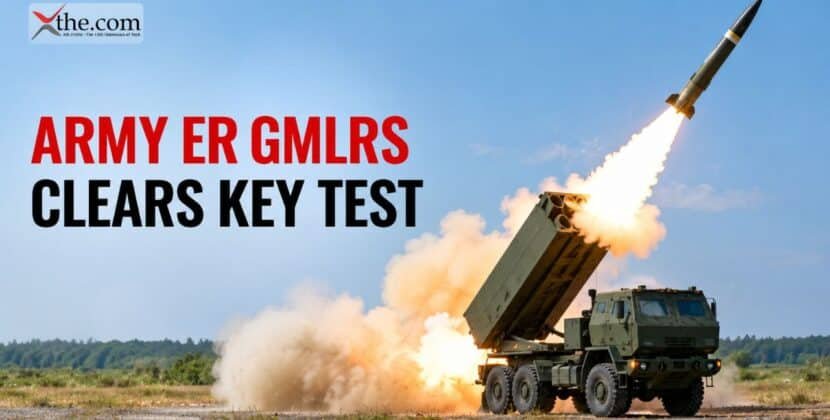






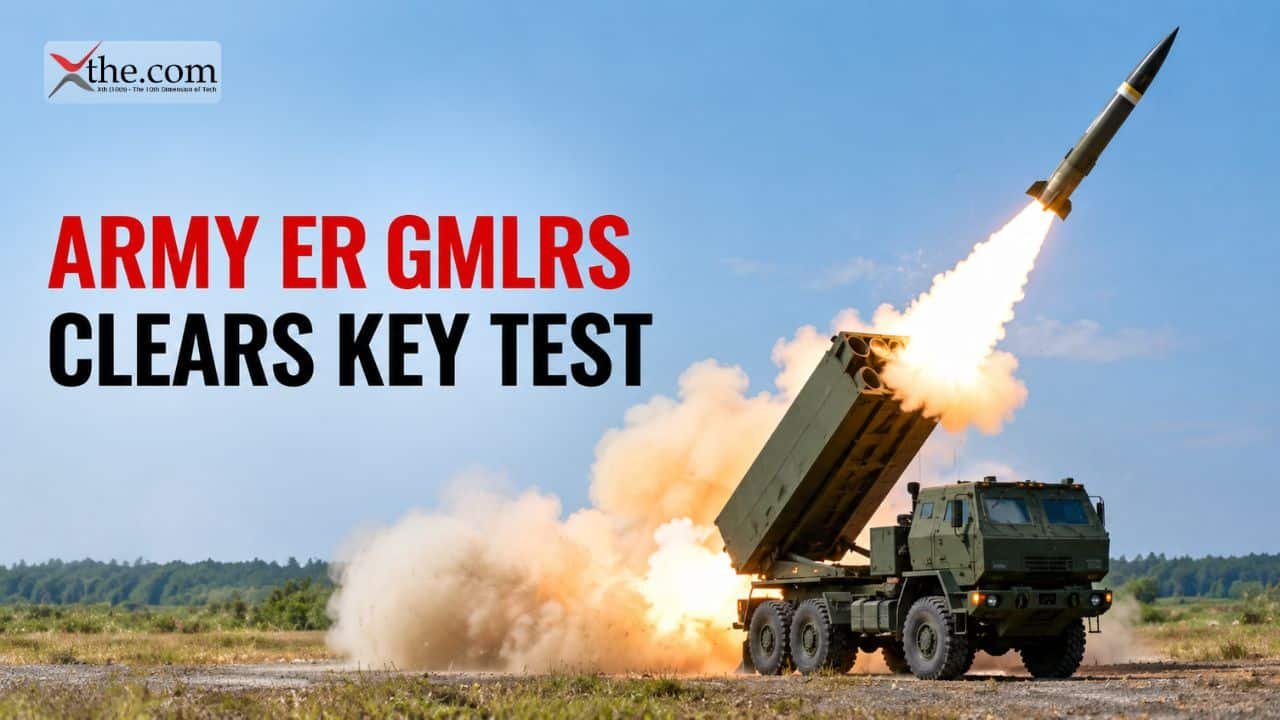
Extended-Range GMLRS Clears Milestone C: The Army’s Precision Rocket Goes Longer
The extended-range GMLRS just crossed the line between test program and fielded weapon. Lockheed Martin announced on October 19, 2026, that the US Army granted Milestone C approval for the Extended-Range Guided Multiple Launch Rocket System after two soldier-led operational tests at White Sands Missile Range, moving the 150-kilometer class rocket into production and fielding. For a ground force studying distance lessons from Ukraine, this is one of the more consequential artillery decisions of the year. Here is what Milestone C means, how the weapon performs, and what changes when it reaches units.
Key Takeaways:
- – The Army granted Milestone C to ER GMLRS, announced by Lockheed Martin on October 19, 2026.
- – Approval followed two soldier-led operational tests using an M270A2 launcher at White Sands Missile Range.
- – The rocket is designed for ranges up to 150 kilometers, a major step beyond baseline GMLRS.
- – It is compatible with both HIMARS and M270 launchers, plugging into existing fleets rather than new platforms.
- – Lockheed did not release production quantities or a unit fielding date in the announcement.
What Milestone C Approval Actually Means
In American acquisition, Milestone C is the approval to move from development into production and deployment. Practically, it means the program has survived its development phase review, demonstrated necessary performance in realistic testing, and can now be bought at scale with program-of-record funding. The two soldier-led operational tests are the evidence base: Army Technology reports flights in September and October at White Sands Missile Range fired both Alternative Warhead and Unitary Warhead variants from an M270A2 launcher, validating extended-range precision fire across operational conditions. Army Technology also confirms a June 2026 contract worth roughly 3 billion dollars to continue production of standard and extended-range GMLRS rounds under the fiscal 2026 procurement cycle, the industrial backdrop for the expanded production Lockheed now cites. Lockheed’s phrasing is worth reading closely, because the company describes the system as advancing toward operational fielding and expanded production, without naming delivery quantities.
That modest language is standard at this stage. Production quantities and unit fielding dates typically emerge through Army budget documents and separate announcements, so the news value is the gate crossing, not a fixed schedule. Anyone tracking actual field timeline should watch the next Army budget proposals and Army ammunition modernization statements rather than hold their breath for a calendar date from the prime contractor.
From 70 Kilometers to 150 Kilometers
The capability leap is distance. Baseline GMLRS guided rockets, the workhorse of both American artillery and allied donations to Ukraine, fly roughly 70 kilometers. The extended-range variant pushes that design out to about 150 kilometers by improving the rocket motor and refining the trajectory, keeping the GPS-aided precision guidance that gave the round its reputation for accuracy on point targets. Lockheed says the system is designed for ranges up to 150 kilometers and compatibility with the HIMARS and M270 launchers already spread across the Army, Marine Corps and allied inventories.
The tactical logic is visible in the Ukraine war’s defining artillery lesson: to survive, a rocket artillery unit must shoot and move before hostile counter-battery fire arrives, and the practical way to do that while still hitting deep targets is rockets that fly farther from the same chassis. A single ER GMLRS shot from a launcher that could previously threaten only 70 kilometers can now hold roughly double the territory at risk per emplacement, multiplying the targets a battalion can service across a front.
Why HIMARS Compatibility Matters
Two design choices make this army decision bigger than one program. First, ER GMLRS is compatible with HIMARS and the tracked M270 launchers that the Army and more than a dozen allied countries already operate, so fielding requires new rockets, not new vehicle fleets. That lowers the entry cost for allies who flew stock GMLRS during recent conflicts and now want the longer reach without an acquisition program of their own. Second, the round shares the same logistics chain as its parent, meaning existing storage facilities, transport doctrine and training curricula apply with modest additions rather than full rewrites.
The industrial story compounds the effect. Lockheed positioned the Milestone C announcement around expanded production, and every GMLRS class rocket committed to Ukraine raised US demand for higher-rate manufacturing of the same components. An extended-range variant that plugs into the same production infrastructure gives the industrial base a single scalable family instead of separate programs for near and far range, which is exactly the kind of consolidation defense economists push for when budgets tighten.
The Ukraine Lesson, in American Terms
The concrete operational case for extended-range GMLRS has been written in Ukraine, where HIMARS rockets created the deep-strike template that shaped this development. American planners drawing lessons from that campaign emphasize that ranges of 150 kilometers let a launcher sit farther from a contested front while still threatening logistics nodes, air defense emplacements, and command posts. That buffer directly addresses the counter-battery problem, since Russian responses to HIMARS strikes have leaned on drones that range progressively deeper.
For the US Army, ER GMLRS also fills a slot in a layered system that already contains the Precision Strike Missile, designated PrSM, aimed at even greater distances. With ER GMLRS at roughly 150 kilometers and PrSM pushing beyond 400, the Army’s ground-launched strike portfolio now steps upward in range rather than leaving a gap between tactical artillery and ballistic-class weapons. Commanders get a cheaper rocket for mid-range targets and save the expensive missile for the deepest set, a rational division of labor that budget officers have been asking for since the PrSM program began.
What Happens Next
Three timelines now matter. The procurement clock: with Milestone C granted, expect production contract announcements, Army budget line items naming quantities, and potentially first unit fielding within the next year to 18 months according to normal post-Milestone-C pacing. The allies clock: partners who flew HIMARS and M270 in recent operations will move to buy ER GMLRS through foreign military sales, expanding the launchers’ reach across NATO’s eastern flank. And the competition clock: adversaries will adapt by dispersing targets and thickening air defenses at the 150-kilometer ring, which in turn pressures the next range increment. The announcement’s careful avoidance of production numbers is not reticence; it is the standard posture of a program in the exact phase where those numbers get negotiated.
Frequently Asked Questions
How far does the extended-range GMLRS rocket fly?
The system is designed for ranges up to roughly 150 kilometers, more than double the 70-kilometer reach of the baseline GMLRS round, according to Lockheed Martin’s announcement.
What is Milestone C in Army acquisition?
Milestone C is the approval gate that lets a program move from development into production and deployment. The Army granted it to ER GMLRS on October 19, 2026, after two soldier-led operational tests at White Sands Missile Range.
Can ER GMLRS fire from HIMARS and M270 launchers?
Yes. Lockheed says the rocket is compatible with both HIMARS and M270 launchers, so existing fleets and infrastructure can use it without new vehicle purchases. The trade press fills in the hardware: the precision-guided rocket measures 3.93 meters long, carries either warhead type, uses GPS-aided inertial navigation with maneuvering canards, and its launcher pods hold six rockets each.
Sources: