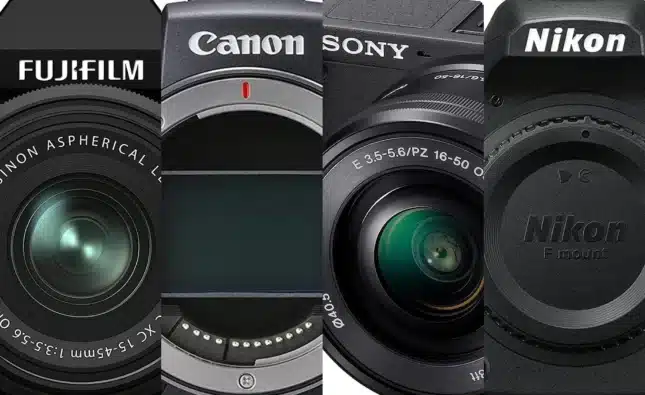






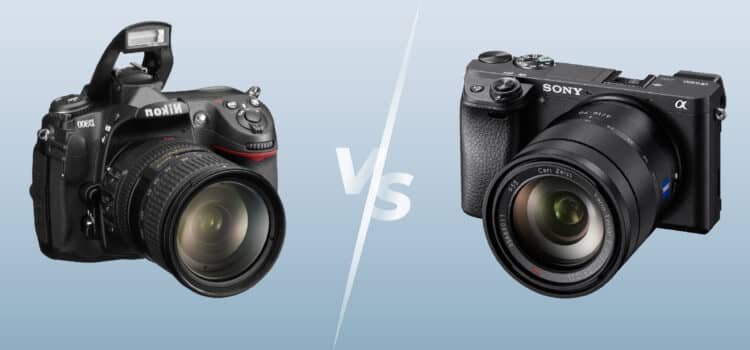
Firstly, let’s understand the basic differences between a DSLR and a mirrorless camera are essentially in the underlying design and method of capturing light. So, let’s learn how differently a DSLR and mirrorless cameras capture. DSLRs use a mirror system to divert light to an optical viewfinder so that the photographer can see a direct optical image. Mirrorless cameras remove the mirror, allowing light to reach the sensor directly and create a digital preview via an electronic viewfinder.
Size and Weight
Generally, mirrorless cameras are much more compact and light weight compared to DSLRs, which are heavier with the presence of a mirror and prism mechanism. This mirrorless is the top go-to for photographers who don’t want to sacrifice quality while ensuring adaptability.
Autofocus and Performance
By 2026, the precision of autofocus has significantly improved mirrorless cameras, very often outperforming DSLRs. The on-sensor phase detection autofocus in mirrorless cameras offers faster, more accurate focusing, especially with fast-moving subjects. DSLRs were generally better for autofocus in action photography, but that gap has largely closed.
Viewfinder Experience
DSLRs have an optical viewfinder that provides a lag-free, real-world preview, some photographers prefer the natural feel this affords. In contrast, mirrorless cameras provide electronic viewfinders that display a live digital preview, complete with exposure levels and other settings for exact composition and focus adjustments before shooting.
Pros & Cons of DSLR and Mirrorless Cameras
DSLR Pros:
- Longer battery life, often double that of mirrorless cameras.
- Optical viewfinder provides true-to-life image preview without electronic lag.
- Entry-level options are usually cheaper.
- Extensive lens availability due to regular usage.
DSLR Cons
- DSLR is inconvenient for travel or all-day shooting because it’s heavier.
- Autofocus, while improved, is generally slower and less accurate compared to mirrorless.
- Video capabilities tend to lag mirrorless models.
Mirrorless Pros:
- The compact, lightweight design enhances portability.
- Faster and more accurate autofocus; increased frame coverage.
- Advanced video features such as 4K/8K recording and superior autofocus tracking.
- Electronic viewfinder showing real-time exposure and settings.
Mirrorless Cons
- Shortened battery life because of continued use of EVF and screen.
- The selection of lenses is still growing, though it is improving rapidly.
- May have ergonomics that feel less comfortable for some users.
Video vs. Photo Use
Mirrorless cameras have now become the default choice among videographers and hybrid shooters due to their feature-rich video capabilities, including internal 8K recording, focus tracking for humans and animals, high frame rates, and professional log profiles for color grading. DSLR models, on the other hand, tend to feature lower video capabilities and are better used by still photography enthusiasts.
DSLRs still provide value for photo-only users with their traditional ergonomics and longer battery life. However, mirrorless cameras have top-notch still image quality while offering the added advantage of an EVF preview and subject detection.
Price & Size Considerations
Entry prices for DSLRs are usually low, thus making them the best choices as entry cameras for novice buyers on a tight budget. While still competitive, mirrorless cameras do tend to carry a higher upfront price tag, reflecting their advanced tech and compact form of factors.
The mirrorless models are essentially much smaller. That has an impact not only on transportability but on the sizes and weight of lenses, too-another important factor for travel photographers or those carrying cameras during the whole day.
Who Should Buy Which?
DSLR is best for:
- Beginners on a budget need reliable, no-frills camera experience.
- Photographers who would prefer a traditional optical viewfinder and longer battery life.
- Users who have collected DSLR lenses and want to upgrade bodies without changing lenses.
- Those focused primarily on still photos rather than video.
Mirrorless is best for:
- Hybrid shooters require excellent video and photo capabilities on one device.
- Photographers who value compactness and light equipment.
- Users who require professional level autofocus and performance features. Professionals and enthusiasts who are ready to invest in modern lenses and technology.
Conclusion
To conclude, the comparison below of DSLR versus mirrorless for 2026 equips you with a clear look at various strong and weak points of each system. Knowing these factors means that whether you go with a DSLR or mirrorless camera, you’ll be able to confidently choose the best entry-level camera or step up to gear that matches your creative vision in both photography and video.