

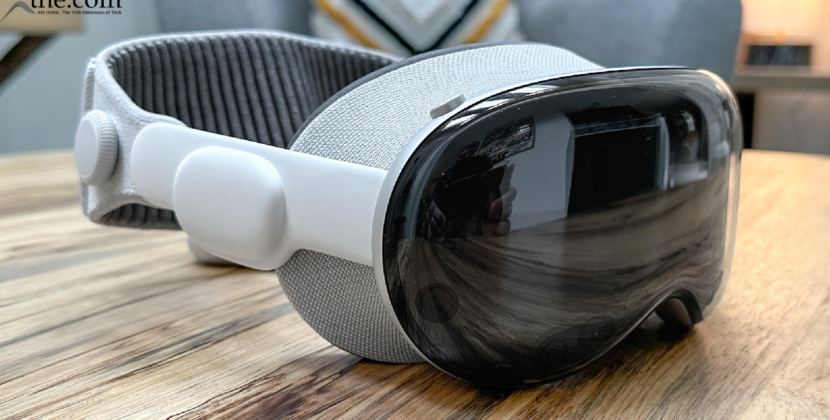




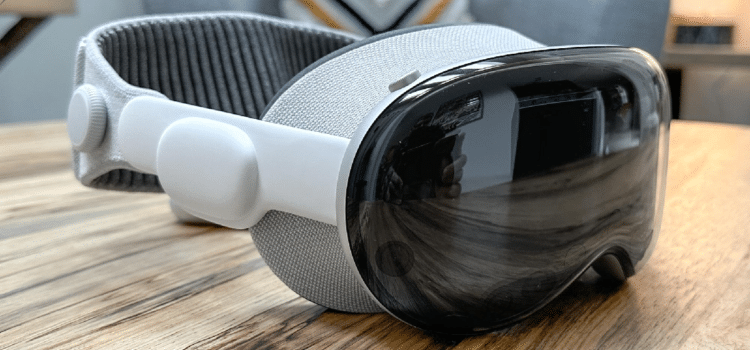
The Apple Vision Pro marked Apple’s initial entry into the emerging AR/VR market in 2024. While the device was expensive and considered underdeveloped by some, it showed significant potential for upcoming innovation.
Recent reports suggest that Apple is developing two Vision Pro models simultaneously:
- The anticipated Vision Pro 2
- A more affordable consumer-focused model, which may be named Vision Air (though this has not been confirmed)
It is clear that a Vision Pro successor is in development, and Apple is still committed to extended reality (XR) technology.
Following Apple’s annual WWDC event in June 2025, a new Vision OS update was announced, but no new hardware was announced. In October 2025, reports indicated that Apple had paused development on future Vision Pro models. The company is reportedly focusing on augmented reality via Apple Glasses, an unusual shift in its product strategy.
Please read our Vision Pro review to learn more.
This page will be updated with the latest information on the potential Apple Vision Pro 2. Please check back regularly for updates.
What we know so far:
- Vision Pro 2 will be upgraded to the Apple M5 processor.
- Vision Pro 2 will get Apple Intelligence.
- The device will retain the same design and price as the original Vision Pro.
Jump to:
- Release date
- Price
- Head strap and comfort
- Hand tracking
- Eye tracking and controllers
- Storage
- Design
- Display
- Battery
- Features and software
Release Date
Mixed reports about when Apple will release its next spatial computing device, and it seems Apple has not made a final decision yet.
The most recent report coming from trusted Apple insider Mark Gurman claims that the Apple Vision Pro 2’s release has been pushed back to sometime between late 2025 and spring 2026.
This means we could be waiting for at least another year, or possibly longer, for the Apple Vision Pro 2 as Apple decides on its upcoming moves.
Some rumors suggest that an Apple Vision Pro Lite could arrive sooner. This version would be simpler and more affordable than the initial version. Still, these rumors are unconfirmed, so it’s best to be cautious.
In April 2025, online leaks suggested the Vision Pro 2 might launch sooner than expected. While there was little information on its technical or financial features, the Vision Pro 2 could be released alongside the Apple iPhone 17, which may happen as early as September 2025.
Price
The first Apple Vision Pro launched at a very high price of $3,500. This is well above what AR/VR fans usually pay, especially since the popular Meta Quest 3 headset costs $500 and offers more experience.
The price was also more than most tech fans were willing to pay, so the Vision Pro sold fewer units than Apple expected.
It’s normal for a first-generation advanced product to be expensive. However, the Vision Pro faced tough competition from much cheaper devices and lacked standout apps and users, which hurt its success.
Will the Apple Vision Pro 2 cost less? So far, no reliable rumors or leaks have shown a lower price. Apple will likely keep the price at $ 3,500, the same as before.
Head Strap and Comfort
Apple tried to make its Mixed Reality headset stand out in two main ways:
- Calling it a spatial computer
- Giving it a unique head strap design
This strap wraps around the back of the user’s head rather than going over the top, as with most headsets.
While the head strap looked better, it was uncomfortable because the headset’s front-heavy weight rested on the user’s face. The Vision Pro is also quite heavy, weighing 650 grams.
To address this, Apple included both the better-looking but less comfortable Solo Knit Band and a Dual Loop Band with the Vision Pro. The dual-loop band goes over the user’s head and spreads the weight more evenly, similar to other headsets.
For the Apple Vision Pro 2, we will likely see the same two head straps, unless Apple decides to switch to a traditional headset band and goes around both the back and top of the user’s head. This option may look less unique and be a bit bulkier, but it would be much more comfortable.
Hand Tracking, Eye Tracking, and Controllers
The Apple Vision Pro 2 will rely on eye tracking and hand tracking, like its predecessor, for user input. In our Apple Vision Pro review, we were impressed with its accuracy, especially since this technology was already ahead of the competition on Apple’s first attempt.
I must mention the lack of controllers in the first Apple Vision Pro. While eye and hand tracking made it simpler and more futuristic, the absence of controllers does not bode well for AR/VR gaming. Gaming is the driving force behind every other AR/VR headset on the market.
While 3rd parties have already released controllers for Vision Pro, Apple might introduce its own in the future as an optional gaming accessory. This is pure speculation, but it would make sense. We will keep you updated if any news on official Apple Vision Pro controllers appears.
Storage
Apple Vision Pro 2 will likely come with the following storage options:
- 256 GB of storage for $3,499.
- 512 GB of storage for $3,699.
- 1 TB of storage for $3,899.
These are speculations based on the storage options of the first Apple Vision Pro, as there is currently no reason to expect changes in that area.
Apple is known for a significant price increase on storage upgrades. So, a price of nearly $4,000 for a 1TB Apple Vision Pro 2 is not out of the question.
Is the Apple Vision Pro 2 likely to be the best and most immersive way to watch content in AR and VR? The need for Mohs storage depends on whether the user streams content online or downloads it to the handset. If it is the latter, Mohs storage will be in demand.
Like any modern flagship product, the Apple Vision Pro 2’s storage will not be expandable via a microSD card. So, the storage option you buy will be the one you have for the device’s lifetime.
Design
Reliable sources such as Mark Gurman say the Apple Vision Pro 2 will likely retain the same design as the first model, despite internal changes and upgrades.
We can expect the same premium, though a heavy build featuring glass on the front and metal on the sides. The external battery, which must be connected to the headset at all times, is also made of metal.
For reference, the first Apple Vision Pro weighs about 650 grams. We do not expect the Vision Pro 2 to be any lighter, partly because of those premium build materials.
We can also expect the same lenticular display upfront, showing either:
- The user’s eyes when they are using the pass-through and seeing their surroundings through the headset’s cameras
- An abstract, colorful pattern when they are fully immersed in virtual reality
Similarly, we expect the same array of complex cameras and sensors around the headset used for hand tracking, tracking the user’s real-life environment, and displaying it in pass-through mode.
On the top right of the headset, the scroll wheel, akin to Apple’s Watch Crown, will also return, letting the user switch between Pass-through (Mixed Reality) and VR mode.
Display
Like its predecessor, the Apple Vision Pro 2 is expected to feature micro-OLED displays, one for each eye, with a resolution of 3600 x 3200 pixels per eye and a refresh rate of up to 100Hz.
The display specs on the first Vision Pro were already cutting-edge and likely a big reason for its high price. Apple not upgrading them yet is reasonable and expected.
Battery
The Apple Vision Pro 2 is expected to use the same external battery as its predecessor, which must be always connected to the headset via a magnetic cable to function. The external battery also connects the headset to a wall outlet, enabling indefinite use.
Apple Vision Pro battery (included with the headset and available as an additional spare for $200) is a 3166 mAh battery.
After testing, it lasted about two hours on a single charge. There is no reason to expect that the Apple Vision Pro 2 will have a longer battery life unless Apple uses a more efficient processor. Even then, any increase would likely be insignificant.
Features and Software
Multiple features are expected for the Apple Vision Pro, including Apple Intelligence, which was not available on the first Vision Pro. Apple Intelligence is Apple’s answer to the AI trend and will bring a more conversational Siri and useful AI additions to the Vision Pro’s software.
The Mac Virtual Display feature will return, allowing Apple Vision Pro 2 users to smoothly connect the headset to their MacBook and get a virtual portable 5K display.
Currently, on the 1st-gen Apple Vision Pro, this feature supports only one virtual display. We can speculate that the Apple Vision Pro 2 will have the processing power to offer two or even three, but for now, this is unconfirmed wishful thinking.
In terms of software powering the Apple Vision Pro, that would likely be Vision OS 3. It’s a spatial computing operating system developed by Apple specifically for AR/VR and is based on iPadOS.
When launching the headset, the user gets a honeycomb array of icons for their apps, as well as a side menu for things like changing their virtual environment.
The current version of Vision OS 2.2 still lacks the complete App Library found on iPhone, iPad, Android devices, and even the Meta Quest headset. Apple has gone a long way in adding apps, experiences, and games. Before Vision OS 3 and Apple Vision Pro 2 launch, we have yet to see how this develops.
Source:https://www.phonearena.com/apple-vision-pro-2-release-date-price-features-news



