



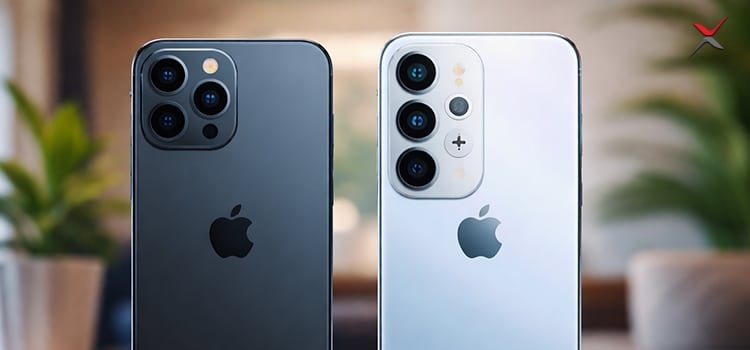
Apple’s latest iPhone 17 series launch provided the market with a new roster of premium devices. With sleek design, exciting features, and impressive camera upgrades, the models are currently available across major online and offline retailers. The base model iPhone 17 seemed like the best buy thanks to all its tasty upgrades. While the Pro models went pro-ier than ever before. And the iPhone Air seemed to be the pick for those that want a pretty phone.
Let’s take a look at the most important upgrades and scope of improvements for Apple. This article also provides an idea if enthusiasts should buy this model or not.
Advancements Like Never Before
120Hz Refresh Rate
It’s a long overdue upgrade, but the 120Hz refresh rate the iPhone 17’s display now supports makes such a huge difference. For years Apple refused to give its base flagship model this treatment, especially when this feature became more common amongst the best cheap phones around, like the Pixel 9a.
Improvement in Screen Size
At 6.3-inches, it’s slightly larger and sits in a sweet spot. It’s big enough to watch a quick YouTube video, but small enough that your hands don’t cramp after using it for long periods of time. The brightness is also very good. It provides 3000 nits in sunlight, which matches the Pro models. Users can read text outside without squinting.
iOS 26 lock and home screen customizations
Even though Liquid Glass takes credit for a lot of things with the way iOS 26 looks and feels, the level of customization it offers with the home and lock screens is awesome. Users can enable photo shuffle to constantly change lockscreen wallpaper with my photos.
The iPhone screen comes alive with the depth effect. It gives the lock screen wallpaper a new 3D-like effect. Another exciting feature is the digital clock, which adapts its size depending on the wallpaper. These new additions make it feel personal.
Camera Control
Apple has kept the functions of the Camera Control unchanged from when the feature was introduced with the iPhone 16. Apple intends Camera Control to be as simple as possible, but the company should focus on “pro” mode that could be unlocked to give more controls for things like the shutter speed, ISO, aperture, and focus.
Camera
Camera-wise, the iPhone 17 is punching well above its weight. The 48MP main sensor, coupled with Apple’s excellent night mode, delivers brilliant results in low light. The night shots are not the grainy, smeary mess that used to get unless users hold it perfectly still. The Phone 17 consistently delivers excellent colour balance and quicker focus than the previous model. That said, it does stumble in terms of versatility.
The iPhone 17 also gains an anti-reflective coating and a 3,000-nit peak brightness, compared to 2,000 nits on the iPhone 16. That should make it easier to see your phone in bright sunlight.
Disadvantages
Apple Intelligence
Apple could have at least revealed a few new tricks since the phone’s release, but there’s been nothing. Apple’s rivals are outpacing it in every aspect of AI, from productivity-centric stuff to AI tools for photo editing. The iPhone 17 lacks the tools like how the Pixel 10 can make complex photo edits. Tools like that prove the time-saving abilities of AI, which is something I can’t say about Apple Intelligence at this point with the iPhone 17.
iPhone 16 vs iPhone 17
Some of the biggest changes between the iPhone 16 and 17 have to do with the display. Apple says it shrunk the borders around the screen on the iPhone 17, expanding the display from 6.1 inches on the iPhone 16 to 6.3 inches on the iPhone 17 without expanding its dimensions. The new Ceramic Shield 2 cover on the iPhone 17 offers 3x better scratch resistance, according to the company.
Both the iPhone 16 and 17 have a 48-megapixel wide-angle camera. But the iPhone 17 upgrades the ultrawide camera from 12 megapixels on last year’s phone to 48 megapixels. The front-facing camera also gets an upgrade, going from 12 megapixels on the iPhone 16 to 18 megapixels on the iPhone 17. There’s a new Center Stage feature for the selfie camera that can automatically adjust from a portrait orientation to landscape to make sure everyone is in the shot.
The iPhone 17 is supported by an A19 chip, which is an upgrade from the A18 chip in the iPhone 16. One key difference is that the iPhone 17 starts at 256GB, while the iPhone 16 started at 128GB.
The iPhone 16 supports up to 22 hours of video playback, according to Apple, while the iPhone 17 bumps that up to 30 hours. Anecdotally, the iPhone 17’s battery lasts over a day, even after taking photos, scrolling through social media, watching videos, texting, sending emails and more. The same can be said about the iPhone 16, so you likely won’t feel a huge difference between the two when it comes to day-to-day activities.
The iPhone 17 arrives with the upcoming operating system onboard, but you’ll also be able to download iOS 26 on the iPhone 16, as well as some older iPhones, once it becomes available publicly. That should help to stretch your battery life on either device.
Like the iPhone 16, the iPhone 17 comes in a range of fun colors: black, white, mist blue, sage (a light green) and lavender. For comparison, the iPhone 16 is available in black, white, pink, teal and ultramarine. Both phones have an aluminum frame.
What’s Common between iPhone 16 and iPhone 17?
Both phones also support the Apple Intelligence suite of AI capabilities, which includes writing tools, image generators and notification summaries. Both the iPhone 16 and 17 have a Camera Control button on the side to quickly launch the camera, snap some shots and use Apple’s Visual Intelligence tool to learn more about what’s around you.
Comparison between iPhone 16 and iPhone 17
| Feature | iPhone 17 | iPhone 16 |
| Display size, tech, resolution, refresh rate | 6.3-inch OLED; 2,622 x 1,206 pixel resolution; 1-120Hz variable refresh rate | 6.1-inch OLED; 2,556 x 1,179 pixel resolution; 60Hz refresh rate |
| Weight | 177 g (6.24 oz) | 170 g (6 oz.) |
| Mobile software | iOS 26 | iOS 18 |
| Camera | 48-megapixel (wide) 48-megapixel (ultrawide) | 48-megapixel (wide), 12-megapixel (ultrawide) |
| Processor | Apple A19 | Apple A18 |
Verdict
The iPhone 17 costs $799, but it’s still a way better value because of the bigger upgrades, including a dual-camera system and that new Center Stage camera. The real improvement is the price-to-performance ratio. At $799, this is the most sensible buy Apple’s offered in years. You get the latest design, that silky-smooth display, proper battery life, and a capable camera.
Final Thoughts
Moving up the ladder, the iPhone 17 Pro is the one that wants to be taken seriously without going full pocket-boulder like its Max sibling. This might be Apple’s most balanced device this year.
FAQs
1. What are the key upgrades of the iPhone 17 compared to the iPhone 16?
The iPhone 17 introduces improvements in processing power, camera capabilities, battery life, and possibly display technology — offering noticeable gains for power users.
2. How does the iPhone 17 battery life compare to older iPhones?
Early tests and reviews suggest the iPhone 17 offers modest improvements in battery endurance, especially during video playback and gaming, making it more reliable for all-day use.
3. Is the price of the iPhone 17 justified?
That depends on your needs — if you value the latest performance, camera tech, and ecosystem features, many find it worth the premium, though budget-friendly alternatives exist.
4. How does the iPhone 17 perform for gaming and demanding apps?
Thanks to a more powerful chipset and optimized graphics, the iPhone 17 offers smooth gaming, faster app loading, and better multitasking.
5. What’s new in iOS on the iPhone 17?
The iPhone 17 ships with the latest iOS version, packed with features like enhanced privacy controls, better AR support, and refined system performance.