
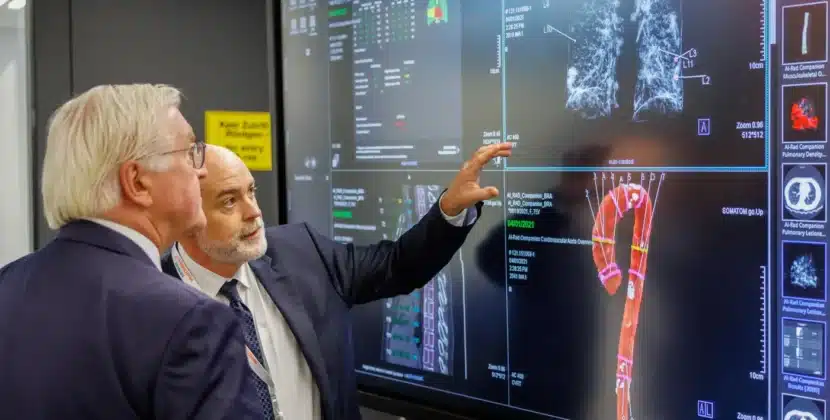




The U.S. Food and Drug Administration has approved a new AI-based diagnostic tool for use in clinical settings, demonstrating the increasing integration of AI technologies into front-line healthcare clinical decision-making. The authorization indicates an increase in regulatory acceptance of machine learning technologies for medical workflows, especially when they can enable rapid analysis of complex clinical information, improving the speed and accuracy of diagnosis.
The approved system will help healthcare providers identify and assess medical problems by analyzing patient information (clinical data) and other inputs, such as imaging and clinical indicators. Although not designed to replace physicians, it will be used as an aid to help providers make better decisions by improving diagnostic consistency and reducing the risk of human error in an emergency environment.
AI Moves Into Clinical Decision Support
The FDA’s approval represents an important change in the use of AI in healthcare. Rather than being applied solely to administrative and/or research tasks, AI is now being used directly in a clinical setting to support real-time clinical decision-making.
AI systems can quickly process large amounts of data (e.g., patient records) and identify opportunities for improvement that a human clinician may not be able to identify within the time it would take them to analyze the same amount of data. Some examples of what AI will be able to provide to the healthcare system include detecting extremely subtle variations in medical images, predicting disease progression rates, and correlating one type of health-related data with other types across multiple patients.
Incorporating AI into the diagnostic process will allow the FDA to provide faster, potentially more accurate clinical evaluations, especially in situations where healthcare practitioners are under significant stress (e.g., working in an emergency room).
Enhancing Diagnostic Accuracy and Speed
AI will revolutionize diagnostics in healthcare. A major advantage of this technology is its capability to rapidly analyze large amounts of complex information, contributing to better patient outcomes when rapid decision-making is essential, for instance, in an emergency room or an intensive care unit.
With the help of AI tools, physicians can receive immediate analyses of whether a patient has an abnormality from imaging tests, lab results, and patient histories, thereby decreasing the time it takes them to make decisions before they receive a lengthy manual review performed by someone other than the physician.
Finally, FDA-approved AI systems do not replace the physician’s judgment but rather serve as a supportive layer, increasing the physician’s confidence in diagnostic decisions.
Integration into Hospital Workflows
Healthcare providers and hospitals are increasingly using artificial intelligence systems to enhance the digital systems already in place in their medical environments, including digital imaging platforms, electronic health records, and diagnostic equipment.
It is anticipated that the new authorized system will integrate with current processes/techniques. Therefore, clinicians can access AI-generated recommendations during patient evaluations. Integrating these systems seamlessly will be vital to getting AI tools accepted, as they will not disrupt the way healthcare is delivered today.
FDA regulatory approval provides confidence that the systems will meet safety and effectiveness expectations for use in real clinical practice.
Applications Across Medical Fields
AI diagnostic systems can assist with many different types of medical diagnoses (i.e., radiology, cardiology, oncology/pathology). For instance, in radiology, AI can detect abnormalities (X-ray, MRI, and CT scan) with a high degree of accuracy.
Cardiology AI models can interpret electrocardiograms (ECGs) and predict the likelihood that a patient will develop a heart problem (before symptoms appear). Oncology machine learning systems enable users to identify and characterize tumors and generate potential treatments using data from past patients.
The versatility of these systems means they provide valuable assistance across almost all diagnostic specialties, especially in high-volume healthcare environments.
Reducing Pressure on Healthcare Systems
Due to increasing population, growth, and aging, there are significant demands on the healthcare systems in the U.S. because of the increased number of people suffering from chronic diseases. One way to relieve this pressure is to use AI tools for routine diagnostics and clinical decision support.
With less time needed for the initial diagnostic process, hospitals can increase throughput and allocate staff resources more effectively. This is especially valuable in rural or underserved areas where access to specialist caregivers is limited.
The FDA has approved AI technology in response to systemic pressures and AI’s potential to address them.
Ensuring Safety and Regulatory Oversight
AI is advantageous for healthcare, but it still needs thorough regulation to be safe and reliable for patients. Before granting approval, regulatory agencies such as the FDA evaluate new medical diagnostic devices using three methods: assessing clinical validation, comparing them to accepted standards for similar devices, and evaluating the risks associated with their proposed use.
Another aspect of ensuring AI system safety is monitoring it after approval. An AI diagnostic system can change over time due to AI system evolution or new training data. Regular monitoring will ensure consistent performance and enable early detection of any problems caused by bias or data errors.
The FDA has stressed the importance of transparency with new AI-based devices used in healthcare and of being held accountable for their use.
Addressing Concerns About AI in Medicine
Health care professionals should take an active role in decision-making and interpreting the AI system’s output to achieve accurate, effective outcomes.
There are various concerns associated with AI, including the privacy of personal data, the potential for algorithms to be biased, and the lack of an understanding of how AI arrived at its decisions. All health care professionals and service providers must ensure they provide fair and equitable treatment to all patients, regardless of ethnicity, gender, or other criteria.
Innovating in AI systems while maintaining ethical standards will be a major challenge for health care service providers.
The Role of AI in Preventive Healthcare
Along with diagnostic purposes, preventive health solutions are leveraging artificial intelligence as part of their systems that use patient data over extended periods to identify risk indicators and accurately predict medical problems before they reach crisis levels. This growing trend toward precautionary healthcare will enable medical services to implement preventive measures earlier, reducing the likelihood of extended hospitalizations and enhancing overall health after discharge through improved patient outcomes. The new software approval will support a broader set of predictive healthcare trends by improving early detection.
Future of AI in Clinical Environments
AI is evolving rapidly, and its application in healthcare will continue to grow. Future solutions may also leverage multimodal data (combining images, genomics, and real-time assessments) to support more informed clinical decision-making.
Through the development of wearable technologies and remote patient monitoring systems, we may also be able to continuously assess patients beyond the walls of a clinical setting.
The FDA will likely remain a primary player in facilitating the introduction of these technologies into the healthcare system.
Conclusion: A New Era of AI-Assisted Medicine
The FDA’s approval of A.I.-based diagnostic tools is a major step forward in the development of medical technology. The introduction of A.I. into clinical decision-making environments has given health care providers new and powerful tools to increase the accuracy and speed of their care delivery processes. Although there are still challenges to providing appropriate oversight and following ethical guidelines in the use of A.I., the integration of A.I. into front-line health care significantly changes how health care is delivered and practiced by physicians.
As A.I. use becomes more prevalent in different areas of health care, it will likely be an important component of contemporary clinical care. This will improve the quality of medical care by providing physicians with better capabilities and ultimately improving patient health outcomes on a global basis.
Source: FDA Gov


