





Houston, Texas | July 9, 2026
NASA Recruits Volunteers for Yearlong Moon and Mars Simulation as Mars Mission Planning Accelerates
A trip to Mars will not fail because of rocket engines alone. It could fail because four people living together for months struggle with isolation, disrupted sleep, limited privacy, or delayed communication with Earth. That is why the NASA Moon Mars simulation 2026 has become one of the agency’s most important research efforts. Through the NASA volunteer yearlong simulation, the agency is asking ordinary people with extraordinary devotion to spend an entire year inside a carefully designed habitat, helping scientists answer questions that no laboratory experiment can completely replicate.
The NASA space habitat experiment is another important step in preparing astronauts for deep-space missions, where there won’t be access to medical care, supply drops, or emergency evacuation.
NASA Moon Mars simulation 2026 prepares for humanity’s next giant leap
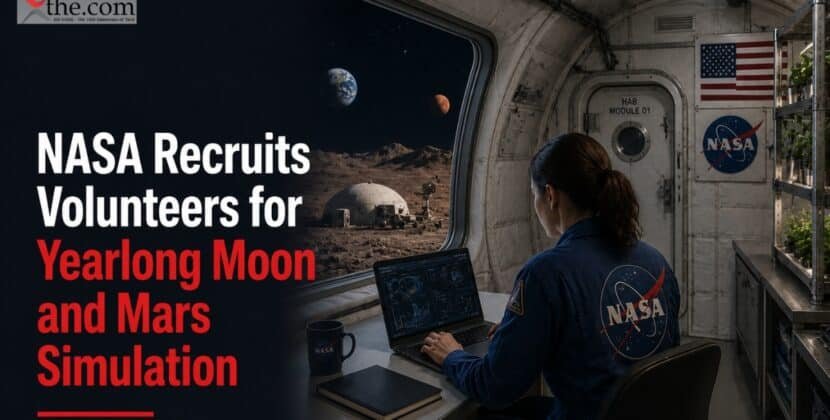
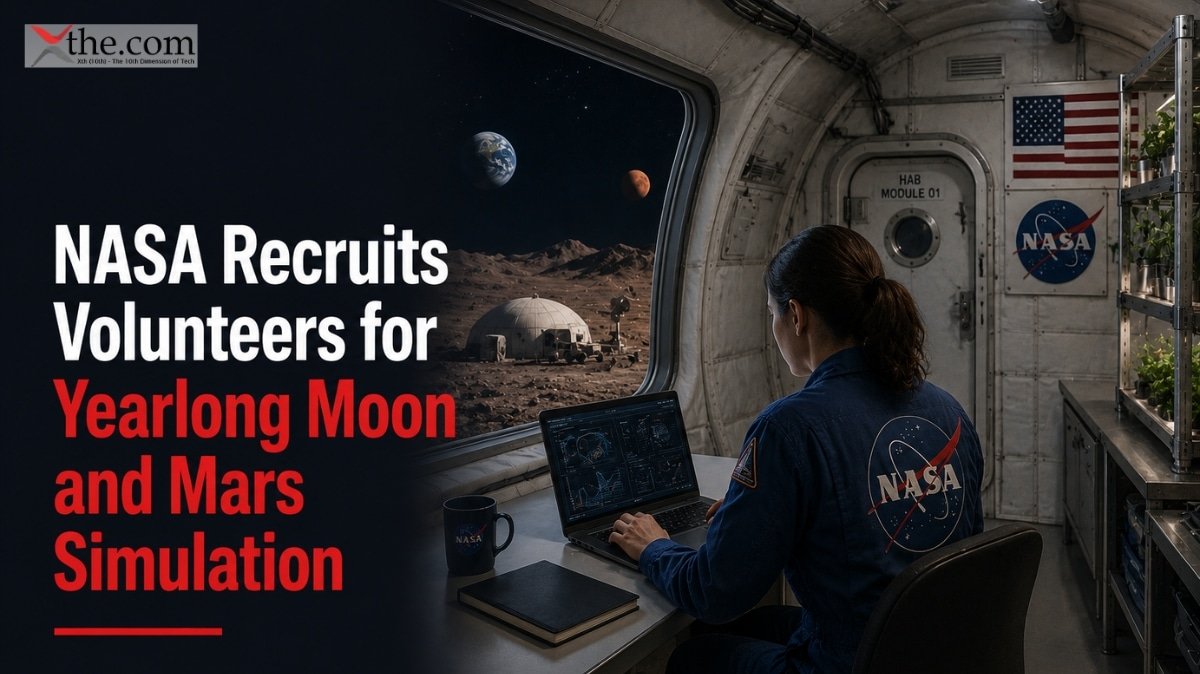
NASA’s new recruitment effort focuses on the Crew Health and Performance Exploration Analog, or CHAPEA. In the NASA CHAPEA Moon Mars simulation 2026, chosen volunteers will live for about a year inside a tightly controlled habitat at Johnson Space Center in Houston, Texas.
Unlike regular astronaut training, these participants won’t go to space. Instead, they’ll live in conditions that are much like those on the Moon or Mars. Researchers will limit communication, resources, personal space, and flexibility to see how crews handle the special challenges of deep-space missions.
This Mars mission preparation simulation lets scientists watch how people behave in ways that short experiments can’t show. Every meal, repair, experiment, emergency drill, and interaction gives important data for ensuing missions.
Why NASA needs volunteers instead of astronauts
Professional astronauts already train for long periods and spend months on the International Space Station. But NASA also wants to see how people from different careers handle long-term isolation.
The NASA volunteer yearlong simulation helps NASA better understand how people outside the astronaut group perform. Engineers, scientists, healthcare workers, military veterans, and others may use different ways to cope and make decisions.
Researchers track many factors during the mission, such as thinking skills, health, nutrition, stress, sleep, teamwork, leadership, and emotional strength. These results help guide how NASA picks astronauts, designs spacecraft, sets medical rules, and runs missions in the future.
Inside the NASA space habitat experiment
Life in the habitat is designed to be challenging and busy.
Participants follow mission schedules, conduct scientific work, handle repairs, exercise daily, prepare meals with limited supplies, and deal with practice emergencies. Each task shows the kinds of challenges astronauts might face on real expeditions to the Moon or Mars.
The habitat copies many parts of living in space. There isn’t much room, supplies are tightly controlled, and crew members can’t just leave if they feel stressed or miss home.
Data transmission delays are built into mimic real Mars travel. On the International Space Station, astronauts talk to mission control right away, but Mars’ crews might wait minutes for a reply from Earth. This delay changes how they make choices in emergencies.
Researchers also study how small teams handle disagreements for months at a time without outside help.
What volunteers must give up for an entire year?
Living in the habitat requires more than just physical strength.
Participants have to be away from family, friends, vacations, holidays, and most of their normal life for about a year. The Internet, entertainment, and contact with loved ones are also very limited to match deep-space conditions.
Volunteers also give up many small freedoms. They can’t go shopping, eat at restaurants, or take weekend trips. Each day is focused on mission plans, science goals, and team duties.
The mental challenge is often harder than the physical one.
Researchers know that boredom, repetitive routines, conflicts, and being stuck inside for long periods can gradually affect how people think and feel. Learning about these effects is a main goal of the NASA space habitat experiment.
Who can apply for the NASA volunteer application in 2026?
The NASA volunteer application 2026 is looking for healthy, motivated people who can work well under pressure.
Applicants usually need education and experience similar to astronaut candidates, though the exact requirements depend on the CHAPEA mission. Good communication, emotional stability, teamwork, and problem-solving skills are all important in the selection process.
Candidates undergo thorough medical checks, psychological tests, background checks, and several interviews before being selected.
NASA wants people who stay steady under stress and can be a positive part of a close-knit team over the long term.
Compensation and commitment are explained.
Many people interested in applying want to know if volunteers get paid.
NASA does pay volunteers, though the sum and compensation details depend on the mission and contracts. Participants aren’t giving up a year of their lives without support. The pay reflects the time and effort the research requires.
The long-tail search phrase “NASA CHAPEA Mars analog simulation 2026 volunteer requirements pay compensation explained” captures one of the most common public questions surrounding the program.
Applicants should know that the pay is for taking part in research, not for being an astronaut. The experience includes strict schedules, extensive monitoring, medical checks, and ongoing data collection throughout the mission.
Artemis, Mars, and the commercial space race
The science learned from the NASA CHAPEA Moon Mars simulation 2026 goes far beyond what happens inside the habitat.
NASA plans to return astronauts to the Moon through the Artemis initiative before aiming for Mars in the 2030s. Choices about spacecraft engineering, crew size, food, medical gear, and mission timing all rely on solid data about how people perform.
Comprehending human behavior is now just as important as rocket technology.
Meanwhile, private space companies are working on ways to reach Mars. SpaceX’s Starship is the only spacecraft currently built primarily for long trips to Mars. The company hopes to launch its first uncrewed Mars mission in 2028, if everything remains on track.
Before sending astronauts on these expeditions, NASA wants solid proof that crews can stay healthy, mentally strong, and able to work well during trips that last year, not just months.
The Mars mission preparation simulation helps answer those questions before real lives are at stake.
Why analog missions matter more than ever
History shows that successful space missions require extensive testing before launching.
Apollo astronauts practiced in mock spacecraft. International Space Station crews ran emergency drills many times before going to space. Mars expeditions need even stricter preparation because rescue won’t be possible.
The long-tail keyword “NASA recruits volunteers yearlong Moon Mars simulation 2026 what it involves how to apply” indicates increasing public interest in these representative missions, which bridge the space between laboratory research and actual spaceflight.
Scientists can’t test every situation during real missions for ethical reasons. Analog habitats allow them to study food systems, medical tools, communication, teamwork, and procedures in safe yet realistic settings.
Each simulation helps reduce unknowns before people embark on one of the biggest journeys ever.
A year on Earth could shape humanity’s future in space.
The volunteers in NASA’s Houston habitat will stay on Earth, but what they learn can shape missions that travel hundreds of millions of miles away. Every talk, repair, tough choice, and teamwork moment helps make future space travel safer.
As Artemis moves forward and private Mars plans grow, all these NASA simulations and volunteer programs are more than just research projects. They lay the careful scientific foundation needed before people can truly become an interplanetary species.
Source: Sick of Earth? NASA is recruiting volunteers for a yearlong Moon and Mars simulation