




Austin, Texas | Thursday, July 23, 2026
Wall Street may overlook a revenue’s miss, but shrinking profits are much harder to ignore.
Tesla had one of its best quarters for vehicle deliveries, with sales beating expert expectations. However, investors were concerned as profits dropped sharply, operating margins weakened, and cash flow turned negative. As a result, TSLA stock falls 3 percent in after-hours trading as markets absorbed the gap between revenue growth and profit pressure.
This quarter showed a tough reality for Tesla: delivering more cars does not always lead to higher earnings.
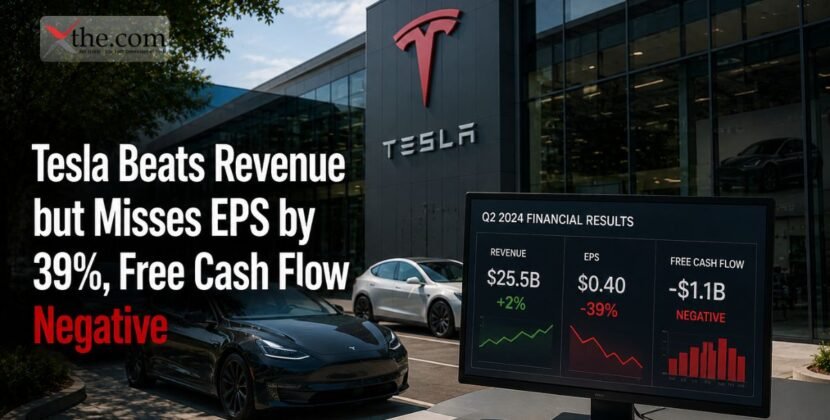
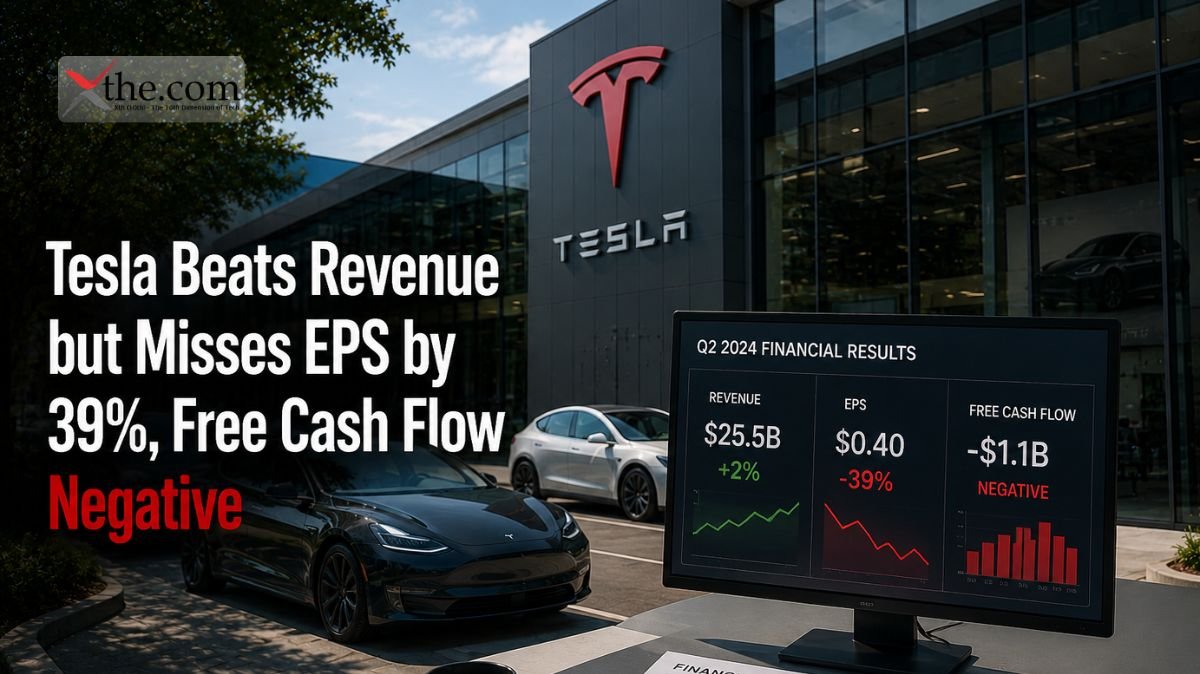
Analysts described Tesla’s Q2 2026 earnings miss. Earnings per share were much lower than expected, even though revenue was stronger than anticipated. Tesla reported $28.24 billion in revenue, but lower margins, fewer regulatory credits, and higher costs hurt profitability.
Tesla Q2 2026 earnings miss Reveals Margin Pressure.
Tesla announced earnings per share of $0.33 compared with Wall Street expectations of $0.54. That represents Tesla EPS misses 39 percent, one of the company’s largest earnings gaps in recent years.
At the same time, Tesla revenue of $28.24 billion beat analyst estimates and was up 26% from last year. Record vehicle deliveries, strong demand for energy products, and more software revenue all contributed to this growth.
Still, investors quickly noticed the gap between revenue growth and profits.
The phrase “Tesla beats revenue misses EPS 39 percent” summed up the quarter. Revenue did grow, but it came with costs. Price competition, higher manufacturing expenses, and investments in new technologies all reduced profits.
Tesla’s earnings report showed that simply increasing scale cannot make up for weaker margins in the long run.
Operating Income Falls Sharply as Regulatory Credits Decline
One of the most worrying numbers in Tesla’s report was the drop in operating income.
The company announced that Tesla’s operating income falls 57 percent year over year, a dramatic contraction that illustrates how quickly profitability can erode in a contested market.
Multiple factors contributed to the decline. Tesla is still investing heavily in self-driving technology, AI infrastructure, robotics, as well as expanding its manufacturing. These investments may help in the long term, but they put pressure on short-term earnings.
At the same time, revenue from regulatory credits, which used to be a big part of Tesla’s profits, dropped a lot. For years, Tesla made money by selling emissions credits to other automakers. But as more competitors launch electric vehicles, demand for these credits has gone down.
The result is captured in another key phrase from this quarter: “Tesla operating income falls 57 percent.”
With less support from regulatory credits, Tesla now relies more on vehicle margins, software sales, and energy products to keep profits up.
Tesla Free Cash Flow Negative Prompts Concerns
Cash flow can sometimes show a different picture than earnings.
This quarter, Tesla reported Tesla free cash flow negative, signaling that capital expenditures and operating requirements exceeded incoming cash. Negative free cash flow is not always a sign of trouble, especially for a company investing in growth. Still, it elicits questions about timing, how capital is used, and future returns.
Tesla is still spending heavily on expanding factories, building AI computing infrastructure, making batteries, and developing robotics. These projects could add a lot of value over the next decade, but investors are starting to wonder how long it will take for these investments to lead to higher profits.
Here’s an example of the challenge: an automaker might sell more vehicles and boost total revenue, but if each vehicle brings in less profit, overall earnings can still fall. This seems to be Tesla’s main issue in 2026.
Why Investors Focused on Profit Instead of Revenue
Markets usually reward growth, but only if it leads to lasting returns.
Tesla’s quarter showed strong demand and wide-scale operations. Still, the market’s reaction suggests investors want proof that more deliveries will lead to better margins.
The combination of Tesla EPS misses 39 percent, Tesla free cash flow negative, and Tesla operating income falls 57 percent outweighed the positive impact of Tesla revenue $28.24 billion beat.
Tesla now has to balance investing in AI, self-driving vehicles, energy storage, and robotics while keeping its main car business profitable.
This careful balancing is getting harder as global competition in electric vehicles heats up. Chinese companies are expanding worldwide, traditional automakers are making more EVs, and consumers are still very sensitive to prices.
What Comes Next for Tesla?
Tesla is still one of the world’s most influential industrial and tech companies. Its goals go far beyond cars, including autonomous transport, robotics, energy systems, and artificial intelligence.
Still, markets judge companies for one quarter at a time. This earnings season’s story is clear: Tesla’s Q2 2026 earnings miss shows strong demand but growing pressure on profits.
For investors, the main question is no longer if Tesla can grow revenue. Now, it’s whether future growth can bring back better margins, create positive cash flow, and justify its big long-term investments.
The next few quarters will show whether 2026 is just a temporary earnings setback or the start of a tougher period for the world’s biggest electric vehicle maker.
Source: Tesla tumbles 14% to 11-month low as profit miss, capex spending outlook weighs on stock