






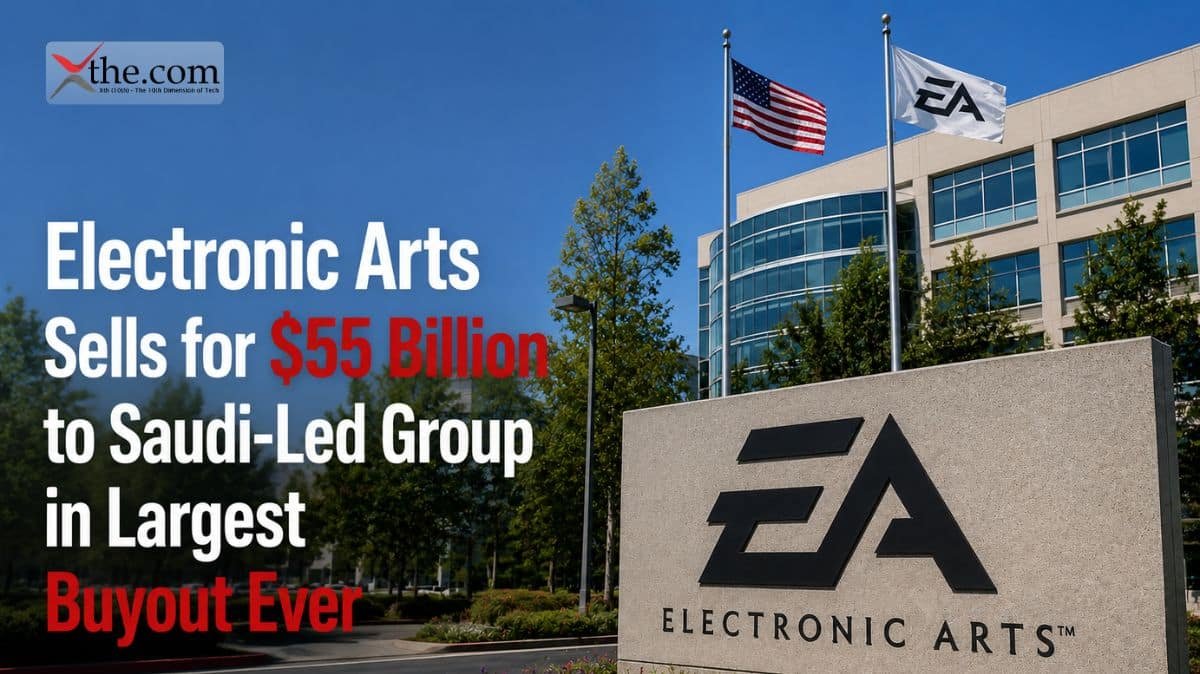
The maker of The Sims, EA FC, and Battlefield is going private — and gamers are wondering what Saudi ownership means for their favorite franchises.
Electronic Arts, the iconic American video game publisher behind The Sims, EA FC, Battlefield, and Apex Legends, has been acquired for $55 billion by a consortium led by Saudi Arabia’s Public Investment Fund. The deal, which closed on August 5, 2026, is the largest leveraged buyout in history — and it is sending shockwaves through the gaming industry.
The consortium includes private equity giants Silver Lake and Affinity Partners alongside the PIF, giving the Saudi sovereign wealth fund effective control over one of the most valuable entertainment companies in the world. EA will be delisted from the NASDAQ and taken private, ending its 32-year run as a publicly traded company.
“The Saudis Now Own Your Games”
The acquisition is the latest and most aggressive move in Saudi Arabia’s strategy to become a global entertainment and esports powerhouse. The kingdom has already invested billions in gaming through its Savvy Games Group subsidiary, snapping up stakes in Nintendo, Capcom, and Take-Two Interactive. But buying EA outright is a different league entirely.
“This is not just an investment — this is a takeover,” said industry analyst Michael Pachter of Wedbush Securities. “The Saudis now own The Sims. They own EA FC. They own Battlefield. For a country that has been accused of using sports and entertainment to launder its reputation, this is the biggest score yet.”
The deal has reignited debates about ‘sportswashing’ and whether Saudi money is fundamentally reshaping Western entertainment. Human rights organizations have criticized the PIF’s investments, pointing to Saudi Arabia’s record on freedom of expression, women’s rights, and the murder of journalist Jamal Khashoggi.
What Happens to the Games?
For the 700 million-plus players who engage with EA titles annually, the immediate question is what changes under Saudi ownership. The consortium has pledged to keep EA’s current leadership in place and has promised not to interfere with creative decisions — assurances that have been met with skepticism.
Industry insiders worry that Saudi influence could eventually lead to content censorship, particularly in games with LGBTQ+ characters, political themes, or mature content that conflicts with conservative Saudi values. The Sims franchise, which has long included same-sex relationships and gender customization, is seen as particularly vulnerable.
“EA has spent years building inclusive, diverse games,” said a current EA developer who spoke on condition of anonymity. “If the new owners start dictating what stories we can tell and what characters we can create, that culture dies. And a lot of us will walk.”
The Financial Engineering
The $55 billion price tag represents a 34% premium over EA’s share price before deal rumors began circulating. To finance the acquisition, the consortium has loaded EA with approximately $25 billion in debt — a staggering leverage ratio that could force aggressive cost-cutting.
Analysts predict layoffs, studio closures, and a pivot toward live-service games with recurring revenue models. Single-player experiences like the Dead Space remake and Dragon Age may face reduced budgets as the new owners chase the predictable cash flows of FIFA Ultimate Team and Apex Legends microtransactions.
For gamers, the message is clear: the house that Madden built just got new landlords. And they are not from around here.








