




Introduction
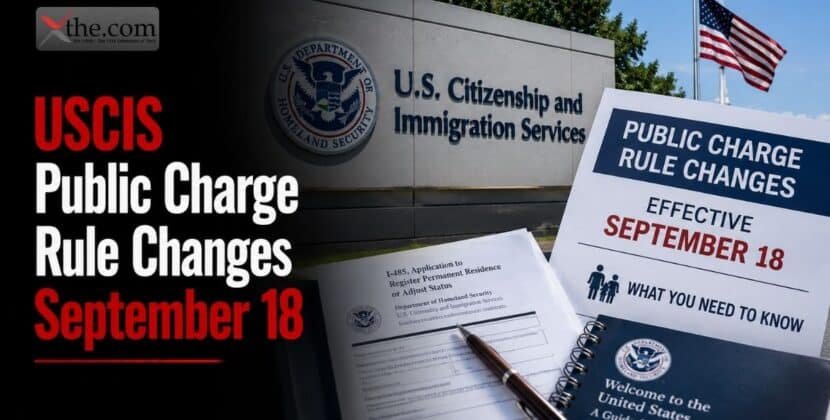
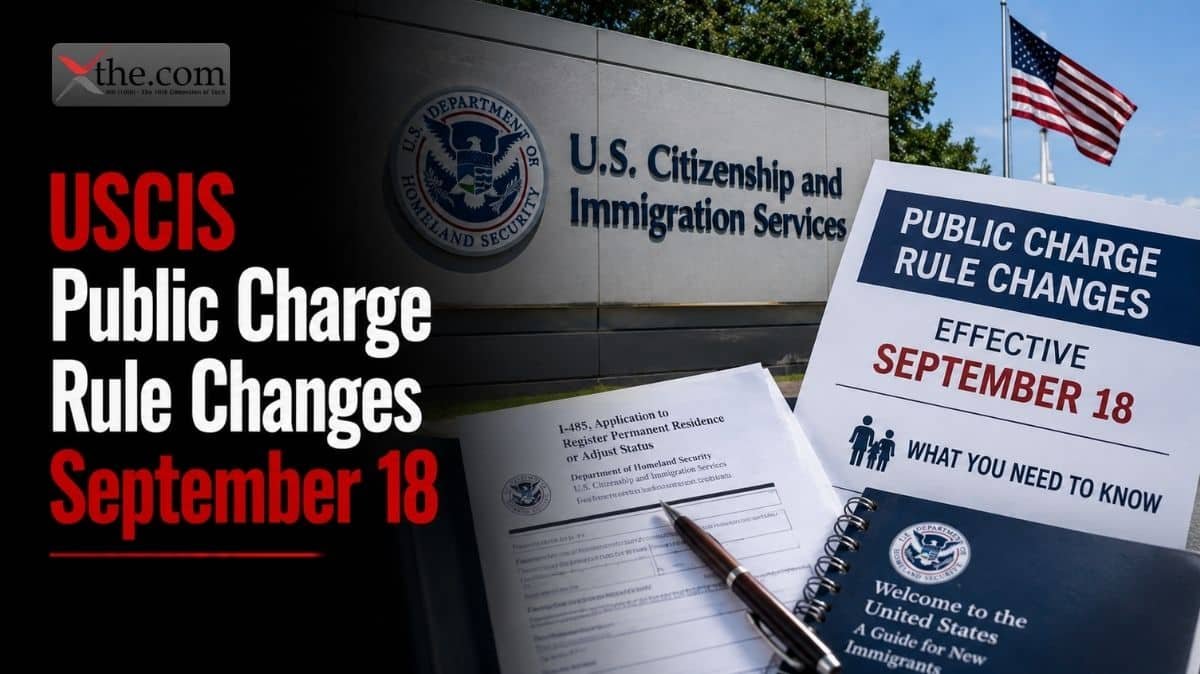
A major change to U.S. immigration law is set to take effect on September 18 2026 when new public charge rules will fundamentally alter how green card applications are evaluated. The Department of Homeland Security has finalized a rule rescinding the 2022 Biden-era public charge regulations and replacing them with a broader more discretionary framework.
The new rules will expand the types of public benefits that immigration officers can consider when determining whether an applicant is likely to become a public charge a legal term meaning someone who depends on government assistance. The change is expected to make it significantly harder for lower-income immigrants to obtain green cards.
What Is the Public Charge Rule
The public charge ground of inadmissibility is a provision in U.S. immigration law that allows the government to deny green card applications to individuals who are deemed likely to depend on government benefits. The concept has been part of immigration law for over a century but its interpretation has varied significantly across different administrations.
Under the 2022 Biden-era rule USCIS officers were required to follow a narrow and predictable test when assessing public charge applications. The rule clearly defined which benefits would be considered and provided applicants with a straightforward framework for demonstrating that they would not become public charges.
What Changes Under the New Rule
The new rule effective September 18 2026 rescinds the detailed standards of the 2022 regulation and gives USCIS officers much broader discretion to evaluate applications. Officers will now be directed to weigh all relevant facts on a case-by-case basis rather than following one narrow test.
For benefits received on or after September 18 2026 USCIS will consider any and all means-tested public benefits. This includes programs like Medicaid SNAP food stamps Supplemental Security Income Temporary Assistance for Needy Families and housing assistance among others.
Who Is Affected
The new rule primarily affects immigrants who are applying for adjustment of status to become permanent residents or green card holders. It does not apply to refugees asylum seekers or individuals with certain other immigration statuses who are exempt from the public charge ground.
Immigration attorneys say the rule will have the greatest impact on lower-income immigrants who may have used public benefits at some point during their time in the United States. The expanded discretion given to officers means that even applicants who previously would have passed the public charge test may now face challenges.
Exemptions and Protections
Despite the broader scope of the new rule there are several important exemptions. Certain categories of immigrants are exempt from the public charge ground including refugees asylum seekers T visa holders survivors of domestic violence and certain other humanitarian categories.
Additionally the new rule does not consider benefits received by family members such as U.S. citizen children. This means that immigrant parents who use Medicaid or SNAP for their American-born children will not be penalized for those benefits in their own green card applications.
Legal Challenges Expected
Immigration advocacy groups have signaled that they plan to challenge the new rule in court. Similar legal challenges were filed against the Trump administrations 2019 public charge rule which was ultimately struck down by federal courts.
Legal experts say the broader and more discretionary nature of the new rule may make it more vulnerable to legal challenge. The lack of clear standards and the wide latitude given to officers could be grounds for courts to find that the rule is arbitrary and capricious under the Administrative Procedure Act.
Impact on Immigrant Communities
Community organizations that serve immigrant populations have been preparing for the new rule for months. Many have been advising clients to complete their green card applications before September 18 and to avoid enrolling in public benefits programs that could jeopardize their immigration status.
Healthcare advocates are particularly concerned that the new rule will deter immigrants from seeking medical care even in emergencies. Studies have shown that public charge rules regardless of their actual scope create a chilling effect that discourages immigrants from accessing benefits they are legally entitled to.
What Applicants Should Do
Immigration attorneys are advising applicants who are eligible to file their adjustment of status applications before the September 18 effective date. Applications postmarked or electronically submitted before that date will be evaluated under the current 2022 rule which provides more predictable and favorable standards.
For applicants who cannot file before the deadline attorneys recommend consulting with an experienced immigration lawyer to assess their individual situation and develop a strategy for navigating the new rule. The expanded discretion means that each case will need careful individual analysis.
The Bigger Picture
The public charge rule change is part of a broader shift in U.S. immigration policy under the Trump administration which has implemented numerous restrictions on legal immigration since taking office. From the 75-country visa pause to tightened H-1B requirements the administration has systematically made it more difficult for immigrants to obtain and maintain legal status in the United States.
Critics argue that the policies are designed to reduce immigration by making the process more complex and more expensive. Supporters counter that the rules are necessary to ensure that immigrants who come to the United States can support themselves and do not become dependent on taxpayer-funded programs.
The new public charge rule is expected to affect tens of thousands of green card applications annually and its impact will be closely watched by immigration advocates policymakers and legal experts in the months ahead.
Sources
- Federal Register: https://www.federalregister.gov/documents/2026/07/20/2026-14539/public-charge-ground-of-inadmissibility
- CTM Legal Group: https://www.ctmlegalgroup.com/resources/new-public-charge-rule-effective-september-18-2026-a-guide-for-green-card-applicants
Historical Context
The public charge concept has been part of U.S. immigration law since the Immigration Act of 1882. Over the past century its interpretation has shifted dramatically from a narrow focus on direct cash assistance to a broad consideration of various government benefits. The Trump administrations approach represents one of the most expansive interpretations in recent history.
The back-and-forth between administrations on the public charge rule illustrates the broader instability in U.S. immigration policy. Each administration has sought to reshape the rules to reflect its priorities creating uncertainty for millions of immigrants and their families.
Economic Impact
Economists have noted that the public charge rule could have significant economic consequences. Immigrants who forgo public benefits may face worse health outcomes reduced economic productivity and increased financial stress. These costs can ripple through communities and the broader economy in ways that are difficult to quantify but nonetheless real.
Research from the Migration Policy Institute suggests that even small declines in benefit usage among immigrant communities can lead to measurable increases in poverty food insecurity and housing instability particularly in immigrant-heavy communities across the country.