





Trump Sends Billions in Arms to Taiwan as China Threatens Invasion Over Philippines
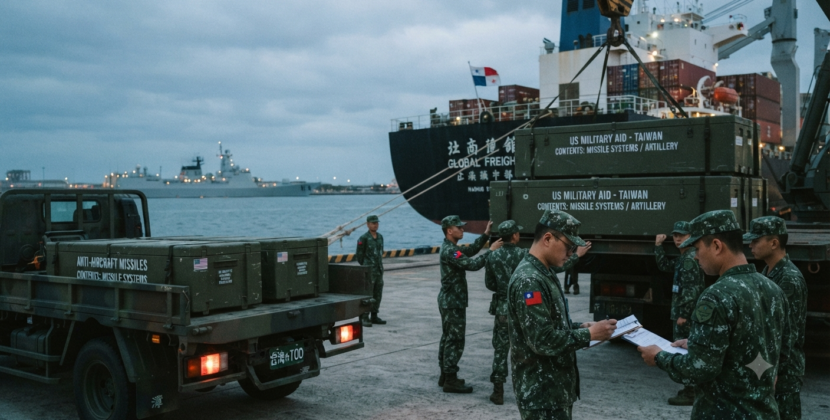
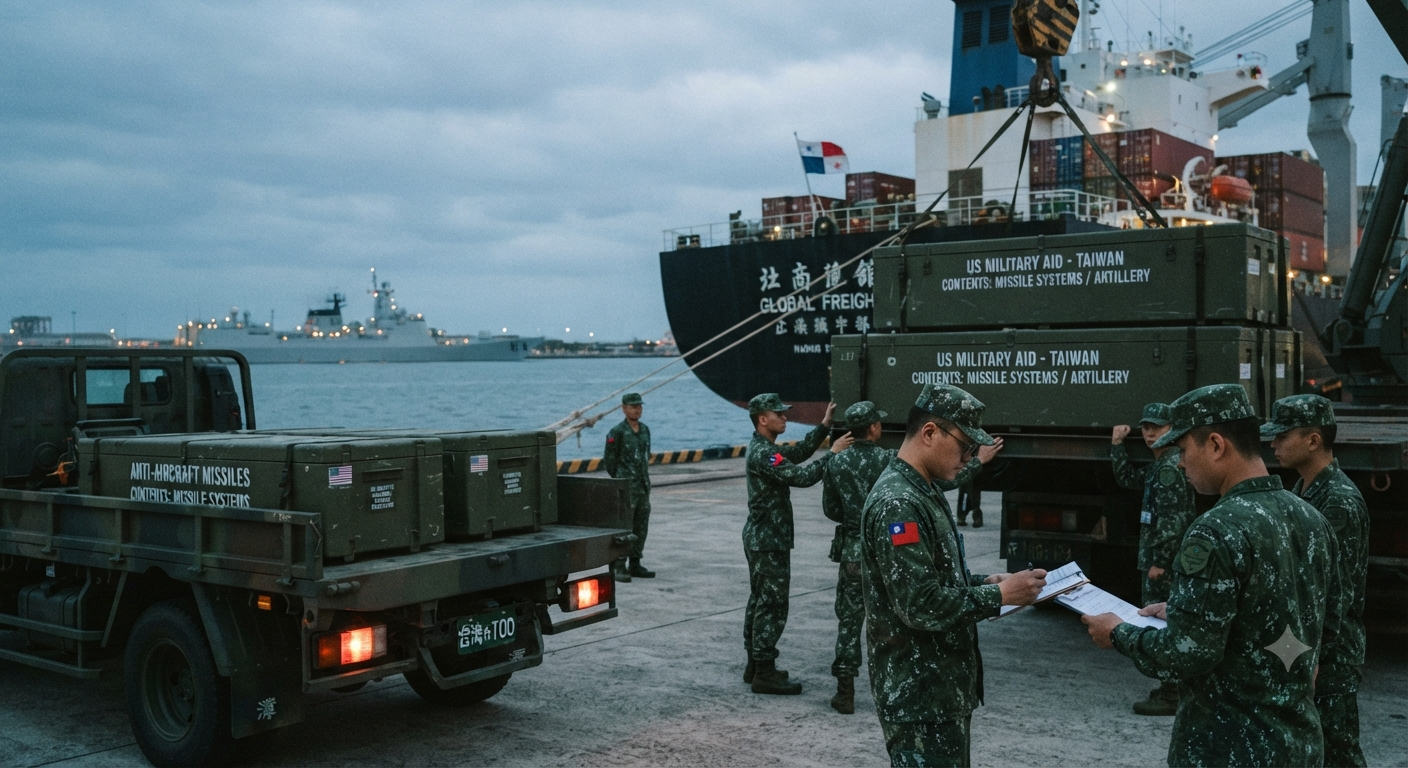
In a move that dramatically escalates tensions between Washington and Beijing, President Donald Trump announced a $20 billion emergency arms sale to Taiwan, sending advanced weapons systems to the self-governing island in defiance of China’s territorial claims. The announcement came just days after Trump signed a sweeping mutual defense agreement with the Philippines, further angering Chinese officials who have threatened military action.
A Double Provocation in the Pacific
The dual actions toward Taiwan and the Philippines represent a significant escalation of Trump’s Pacific strategy, which has combined military buildup with diplomatic pressure on China. The arms sale to Taiwan includes advanced missile defense systems, anti-submarine warfare equipment, and fighter jet components that would significantly enhance Taiwan’s defensive capabilities.
This is about deterrence, a senior White House official said, speaking on condition of anonymity. China needs to understand that any attempt to take Taiwan by force would be met with overwhelming resistance.
The mutual defense agreement with the Philippines, announced earlier in the week, extends American military protection to the Philippines in the event of an attack. China views the agreement as a direct challenge to its claims over the South China Sea, where Beijing has built and militarized several artificial islands.
China’s response has been swift and hostile. The Chinese Ministry of Defense issued a statement warning that Taiwan is an inalienable part of China’s territory and that any attempt to separate it from the motherland will be crushed. Beijing also announced new military exercises near the Taiwan Strait and the South China Sea.
Taiwan’s Response
Taiwan’s government has welcomed the arms sale, calling it a testament to the strong and enduring partnership between Taipei and Washington. President Lai Ching-te of Taiwan said the arms deal would help Taiwan defend itself against growing Chinese military pressure.
Taiwan has long relied on the United States for its defense, and the arms sale fills a critical gap in the island’s military capabilities. Taiwan’s military has been struggling with equipment shortages and recruitment challenges, and the influx of advanced weapons systems will help address some of these shortcomings.
The arms sale is also significant because it comes at a time when Taiwan is increasing its defense spending to record levels. Taiwan has committed to raising military spending to over 3 percent of its GDP by 2028, a significant increase from the current level of approximately 2.5 percent.
China’s Military Buildup
The arms sale must be understood in the context of China’s massive military buildup over the past decade. China has invested heavily in its navy, air force, and missile capabilities, developing weapons systems specifically designed to deter U.S. intervention in a conflict over Taiwan.
China’s military, the People’s Liberation Army, now has more active-duty personnel than the U.S. military and is rapidly modernizing its forces. China has developed anti-ship ballistic missiles that can target aircraft carriers, advanced stealth fighters, and a growing nuclear arsenal.
The Pentagon’s latest annual report on China’s military capabilities warns that the PLA is on track to have the world’s largest navy by 2030 and that China’s military modernization is proceeding faster than previously estimated. The report identifies Taiwan as the most likely flashpoint for a military conflict between the U.S. and China.
The U.S. has approximately 30,000 troops stationed in Japan and South Korea, and maintains significant naval assets in the western Pacific. However, the geographic proximity of China to Taiwan gives Beijing a significant advantage in any potential conflict, as it can mobilize forces quickly and in large numbers.
The Broader Geopolitical Context
The tensions over Taiwan and the Philippines are part of a broader pattern of escalating competition between the U.S. and China that spans trade, technology, and military power. The Trump administration has imposed sweeping tariffs on Chinese goods, restricted Chinese access to advanced semiconductor technology, and increased military cooperation with allies in the Indo-Pacific region.
The arms sale to Taiwan is likely to trigger a new round of retaliatory measures from Beijing, which could include additional tariffs on U.S. goods, restrictions on Chinese exports of critical minerals, or military provocations in the South China Sea or the Taiwan Strait.
Some analysts warn that the escalating tensions between the U.S. and China could lead to a catastrophic miscalculation. The risk of accidental escalation is real, especially as both sides increase their military presence in the region, said Bonnie Glaser, director of the Asia Program at the German Marshall Fund.
What This Means for the Region
The combined effect of the Taiwan arms sale, the Philippines defense agreement, and China’s threats has created the most dangerous moment in the western Pacific since the Cold War. For the nations of the region, the choices are stark.
Japan, South Korea, Australia, and other U.S. allies in the region have expressed concern about the escalating tensions, even as they continue to strengthen their own defense capabilities. Many of these nations have deep economic ties with China and are reluctant to be drawn into a conflict between the two superpowers.
For Taiwan, the arms sale provides a measure of reassurance, but it also raises the stakes of a potential conflict. If China perceives that Taiwan is being armed to the point where reunification by force is no longer feasible, Beijing may feel compelled to act sooner rather than later.
The situation in the western Pacific is a powder keg, said Admiral Philip Davidson, former commander of U.S. Indo-Pacific Command. The question is whether the parties involved have the wisdom and restraint to prevent a spark from igniting it.
The Risk of Miscalculation
Perhaps the most dangerous aspect of the current situation is the risk of miscalculation. With both the U.S. and China increasing their military presence in the western Pacific, the chances of an accidental encounter escalating into a conflict are higher than at any point since the end of the Cold War.
Military analysts have pointed to several potential flashpoints, including the Taiwan Strait, where Chinese and Taiwanese military aircraft frequently encounter each other, and the South China Sea, where U.S. Navy vessels regularly conduct freedom of navigation operations that China views as provocative.
The situation is further complicated by the lack of direct military-to-military communication between the U.S. and China. Unlike during the Cold War, when the U.S. and the Soviet Union established hotlines and protocols for managing crises, there is no equivalent mechanism for managing U.S.-China tensions. This means that a miscalculation or accidental encounter could escalate rapidly without effective channels for de-escalation.
The arms sale to Taiwan adds another layer of complexity to the situation. By enhancing Taiwan’s defensive capabilities, the U.S. is signaling to China that any military action against the island would be costly and risky. But China may interpret this as a sign that the window for peaceful reunification is closing, potentially prompting more aggressive action. The international community is watching closely. European allies have expressed concern about the escalating tensions, and the United Nations has called for restraint from all parties. The stakes are simply too high for miscalculation, said UN Secretary-General António Guterres. We urge all parties to pursue dialogue and diplomacy over confrontation.