





FDA Approves Jemperli So Some Rectal Cancer Patients Can Skip Chemo, Radiation and Surgery
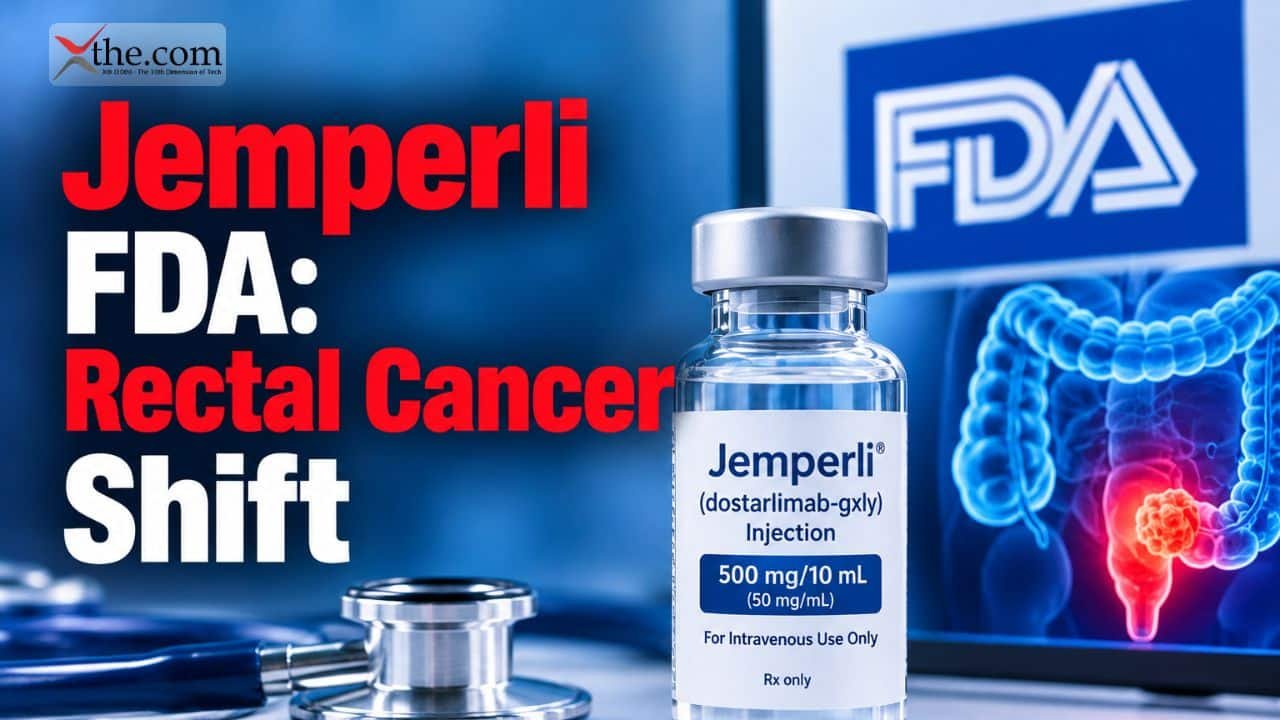
The Jemperli FDA approval rewrites the starting line for a subset of rectal cancer care. On October 19, 2026, the agency granted accelerated approval to dostarlimab, sold as Jemperli, as a standalone first treatment for adults with locally advanced stage II or III rectal cancer whose tumors are dMMR or MSI-H, a molecular profile found in roughly three percent of these cases. In the supporting trial, nearly three quarters of such patients avoided surgery, chemotherapy and radiation entirely. Here is who qualifies, what the evidence shows, and the cautions that matter.
Key Takeaways:
- – FDA granted accelerated approval to Jemperli alone for untreated locally advanced rectal cancer with dMMR or MSI-H tumors on October 19, 2026.
- – Those tumor profiles account for about three percent of locally advanced rectal cancers.
- – In interim trial results, close to three quarters of 154 patients did not need surgery, chemotherapy or radiation after a median follow up of more than two years.
- – The approval is based on interim evidence, and FDA says longer follow up is needed to confirm durability.
- – Immune checkpoint drugs can cause severe or fatal immune reactions, and patients need medical supervision.
What the Approval Covers
The indication is narrow and specific, which is the point. Jemperli is approved as standalone first line therapy for adults with previously untreated stage II or III locally advanced rectal cancer whose tumors are mismatch repair deficient, abbreviated dMMR, or microsatellite instability-high, MSI-H. These molecular markers show that a tumor’s DNA repair machinery is broken in a way that makes immunotherapy unusually effective, because the immune system can more easily recognize the cancer as abnormal.
Standard of care for locally advanced rectal cancer has traditionally been a punishing sequence: chemotherapy, radiation, then surgery, often with a permanent or temporary ostomy and lasting effects on bowel, urinary, and sexual function, plus fertility consequences for younger patients. The FDA announcement states that the new approval may allow certain patients in this population to avoid that entire sequence. That is why oncology circles have followed dostarlimab’s rectal data so closely since early dramatic reports of patients with no detectable cancer and no surgical intervention.
What the Trial Data Shows
The numbers come from AZUR-1, a multicenter, single-arm, open-label phase two study with 154 adults enrolled, tested through an FDA-authorized test for solid tumors. In interim results, almost three fourths of patients did not need surgery, radiation or chemotherapy after a median follow up of more than two years. FDA cautions two things clearly: longer follow up is needed to establish how durable the responses are, and the approval itself is accelerated, meaning it rests on a surrogate or intermediate endpoint and comes with continued evaluation obligations rather than the fuller evidence standard of a traditional approval.
FDA’s approval entry adds dose and response detail: 500 mg every three weeks for nine cycles, a 79 percent objective response rate per independent review, and 71 percent of the 154 patients treated with dostarlimab alone. Reading those caveats correctly matters for patients discussing options. Roughly three in four trial participants with the qualifying tumor profile avoided the standard treatment sequence so far, but the follow-up window is only into its third year for the median patient, and rectal cancer can recur years later. The approval requires ongoing trials to keep following patients for years to come, and results out of that continued surveillance will determine whether the benefit holds.
Safety Profile and Known Risks
Jemperli belongs to the PD-1 inhibitor immunotherapy class, which works by releasing a brake on T cells so the immune system attacks cancer. The price of that mechanism can be immune-related adverse events in the gut, lungs, liver, endocrine glands, skin, or other organs, and these can be severe or fatal, as FDA’s own approval language notes. treated patients need clinicians who can recognize and manage immune toxicity early, using steroids or other immunosuppression when required.
Patients pursuing this pathway should expect structured monitoring plan details: periodic scans to confirm the tumor keeps shrinking, lab work to watch for immune side effects, and a clear escalation path if symptoms appear. The drug is not appropriate for everyone, and FDA’s announcement lists important eligibility and risk considerations that treating oncologists will weigh case by case.
This information is educational and is not medical advice; treatment decisions belong with a qualified oncologist.
Who Qualifies and How Testing Works
Eligibility runs through molecular testing, not through stage or age alone. A patient with stage II or III locally advanced rectal cancer needs a tumor sample tested for mismatch repair deficiency or microsatellite instability-high status.(Those markers appear in roughly three percent of locally advanced rectal cancers.)
The practical sequence for patients is to ask two questions at diagnosis. First, has my tumor been tested for dMMR and MSI-H, and are the results in my pathology report? Second, if the markers are present, is my oncology center familiar with the appropriate protocols for treatment-free intervals? Since the earlier rectal cancer data existed in the literature before this approval, some US cancer centers already ran familiar pathways, while community oncology settings may vary in readiness. The approval gives those conversations a firm regulatory footing as of October 19, 2026.
What This Means for US Cancer Care
The approval accelerates an organ preservation movement already visible in early-stage rectal protocols, where tumor response sometimes allows watching instead of radical surgery. What makes this one different is that the FDA has now formalized immunotherapy alone, with no surgery at all in the surveilled population, as an approved option for the qualifying tumor profile. Insurers follow regulatory labels, so access barriers should be lower this quarter.
A regulatory label that removes surgery for a portion of one cancer type pressures researchers to test the logic in other GI cancers with similar repair deficits, and it raises the stakes on faster dMMR and MSI-H testing at diagnosis. Broader adoption of universal molecular screening at diagnosis, rather than testing only after recurrence, is the most likely near-term system change in the United States.
Treatment decisions belong with qualified oncologists. This article summarizes FDA’s announcement for general awareness and is not medical advice.
What Happens Next
Expect three developments on the clock. First, continued FDA-required follow up from the ongoing trial will publish longer durability data, and those updates determine whether the approval converts to full status. Second, clinical guidelines from US oncology societies will fold the indication into official pathways, which steers community-practice adoption. Third, watch for expansion attempts into earlier or later stage disease and into other dMMR tumor types, since those are the obvious next studies. For patients and families, the near-term step is the conversation at diagnosis about molecular testing, which is the gate that decides who can even access this pathway.
Frequently Asked Questions
Which rectal cancer patients qualify for Jemperli?
Adults with previously untreated stage II or III locally advanced rectal cancer whose tumors test dMMR or MSI-H, a molecular profile found in about three percent of locally advanced rectal cancers, qualify under the October 19, 2026 accelerated approval.
Does Jemperli eliminate the need for surgery, chemo and radiation?
In interim trial results, nearly three quarters of the qualifying patients did not need surgery, radiation or chemotherapy after a median follow up of more than two years, and FDA says the approval may allow certain patients to avoid that sequence.
What are the main Jemperli side effects?
Immunotherapy can cause severe or fatal immune-related reactions affecting organs such as the gut, lungs, liver or endocrine glands, which is why treated patients need close medical monitoring.
Sources:
- https://www.fda.gov/news-events/press-announcements/fda-approves-immunotherapy-may-allow-certain-patients-rectal-cancer-avoid-chemotherapy-radiation-and
- https://www.fda.gov/drugs/news-events-human-drugs/whats-new-related-drugs
- https://www.fda.gov/drugs/resources-information-approved-drugs/fda-grants-accelerated-approval-dostarlimab-locally-advanced-rectal-cancer
- https://www.oncnursingnews.com/view/fda-grants-accelerated-approval-to-dostarlimab-in-dmmr-rectal-cancer