





UNM Cyber Attack: Why New Mexico’s Biggest Hospital Shut Down
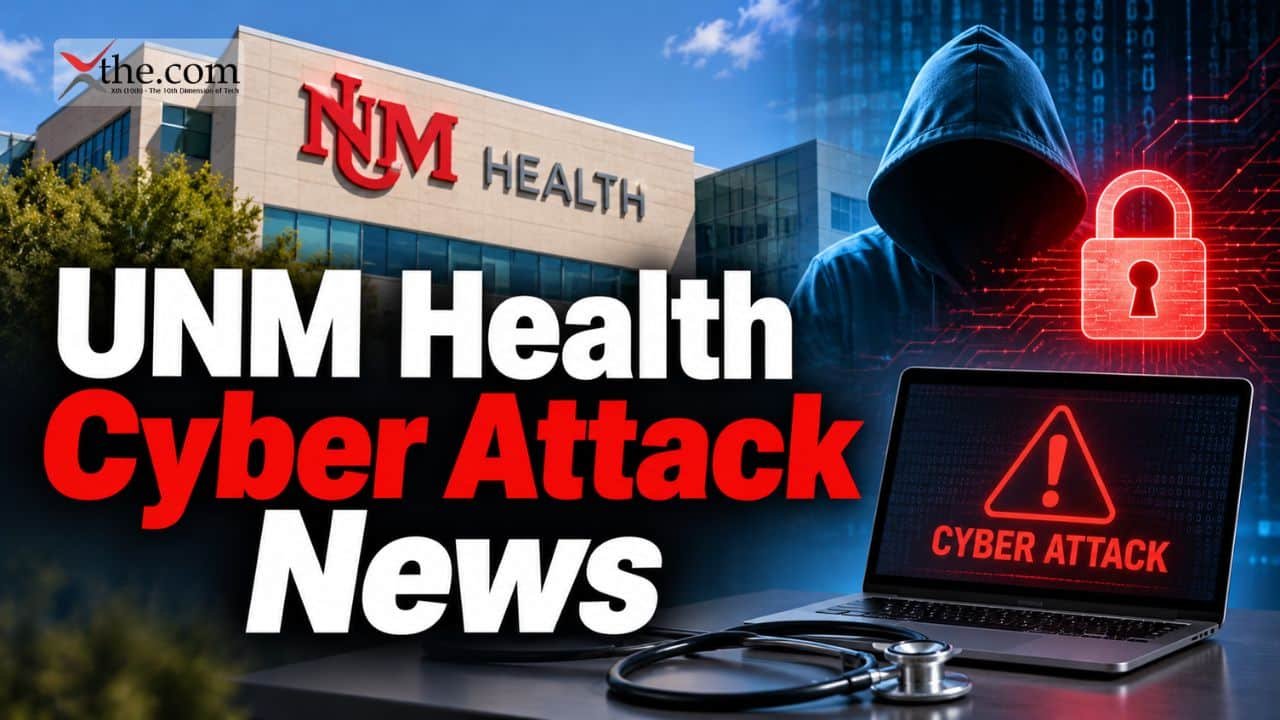
The University of New Mexico Health System was hit by a cybersecurity incident on Monday, October 26, 2026, that forced it to divert ambulances, cancel appointments at more than 30 clinics, and briefly leave the state without a Level 1 trauma center. Here is what the UNM cyber attack did, how patients were affected, and what it signals for hospitals nationwide.
Key Takeaways:
- – UNM Health System diverted ambulances and canceled appointments at 30-plus clinics on October 26, 2026.
- – UNM operates New Mexico’s only Level 1 trauma center, so the diversion left the state without the highest tier of trauma care for hours.
- – Employees reported hearing a message on their computers claiming patient, student, and employee data had been stolen.
- – The FBI is assisting the active investigation; Presbyterian and Lovelace absorbed extra patients.
- – Hospitals and clinics began resuming operations in phases Monday evening, per UNM’s statement.
What happened on October 26
The Associated Press reported that the state’s flagship academic medical center told patients not to show up at its main Albuquerque hospital and to reschedule appointments across its clinical network. Around late Monday morning, employees who were still working heard messages play across their computers claiming that student and employee data and patient information had been stolen. UNM’s spokesperson declined to comment, characterizing the incident as an active law enforcement investigation, and an FBI spokesperson said the agency was assisting but gave no further detail.
The scope matters for scale: UNM Health System says it conducts about 900,000 outpatient visits and receives about 100,000 emergency room visits each year, and runs the state’s only Level 1 trauma center. This is not a rural clinic; it is the referral point for the state’s worst injuries. Presbyterian Healthcare Services and Lovelace Health System, the two other major hospital networks in the Albuquerque area, both confirmed they were coordinating with UNM and taking additional patients. UNM’s Health Sciences Center also canceled Monday and Tuesday classes.
How a hospital cyber attack actually hurts patients
Outages like this one are never just an IT story. When a hospital’s electronic systems go dark, a cascade follows: imaging and lab results can stop moving between departments, elective surgeries get postponed, ambulance crews are rerouted to farther facilities, and patients turn up for appointments they are told are canceled. Research across hospital cyber incidents has consistently linked them to longer ambulance transport times and worse outcomes in the diverted window. At UNM, the visible layer was signs at the main entrance warning clinics were closed and security guards asking arriving patients to reschedule; the invisible layer was clinician workarounds on paper and phones.
For patients in New Mexico, the immediate risk window appears to be the same day. UNM said its hospitals and clinics began resuming operations in phases later Monday, which is fast by industry standards, but many affected systems lock down for days while everything is reimaged and credentials cleared. Anyone with appointments this week should call ahead rather than arriving, in case the phased restart keeps some clinics offline longer than others.
Why the UNM cyber attack response stood out
Josephine Wolff, a cybersecurity policy professor at Tufts University, told the AP that incidents with ransom demands have been a decade-long phenomenon, but that breaching a network to play a message on computers is unusual, and Monday showed “how much work we still have to do to get better at defending ourselves.” That distinction between a conventional encryption attack and a message-dropping intrusion is important: broadcasting a claim of exfiltration can be a psychological tactic, and whether data was actually taken remains unconfirmed in the hours after.
The other differentiator is pace of recovery. Some hospital systems shut down for weeks after ransomware. UNM restarted outpatient operations the same afternoon, which suggests either non-critical systems were segmented from care delivery, backups were usable, or the incident was contained earlier than feared. Each of those options is better than the industry’s worst-case, but all three carry the same open question a spokesperson would not answer: was patient data copied?
Hospital cyber attacks are rising nationwide
US hospitals are increasingly a target for groups that monetize stolen data, because medical records carry a long shelf life on criminal markets and downtime pressures organizations to relent to ransom demands. A cyber incident at a flagship academic center in New Mexico is not unique this year; across the country, hospital systems have disclosed clinic downtime, imaging outages, and network segmentation failures that sent ambulances to alternative emergency departments. The pattern in these incidents is now well-documented in sector advisories: attackers get in through unpatched systems or stolen credentials, move laterally for weeks, and then detonate the attack on a Monday morning when staffing and decision-making are stretched.
The strategic lesson for hospital executives is that resilience is a clinical capability, not a technology budget line. Systems that pre-print downtime paperwork drills, maintain paper fallbacks for lab and imaging ordering, and regularly rehearse disaster-mode operations, whether table-top or live, get wired back up faster. Federal resources on preparedness scaled with the rising threat, and each flagship outage provides more evidence that being ready for a Monday that goes dark is now standard operating procedure.
What patients should do now
If you are a UNM patient or have an appointment this week, call ahead days before the visit to verify the clinic is open rather than relying on the scheduling confirmation you received when it was booked. If you were seen in the system recently, normal post-incident hygiene applies: expect possible communications once the investigation confirms the scope of any data access, monitor your insurance statements for unfamiliar claims, and be skeptical of phishing that references the incident. Legitimate institutions do not ask for payment or identity documents via unsolicited email or text after a breach.
What happens next
The investigation is active, so watch for three follow-ups. First, a decision from the health system about whether protected health information was accessed, which, if confirmed, would trigger federal breach notification timelines and possible class-action litigation. Second, the state’s largest employers self-insure, so their networks need to consider whether their own plans’ claims data was routed through UNM systems. Third, the FBI’s assistance signals that federal authorities view the intrusion as potentially tied to a broader campaign rather than a random hit, which will shape how quickly peer hospitals in the region harden their networks.
Frequently Asked Questions
Was the UNM cyber attack ransomware?
Not confirmed. The health system characterized the incident as a cybersecurity issue and an active investigation rather than naming a method; employees reported hearing messages on computers that claimed data had been stolen, but no encryption-based copy is confirmed.
Is UNM hospital open after the cyber incident?
UNM Health System said hospitals and clinics began resuming operations in phases on the evening of October 26, 2026; patients with appointments early in the week should still confirm by phone in case some clinics restart later than others.
What should patients do if their data was stolen?
Patients should monitor for official breach notifications, review insurance statements for unfamiliar services, and watch for phishing attempts referencing the incident; avoid responding to unsolicited requests for insurance numbers, Social Security numbers, or payment.
Sources: