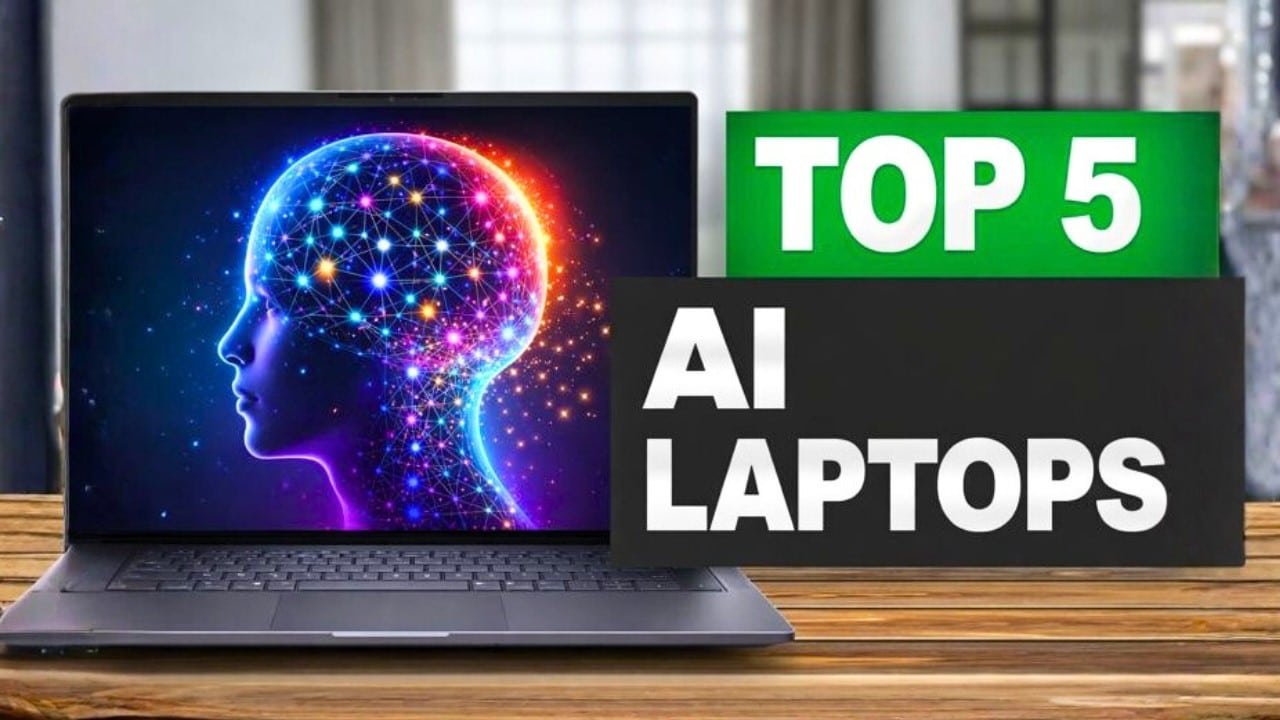
Professionals in the United States now use AI-powered laptops as standard equipment because their work requires processing information, automating tasks, and accessing intelligent assistance. People who use devices with dedicated neural processing units and AI-optimized hardware now have a new standard for what portable computers should deliver. The transition to on-device AI processing hardware is being led by Apple, Microsoft, Intel, and AMD through their development of specialized equipment.
AI laptops measure their performance using three main criteria: operational efficiency, system responsiveness, and the ability to execute machine learning applications without cloud dependency. Professionals can now complete work tasks faster while using fewer cloud resources, thanks to greater control over their private information.
What Defines an AI Laptop in 2026
AI laptops use NPUs as dedicated processors that run machine learning operations while other components in the system execute multiple tasks. The system components enable devices to run AI models locally, supporting functions such as instant transcription, image enhancement, text prediction, and automated workflow management.
Intel and AMD have developed processors with AI acceleration, while Apple enhances its unified architecture with built-in neural engines. New technologies enable users to perform AI operations without draining their batteries or slowing down their systems.
The system enables professionals to execute tasks faster and provides a better user experience across applications.
Apple MacBook Series: Efficiency and Integration
The MacBook range from Apple stands as a leading option for artificial intelligence laptops because its custom-built silicon chips combine the processing unit, graphics unit, and neural processing unit into a single unified design.
The system enables AI tasks to run with maximum efficiency, resulting in quicker video editing, content creation, and data processing while consuming less power. The system achieves seamless AI operation in macOS applications through its design, which connects hardware components with software elements.
Apple devices offer long battery life during artificial intelligence tasks, making this a key benefit. The features make these devices ideal for professionals who need both portable equipment and dependable performance.
Microsoft Surface: AI-First Windows Experience
Microsoft uses its Surface product line as a standard reference model for personal computers that prioritize artificial intelligence. Microsoft’s Surface devices use Windows-based artificial intelligence, including system-wide virtual assistants and productivity applications.
NPUs in Surface devices provide instant AI capabilities that support users in document summarization, meeting transcription, and workflow automation. The system eliminates unnecessary work through its integration, enabling users to complete their daily responsibilities.
Surface laptops provide an excellent solution for Windows-based professionals, offering both hardware and software optimization.
Intel-Powered AI PCs: Broad Ecosystem Support
The Intel Core Ultra processor range supports artificial intelligence workloads across various platforms. The chips feature dedicated artificial intelligence engines that process data efficiently on devices.
Intel maintains its market power through its extensive ecosystem, which includes multiple manufacturers producing AI laptops powered by its processors. This enables professionals to select from various design options while choosing performance levels and cost-effective solutions.
Enterprise applications and creative workflows can both leverage Intel-powered systems due to their flexible design.
AMD Ryzen AI: Performance and Efficiency Balance
In addition to their CPU performance, AMD Ryzen AI processors deliver built-in AI processing. The chips execute standard computing operations together with AI processing tasks.
AMD designs its products to achieve maximum performance while consuming minimal energy, enabling users to run demanding applications such as simulation, data analysis, and content creation on their laptops.
AMD-based systems present an attractive solution for professionals who need to balance processing strength with power-saving features.
Key Features to Look For
AI laptops should be assessed by professionals using criteria that will inform their selection. One important feature is the NPU that powers the laptop, enabling real AI operations. Higher TOPS ratings indicate better performance for AI, measured as the total number of operations completed per second (TOPS).
Memory and storage requirements become essential for systems that operate large models and process high-complexity datasets. The system requires a minimum of 16GB of RAM, but additional RAM will enhance system performance.
The two main battery-life functions are essential because AI tasks demand substantial power. Efficient hardware design enables devices to maintain their operational capabilities throughout extended periods without needing power recharging.
Productivity Gains from On-Device AI
The primary benefit of AI laptops lies in their capacity to boost user efficiency. Users can now perform tasks that require either manual work or cloud computing using local, real-time processing.
AI tools enable professionals to conduct writing tasks, analyze data, and create visual content, all without needing internet access. This method speeds up the process and reduces the need for external resources.
Microsoft and Apple have developed their systems to include these features, establishing AI as an essential component of user computing across their platforms.
Battery Efficiency and Thermal Management
The combination of power-saving technologies built into AI mobile computers enables extended use and the full utilization of the machine’s advanced features. NPUs that handle AI workloads are more efficient than traditional CPUs, allowing devices to run longer than if they had used only CPU-based processing power for AI applications.
The latest design solutions deliver better thermal control, enabling devices to maintain low temperatures during high-performance use. The system offers advantages that enhance user comfort and extend device lifespan.
Apple and AMD use efficiency as their main competitive advantage for developing their hardware products.
Challenges and Considerations
While AI-enabled laptops offer many benefits over traditional models, they also have drawbacks, such as higher costs than traditional machines.
Another challenge is software development, as not every application has yet been designed to leverage the benefits of newer AI features.
When selecting a device, a user must first identify their usage needs, as different models may be better or worse suited to certain tasks.
The Future of AI Laptops
The development process for AI-enabled laptops will accelerate as upcoming models feature advanced NPUs, improved power efficiency, and tighter software integration.
The gap between traditional laptops and AI laptops will decrease because AI technology becomes standard in computing. All devices will need to meet AI capabilities as their basic requirement.
Companies like Intel, AMD, Apple, and Microsoft will continue to drive innovation in this space.
Conclusion: Choosing the Right AI Laptop
Finding the right AI-powered laptop comes down to individual needs and preferences, from performance and ecosystem features to budget constraints. Apple offers outstanding total system integration, resulting in excellent operational efficiency for users. Microsoft creates a powerful AI-based operating system to support all Windows PCs. Intel/AMD offer many options within their product families.
The right hardware investment allows businesses to achieve better productivity results because artificial intelligence changes how people use computers.
Source: Apple accelerates environmental progress with highest‑ever recycled material in its products