MOUNTAIN VIEW, CA —
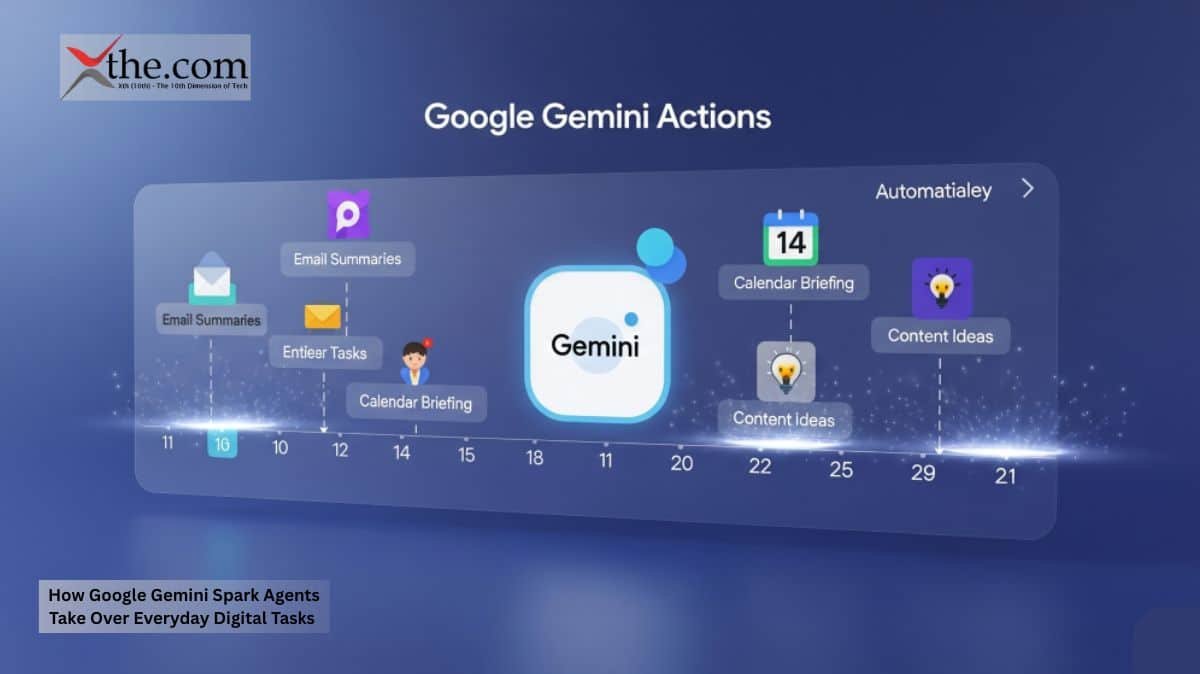
Google unveiled Gemini Spark at Google I/O 2026, a new class of autonomous background agents designed to execute complex multi-step workflows continuously without user prompting. Unlike conversational AI that responds to queries, Gemini Spark agents operate independently, booking travel, managing files, automating data entry, and coordinating cross-application tasks while users focus on higher-priority work.
The Gemini Spark announcement represents Google’s most direct answer to the consumer fatigue generated by static chatbot interactions the frustration of AI that answers questions without executing consequences. As Google AI Agents transition from responsive to proactive, the Google I/O 2026 developer platform shift toward autonomous AI background execution reframes what every day digital assistance actually means. Google Gemini Spark autonomous background agents do not wait for instructions they manage the workflow while the user manages the outcome.
Why Static Chatbots Created the Demand for Spark
Task automation through conversational AI has hit a ceiling that user behavior data makes visible the majority of chatbot interactions involve repetitive multi-step workflows that users re-initiate daily because the AI completes a single response and waits rather than continuing the task chain implied by the initial request. Booking a flight requires a query, then a follow-up, then a confirmation step, then a calendar entry, then a notification setup a workflow that a user executes across five separate interactions with a chatbot that treats each as a discrete conversation rather than a connected task.
Gemini Spark addresses this by maintaining persistent task context across the full workflow lifecycle an agent that receives a travel request owns the complete booking workflow from fare search through itinerary confirmation, calendar blocking, and expense logging without requiring the user to re-engage at each step. Autonomous AI background execution means the agent works the workflow while the user has moved on, surfacing completion confirmation rather than requiring step-by-step supervision.
Tech innovation that Spark introduces at the infrastructure level is persistent agent state management the capability that distinguishes an agent that completes a task from a chatbot that answers a question. Gemini Spark agents maintain workflow state, monitor external dependencies, and resume interrupted tasks without losing context the persistent execution capability that makes background operation practically useful rather than theoretically appealing.
What Gemini Spark Actually Does in the Background
Within the context of Gmail, Calendar, Drive, Maps, Search, and third-party integrations, Google’s Spark Architecture provides the basis for its AI agents to choose actions, governed by the agent’s permissions framework. The project deadline management Spark agents observe emails for relevant updates, modify calendar obligations in case of conflicts, draft status messages based on progress signaling, and make decisions that require human judgment, rather than burdening the user with viewable intermediate steps. The AI agent helps pick actions rather than generate responses in Gmail, Calendar, Drive, Maps, Search, and other third-party integrations governed by the agent permission framework.
Google I/O 2026 developer documentation for Spark reveals the agent architecture that enables this cross-application execution a persistent reasoning loop that evaluates task state against user goals, identifies the next required action, executes it through the appropriate application interface, and updates task state before evaluating the subsequent step. The loop runs in the background without user interaction until the task completes or encounters a decision point that requires human confirmation within the agent’s authorization scope.
The Authorization architecture of Gemini Spark addresses the trust issue associated with background autonomous execution through the use of explicit permission boundaries for agents created by the user when they set up the agents, as well as providing action categories that require the user’s approval prior to execution, and therefore providing the necessary human oversight that autonomous execution requires for high-consequence actions such as financial transactions, communications or data deletion.
Consumer Use Cases Driving Adoption
Task automation use cases that Gemini Spark targets span the workflows that knowledge workers perform repetitively at significant time cost travel coordination that requires fare monitoring, booking, itinerary management, and expense documentation; document management that requires filing, tagging, summarizing, and sharing across drive and email; and data entry workflows that require extracting information from one application and populating it in another without the copy-paste labor that manual execution requires.
Autonomous AI execution for these workflows delivers time value that consumers experience as reclaimed attention rather than accelerated task completion the difference between spending 20 minutes booking a business trip and receiving a booking confirmation while working on a task that requires human judgment. Google Gemini Spark autonomous background agents reframe AI assistance from a tool that augments task execution into infrastructure that handles task execution, positioning the user as the decision authority rather than the execution resource.
The ability to leverage new technology to enhance productivity is only part of what will be possible with the use of conversational agents to facilitate everyday activities at home tasks such as managing subscription renewals, scheduling appointments with multiple family members, coordinating payment of bills, finding service providers for your home, etc., are valuable consumer propositions related to methods for dealing with the amount of time expended completing daily administrative responsibilities.
Developer Platform and Third-Party Integration
Google I/O 2026 Spark developer platform provides the API framework that third-party application developers use to make their applications Spark-accessible exposing the action endpoints that Spark agents call when executing workflows that touch non-Google applications. Developers who integrate Spark agent compatibility gain access to a user base whose agents can include their applications in automated workflows without requiring users to manually navigate application interfaces.
The Google AI Agents developer ecosystem that Spark builds creates a compounding network effect each third-party application that integrates with Spark expands the scope of workflows user agents can automate, increasing agent utility for existing users while attracting new users whose critical workflows include the newly integrated applications. An autonomous AI platform’s value scales with the breadth of its integration, in ways that single-application AI assistants cannot replicate.
Gemini Spark developer framework also provides the authorization infrastructure that third-party integrations require to participate in agent-executed workflows safely standardized permission scoping, action confirmation hooks, and audit logging that give both users and application developers the governance framework for autonomous cross-application execution within acceptable risk boundaries.
Conclusion
Gemini Spark marks the inflection point where Google AI Agents transition from assistant tools to autonomous infrastructure executing the workflows users previously managed manually rather than helping them manage them more efficiently. Google I/O 2026’s platform architecture, which enables persistent background execution, cross-application action authorization, and decision-point escalation, provides the technical foundation that autonomous AI’s practical utility requires beyond demonstration use cases.
Task automation through Gemini Spark delivers the time recapture that consumer AI has promised, but conversational architecture cannot deliver agents that complete workflows rather than answering questions about them. Tech innovation compounded through third-party developer integration expands the scope of workflows that Spark agents automate as the application ecosystem grows. As Google Gemini Spark autonomous background agents enter everyday consumer and professional use, the static chatbot interaction model that created the demand for something better has the architectural successor that background persistent execution enables and the fatigue that repetitive multi-step manual workflows generate has an autonomous resolution that Google I/O 2026 has moved from roadmap to deployment.
Source: Google Blog / Google I/O 2026 Developer Documentation