






Amsterdam, Netherlands | July 26, 2026
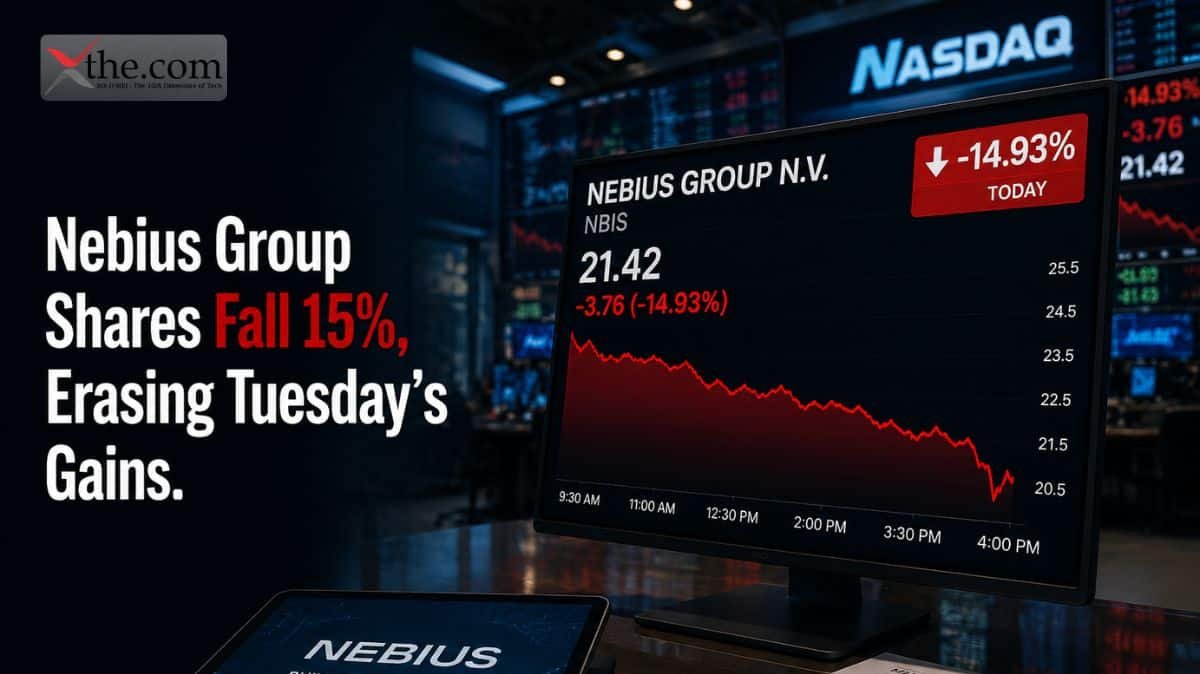
Thirty-three dollars and twenty cents. That is about what a Nebius Group shareholder lost per share on Friday, nearly equaling the gain from three days earlier. On July 24, Nebius shares fall 15 percent, closing at $187.77 and wiping out almost all of Tuesday’s $34.30 rally in one session. This sharp reversal shows just how fragile confidence is in the AI infrastructure trade and how quickly a “vote of confidence” can turn into a “sell the news” reaction in today’s market.
The move also represented a rare case of NBIS wipes Tuesday gains almost to the decimal point, a symmetry that traders on message boards and trading desks alike noted within hours of the closing bell. Nebius still finished the week up 5.7%, a sign that the stock is still a magnet for both bulls betting on the AI buildout and skeptics who think the spending has outrun the revenue to support it.
What Triggered the Reversal
It all started with a regulatory filing, not a product launch or disappointing earnings. On Monday, Nvidia revealed it held a 9.3% stake in Nebius, made up of 22.3 million shares. At first, investors saw this as a strong show of confidence from the top chipmaker, and the stock jumped. But by Wednesday, excitement faded as analysts looked more closely at the details.
About 94.6% of Nvidia’s stake came from warrants bought in March, not from new purchases. These warrants can’t be exercised until September 11 and have transfer restrictions, so the filing mostly confirmed an existing relationship instead of disclosing a new one. Once investors realized this, the extra value in Tuesday’s price quickly disappeared. Friday’s drop was a clear example of what traders call a Nebius trader sentiment reversal—a rally based on a misunderstanding that reversed almost as fast as it started.
A Sector-Wide Wobble, Not an Isolated Stumble
Nebius was not the only one to drop. CoreWeave and IREN, two other well-known “neoclouds” that rent out GPU power to AI developers, saw even bigger weekly declines than Nvidia. Investors across the industry were rethinking funding and delivery schedules. Meanwhile, the Nasdaq Composite fell just 2.1% during the same period, showing that this was a sector-specific pullback, not a general tech selloff.
That distinction matters. AI neocloud stock volatility has become a defining feature of 2026 trading, not a one-off event. Since early July, recurring reports that Meta plans to monetize excess computing capacity through its own cloud offering have triggered repeated selloffs in Nebius and its peers, with each recovery meeting fresh selling pressure. Add persistent insider selling — executives have offloaded more than $140 million in shares over three months — and a picture emerges of a stock whose fundamentals investors like but whose near-term price action they no longer trust.
The Business Behind the Ticker
If you look past the trading swings, Nebius’s core business looks stronger, at least on paper. The company has secured over $40 billion in contracted revenue, with Microsoft and Meta as major customers. First-quarter revenue jumped 684% from last year to $399 million, and adjusted EBITDA hit $129.5 million, showing that the company is starting to generate real cash flow, not just future promises. Management also raised its 2026 capital spending forecast to $20–25 billion, signaling big expansion plans but also raising the question of when this spending will turn into long-term profit.
For now, Wall Street’s answer is: not yet, and not for lack of additional proof. In late July, Freedom Capital analyst Paul Meeks upgraded Nebius to “Buy” with a $200 price target, saying the drop from nearly $300 made the stock’s risk and reward more attractive. This kind of mixed view—positive about the long term but careful about the next quarter — is becoming the norm for Nebius AI cloud stock drop headlines, which now arrive with almost predictable regularity whenever a filing, a competitor announcement, or a wider tech selloff gives traders a reason to book profits.
Reading the Nasdaq Signal
Zoom out to the exchange level, and the pattern sharpens further. Nebius Group Nasdaq decline episodes have clustered around three recurring triggers this year: capex guidance that exceeds near-term revenue, competitive threats from hyperscalers entering the AI cloud market, and ownership filings misread before the fine print catches up with the headline. Each has, since early July, wiped out days of gains in a single session — including a 17% drop on July 1 tied to Meta’s cloud ambitions and an 11.4% decline in mid-July after the capex forecast increases.
Nebius is not alone in this. Alphabet, Tesla, and other companies tied to AI infrastructure have also faced worries about capital spending this month, as investors want to see real returns instead of just big plans. The difference is that Nebius, being a pure neocloud company with a smaller market value and shorter interest, shows these worries more clearly than its bigger rivals, leading to bigger price swings when new information comes out.
A Case Study in Speculative Momentum
Friday’s trading is a good example for anyone interested in how speculative momentum can rise and fall. The headline was “Nebius shares fall 15 percent erasing gains,” but the real story was the market correcting a misunderstanding, not reacting to new business problems. In market terms, “NBIS stock wipes out Tuesday rally” means expectations got ahead of reality and had to be reset. This difference is important for anyone deciding if Friday’s drop is a chance to buy or a sign to be careful.
What Comes Next
The real test for Nebius will come based on its ability to turn its $40 billion in contracted revenue into dependable, growing cash flow as new capacity becomes available through 2027. Until then, the stock will likely keep reacting to headlines as much as to business fundamentals. Any new development—a customer deal, insider sale, or competitor’s earnings—could cause the kind of sharp moves investors just saw. For a sector still figuring out its economics, this volatility is normal. It’s how markets behave when confidence gets ahead of certainty.
Source: Nebius Group (NASDAQ:NBIS) Shares Fall 15%, Wiping Out Most of Tuesday’s Gains








