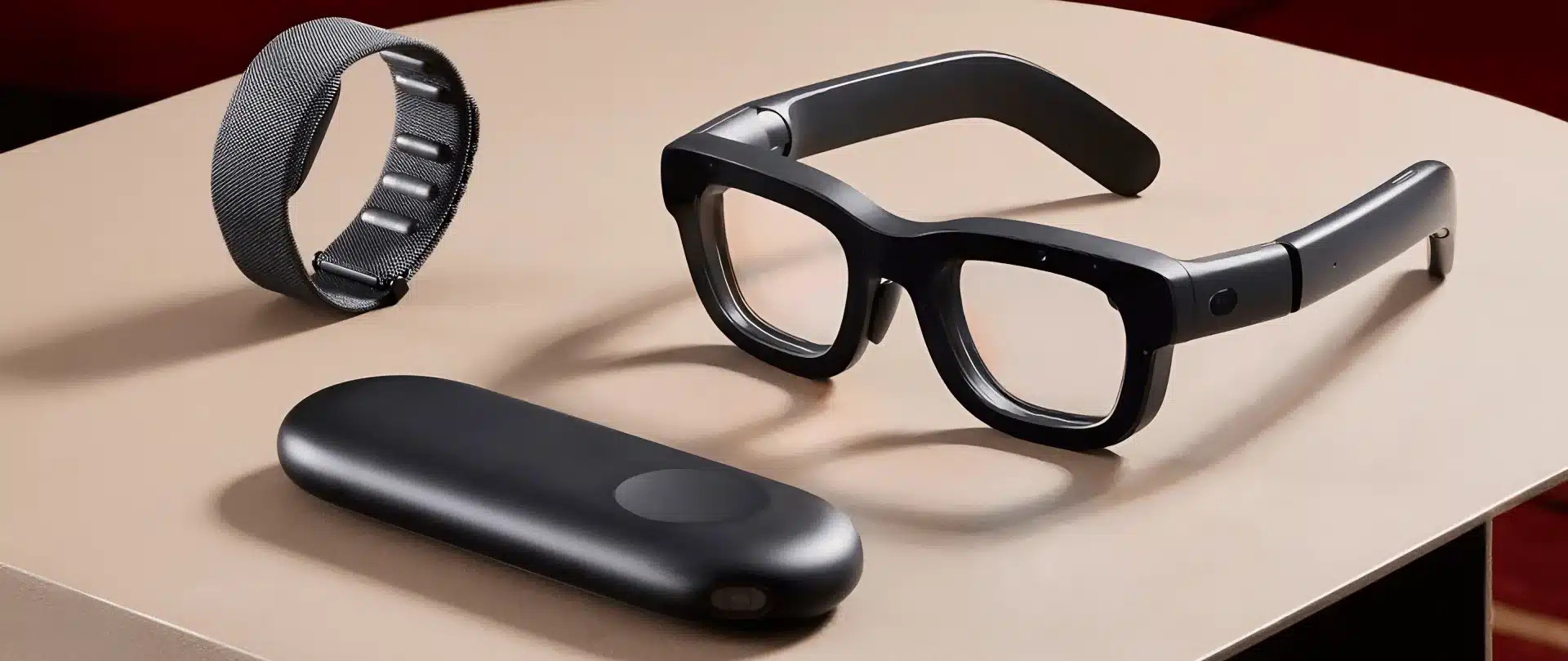
Meta increases its commitment to artificial intelligence wearables with recent advancements in its augmented reality glasses technology. The company develops augmented reality devices through its Orion prototype project. The company works on this project to develop advanced AI-powered immersive devices that will replace smartphone technology.
The latest updates show how Meta combines artificial intelligence with augmented reality to develop devices that function as advanced visual systems, capable of comprehending and reacting to their surroundings in real time.
A Shift Toward Wearable Computing
The tech industry is moving toward wearable computing through Meta’s investment in AR glasses, signalling a complete shift in technology. Companies are seeking new devices that better fit daily activities, while smartphones maintain their market leadership.
AR glasses are potential successors that can either replace traditional screens or serve as additional display options. The devices project digital content directly into users’ field of view to help them stop using handheld devices.
Meta develops a system that uses lightweight components to ensure uninterrupted operation and allows users to interact with AI systems that deliver contextual support without requiring specific instructions.
Orion and the Vision for True AR
The Orion AR glasses prototype is the main focus of Meta’s ongoing development work. The Orion project represents the company’s most sophisticated wearable research programmed, aiming to deliver Meta’s definition of authentic augmented reality experiences.
Orion establishes a new standard for augmented reality devices by leveraging built-in advanced optical systems, sensor technology, and processing power to deliver its functionality in a compact form factor. The project aims to develop a system that delivers accurate digital content with near zero latency in real-world environments.
The system projects interactive components, which include notifications, navigation cues, and contextual information, directly into the user’s environment to provide a more lifelike and immersive experience.
The Role of AI in AR Glasses
Meta uses artificial intelligence to develop its augmented reality AR system. The company is developing artificial intelligence systems that will analyse user surroundings to deliver real-time, relevant information.
The system will enable users to identify physical objects and understand spoken instructions while delivering contextual information based on their current visual experience. Meta plans to develop a device that uses artificial intelligence and augmented reality to serve as an active assistant rather than a standard display.
Artificial intelligence integration enables users to experience customised content. The system learns user preferences and patterns, which enables it to deliver a better user experience through system improvements.
Hardware Challenges and Innovation
The process of creating AR glasses that balance strong performance and practical usability presents multiple major technical obstacles. The device needs to achieve three objectives, which include performance, battery life, and user comfort, while keeping a small form factor.
Meta achieved progress in its Orion project through advancements in display technology, sensor systems, and power management solutions. The creation of compact visual systems requires the development of new optical technologies, while these systems require real-time data processing to maintain operational efficiency.
The company is researching advanced input techniques, including gesture controls and neural interfaces, that will work alongside existing interaction methods. The purpose of these developments is to create AR glasses that users can operate more intuitively during their daily activities.
Privacy and Social Considerations
The use of AR glasses as wearable technology poses major challenges that must be addressed for people to accept them. The technology needs to resolve privacy issues because it collects and analyses environmental information from its surroundings.
Meta has confirmed the existence of these difficulties, but its team is developing privacy protections that it will implement in its product designs. The system requires protection through limited data-collection methods that allow users to control their personal information while maintaining operational transparency.
Another aspect that influences social acceptance exists. For AR glasses to succeed, they must be comfortable not only to wear but also to use in public settings without causing discomfort to others.
Competing in the AI Wearables Market
Meta is not the only company developing wearable devices with artificial intelligence capabilities. Major technology companies are developing wearable artificial intelligence technologies through separate efforts that combine artificial intelligence with physical devices.
Meta establishes its unique position through dedicated efforts to build an entire augmented reality ecosystem that leverages its existing virtual reality and metaverse development work. The company established its augmented reality goals based on its previous experience creating immersive technologies.
The need to compete with other organisations for business will require companies to develop better products through design enhancements and operational improvements.
Implications for Users in the United States
United States users will experience a technological transformation as the development of AR glasses changes their daily interactions with technology. Users will use wearable systems that provide information throughout the day without needing to touch their devices.
The system will affect all human activities because it enables people to navigate their environment and communicate with others while using their devices for work and leisure. The implementation of AI technology creates additional opportunities by enabling users to engage with systems that demonstrate advanced cognitive abilities and can understand diverse situations.
The success of technology requires three main elements: price accessibility, user experience, and public confidence in the technology.
The Future of AR and AI Integration
Meta continues to invest in AR glasses because it believes that wearable computing will become an essential technology for the upcoming years. The company develops devices that provide users with both interactive virtual experiences and smart technological abilities through its combination of augmented reality and artificial intelligence.
The company needs to address both technical issues and user concerns to achieve successful results with this method. AR glasses could become essential components in the development of personal computing devices for future generations if they succeed.
Source: Introducing Orion, Our First True Augmented Reality Glasses