





Austin, Texas.
A Fortune 500 manufacturer recently found that moving analytics data between cloud regions costs more than running the analytics itself. Another global bank ended a machine learning project after GPU leasing costs doubled in just 18 months. Cloud spending has become unpredictable, so executives are now closely reviewing every terabyte, GPU hour, and outbound network transfer instead of treating cloud bills as routine expenses.
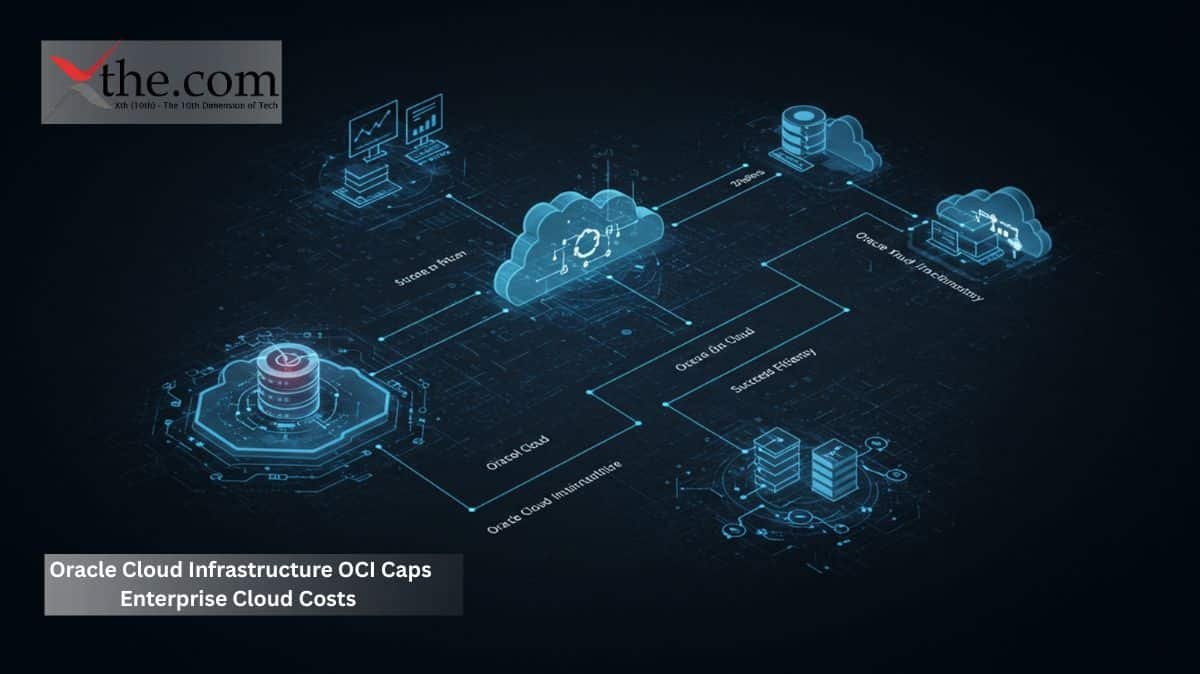
That pressure explains the growing attention around Oracle Cloud Infrastructure (OCI) and pricing comparison discussions in boardrooms and procurement teams.
The New Cloud Budget Platform
For years, companies believed AWS and Microsoft Azure offered the best scale and reliability. This made sense when cloud projects focused on flexibility and speed. Now, CFOs are demanding greater clarity in cost control.
The main issues are rising GPU costs, increasing storage expenses, and high network egress fees.
A global pharmaceutical company using AI for protein modeling can spend millions of dollars each year on GPU infrastructure alone. At the same time, enterprise data often moves between SaaS apps, data lakes, security tools, and hybrid clouds. These transfers create hidden costs that add up over time.
The discussion about cloud egress fees comparison AWS, Azure has intensified because enterprises increasingly operate in multi-cloud environments rather than isolated vendor ecosystems. AWS and Azure still aggressively monetize outbound data movement, especially at scale. Oracle approached the issue differently by reducing or eliminating many inter-regional and cross-cloud transfer charges tied to Oracle workloads.
This pricing difference is more important than marketing claims. It affects how companies plan their long-term infrastructure.
Why OCI’s GPU Strategy Is Reshaping Enterprise Decisions
The market for high-performance AI infrastructure is now extremely competitive. Shortages of NVIDIA GPUs have driven up prices, especially for large AI training clusters.
Oracle capitalized on that imbalance through aggressive OCI bare metal GPU pricing strategies.
Unlike other public clouds that rely on heavy virtualization, OCI is designed around bare metal performance isolation. This setup reduces overhead and provides a more predictable framework for AI simulations and large databases.
This has a big impact on costs.
For example, an automotive company training self-driving models over thousands of GPU hours could save hundreds of thousands of dollars each year by using OCI bare metal instead of premium AWS GPU instances. The savings grow even more when you factor in data transfer costs.
Oracle also adopted RDMA networking and low-latency cluster design earlier than many expected. The first attracted AI startups, and later, larger companies followed after seeing strong performance for the cost in their own tests.
The Real Cost of Enterprise Database
Cloud migration narratives often ignore the hardest part: legacy databases.
Most Fortune 500 companies still use highly customized Oracle, SAP, or Microsoft SQL systems that are tied to business processes built over decades. Moving these systems to the cloud is much more complex than just copying data.
The real challenge is keeping operations running smoothly during migration.
Banks cannot risk even tiny delays in transactions. Airlines cannot have reservation outages. Healthcare networks must maintain compliance and availability simultaneously. This is why discussions around enterprise cloud database migration costs have become more detailed in the past three years.
The real costs include rewriting applications, testing integrations, passing compliance audits, redesigning storage, changing network setups, and retraining staff. Some companies spend more on consulting and migration management than on the infrastructure itself.
Oracle has an advantage here because many companies already use Oracle databases on‑site. OCI lets them expand into hybrid setups without giving up their old systems completely.
This hybrid approach makes it easier for organizations to accept change.
Oracle’s Networking Fabric Versus AWS and Azure
OCI’s architecture is notably different from that of its larger competitors.
AWS has focused on offering a wide range of services.
Azure has prioritized integration with Microsoft products.
Oracle has focused on fast networking and high database performance.
OCI keeps network virtualization and computing more separate than others do, which means bandwidth remains consistent across workloads. This helps big companies avoid performance problems that happen when resources are shared too much.
This is not just a theory.
Financial firms running real-time risk analysis care more about reliable network performance than having lots of features.
Manufacturers using digital twin simulations focus on low GPU-to-storage latency rather than additional integrations.
This is where Oracle Cloud Infrastructure OCI pricing comparison discussions increasingly shift from sticker pricing to workload economics.
Enterprises are calculating total operational costs over five to seven-year horizons rather than comparing monthly invoices.
How To Optimize HCI Cloud Billing Costs
Enterprises pursuing aggressive cloud efficiency programs increasingly focus on how to optimize OCI cloud billing costs without sacrificing scalability.
There are several proven ways to save money:
- Sizing bare metal GPU deployments based on actual utilization instead of projected peak demand.
- Using OCI’s high-bandwidth networking to consolidate segmented workloads into fewer regions.
- Leveraging the Oracle Support Rewards program, ORCL, to offset Oracle software licensing and support expenses.
- Designing hybrid architectures to keep latency-sensitive databases on dedicated infrastructure while shifting burst workloads into OCI elasticity zones.
The Oracle Support Rewards program, ORCL, has become especially appealing to companies that already spend heavily on Oracle licenses. It turns OCI usage into credits for existing support costs, creating a financial benefit that competitors find hard to match.
This model is attractive to procurement teams who want to cut software costs across the company without risking core systems.
A Larger Shift is Underway
Cloud strategy is no longer about choosing big-name vendors or chasing innovation stories. Boards now review infrastructure decisions as carefully as they do supply chain contracts or major investments.
AWS and Azure remain major players with large ecosystems and strong enterprise presence. But Oracle saw a weakness in the hyperscale model: Many companies no longer want unlimited scalability if it means unlimited costs.
They want costs they can predict.
As demand for AI infrastructure grows and multi-cloud setups become the norm, the companies that win long-term enterprise business may not be those with the most services. Instead, they will be the ones who offer clear financial value under ongoing pressure.