

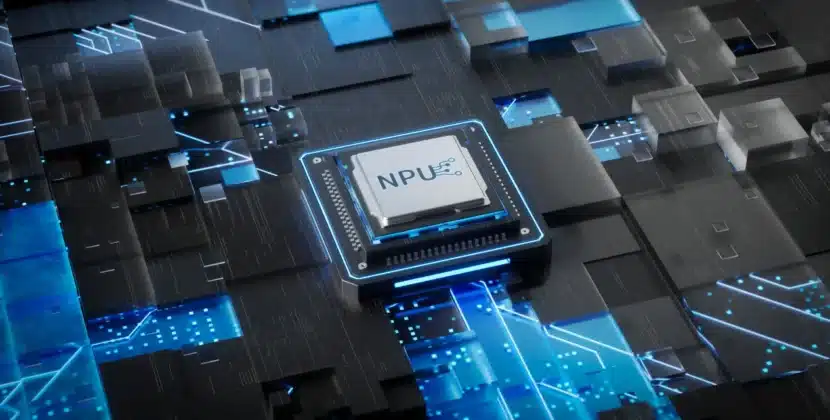




Standard computing is changing with the advent of artificial intelligence and how we use devices to process information, consume energy, and perform. The neural processing unit (NPU) is at the heart of this transformation in computing because it’s a component designed specifically to perform the operations required for artificial intelligence applications.
Qualcomm, Intel, and AMD are rolling out NPUs across their consumer products, delivering dramatically improved AI performance on laptops, tablets, and smartphones.
NPUs outperform traditional CPUs and GPUs because of their specialized design for executing machine learning workloads. They enable AI calculations to be conducted sooner and more efficiently, while providing greater privacy protection for users. As operating systems (OS) and applications increasingly rely on artificial intelligence, NPUs are becoming integral to modern computing systems.
What Makes NPUs Different
NPUs execute neural network operations by performing matrix multiplications and concurrent calculations.
NPUs execute AI tasks with lower power requirements thanks to their specialized design, making them suitable for mobile devices. The NPUs developed by Qualcomm enable advanced AI capabilities that operate without decreasing mobile device battery capacity.
The system enables users to run voice assistant functions and image processing tasks by maintaining resource efficiency during these common activities.
Performance Gains in Real-World Use
The practical example of NPUs is best illustrated through real-world applications. AI Processing is a fundamental component of real-time language translation, noise cancellation, and image enhancement.
These devices can function much faster and at a more consistent level of performance by offloading these tasks to NPUs. Both the latest Intel and AMD processors now include NPUs as standard features, enabling superior processing power.
Overall, the processing capabilities of users on the servers have improved, enabling continuous processing of AI applications.
Battery Efficiency and Power Management
NPUs deliver their primary benefit by reducing power consumption. AI tasks running on CPUs or GPUs will rapidly drain battery power over extended periods of operation.
NPUs solve this problem by executing identical functions more efficiently, enabling devices to extend their operational time on a single battery charge. Energy efficiency is a primary advantage of AMD and Qualcomm’s AI-focused semiconductor products.
The enhancement is crucial for users who depend on their mobile devices for all their daily activities.
Enabling On-Device AI and Privacy
NPUs have created momentum for developing AI systems that operate directly on devices, processing data without requiring cloud connections. This method protects user privacy by eliminating the need to send private data over online channels.
The device enables users to access voice recognition and facial analysis features because all data processing occurs on the device, protecting user information from exposure.
Qualcomm has made on-device AI a fundamental element of its business strategy because it provides both operational advantages and enhanced security.
Reducing Latency and Improving Responsiveness
Users experience real-time applications at their best when latency times stay low. Users experience delays in cloud processing because data needs to travel, and servers need time to respond.
NPUs provide immediate results because they execute AI tasks locally without delays. Intel has achieved lower latency through its AI acceleration solutions, which now power faster and more responsive applications.
The given system demonstrates high usefulness for both video conferencing and interactive application tasks.
Supporting Always-On AI Features
NPUs enable devices to run AI features continuously without significant power consumption. The system supports multiple functions, which include wake-word detection, adaptive brightness, and real-time system optimization.
The NPU design enables background operation of features without causing performance problems, as NPUs are built to maximize energy efficiency.
AMD and Qualcomm use this technology to develop devices that demonstrate improved intelligence and responsiveness.
Expanding Use Cases Across Devices
The integration of NPUs is expanding the range of AI applications available to consumers. AI now functions as a core element of devices that users employ for both creative work and their productivity tasks.
NPU technology delivers performance enhancements that benefit laptops, smartphones, and wearable devices. Intel is working to bring these capabilities to a broader range of devices, making AI more accessible to users.
The expansion drives innovation while creating new use cases that organizations could not implement before.
Challenges in NPU Adoption
The advantages of NPUs are offset by challenges that hinder their adoption. Developers need to create software applications that fully utilize NPU capabilities, as software optimization remains a critical challenge.
NPUs do not currently support all AI workloads, which limits their performance in some use cases.
The development tools and frameworks that Intel, AMD, and Qualcomm provide serve as their solution to tackle these existing challenges.
Conclusion: A New Era of Efficient AI Computing
By enabling higher speeds, lower power consumption, and greater data security, NPUs (Neural Processing Units) are changing how individuals interact with AI. NPUs enable consumers to perform everyday tasks by providing access to more sophisticated features through a fast, energy-saving computer that offloads AI processing from standard processors via sophisticated chip technology.
NPUs will become a key part of current devices and will continue to fuel advancements in AI computing through ongoing R&D efforts of leading manufacturers such as Qualcomm and Intel.
Sources: Qualcomm Recommends Stockholders Reject Mini-Tender Offer by Tutanota LLC


